
Root aphid
Neotrama caudata
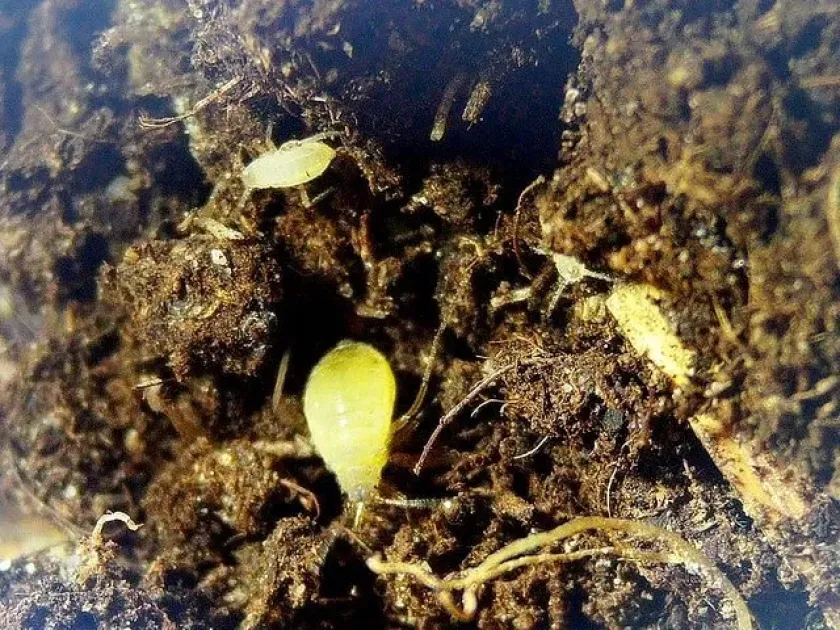
Description
How to identify
Neotrama caudata is a specialized soil-dwelling insect belonging to the order Hemiptera and the family Aphididae. It leads a cryptic lifestyle, exclusively inhabiting the root zone of host plants.
Adult specimens are characterized by a whitish or light-yellow body, often coated in a waxy secretion that protects them from soil moisture. Their morphology, including reduced antennae, is specifically adapted for navigating through soil capillaries.
This species maintains a symbiotic relationship with ants, which transport the aphids to healthy roots and protect them from predators in exchange for honeydew.
Unlike foliar aphid species, Neotrama caudata rarely develops winged forms, making the population sedentary and dependent on the host plant for extended periods.
Visual identification requires careful inspection of the root system, as the colonies are often mistaken for mealybugs due to their white, cotton-like appearance on the root bark.
What it damages
The primary hosts of this aphid include members of the Asteraceae family, particularly wild species like Centaurea, which serve as natural reservoirs for the pest.
In agricultural settings, these aphids can migrate to vegetable and ornamental crops, leading to significant infestations if proximity to wild hosts is maintained.
The damage is caused by the aphid feeding on the phloem sap of the roots, which disrupts the nutrient transport system and stresses the entire plant.
Repeated piercing of the root surface impairs the plant's ability to absorb water and essential minerals, which is particularly devastating during drought conditions.
Heavy infestations can result in stunted growth, yellowing of foliage, and in severe cases, plant death, especially in young seedlings or sensitive cultivars.
When it appears
Activity commences in early spring as soil temperatures rise, triggering the emergence and feeding cycle of the aphid populations in the upper root layers.
The peak of population density typically occurs during the mid-summer months when warm and moderately dry soil conditions favor rapid reproduction.
As autumn temperatures drop, the aphid colonies retreat deeper into the soil profile to overwinter, surviving as eggs or late-stage nymphs until the following season.
The generation turnover rate is highly sensitive to soil moisture levels; while moderate dryness accelerates population growth, waterlogged soils can suppress activity.
Detection is most frequent during the harvest period or during soil cultivation, where the white, waxy clusters are easily visible upon excavating the root ball.
Signs of infestation
A primary symptom of infestation is unexpected wilting, where the plant loses its turgor even when the soil moisture levels are adequate for normal growth.
Upon examination of the root system, white, powdery, or cotton-like clusters are observed attached to the roots, indicating the presence of a thriving aphid colony.
Plants often exhibit chronic chlorosis (yellowing of leaves) and show significantly reduced growth rates compared to healthy specimens in the same area.
The presence of ants active around the base of the plant stem is a strong indicator of an underground aphid colony, as the ants are farming the aphids.
- Sudden midday wilting of foliage.
- Yellowing and loss of lower leaves.
- White waxy secretions found on root surfaces.
- Increased ant traffic near the base of the plant.
Control measures
Integrated pest management should start with robust cultural practices, such as removing wild host plants and weeds that harbor the pest during the off-season.
Deep autumn tilling can disrupt the overwintering sites, exposing the aphids to predators and unfavorable environmental conditions.
In greenhouses, strict sanitation, including the use of pasteurized or sterilized soil, is essential to prevent the introduction of Neotrama caudata.
Biological control agents, such as entomopathogenic fungi, have shown promise in regulating aphid populations without the need for synthetic chemicals.
Chemical control is best achieved through soil-drench applications of systemic insecticides, allowing the plant to take up the compound and eliminate the aphids feeding on the roots.
Taxonomy
- Latin name
- Neotrama caudata
- Order
- Hemiptera (bugs, aphids, leafhoppers)
- Family
- Aphididae
- EPPO code
- PRORCA
Discussion
No discussions yet — be the first.