
Violet aphid
Neotoxoptera violae
Description
How to identify
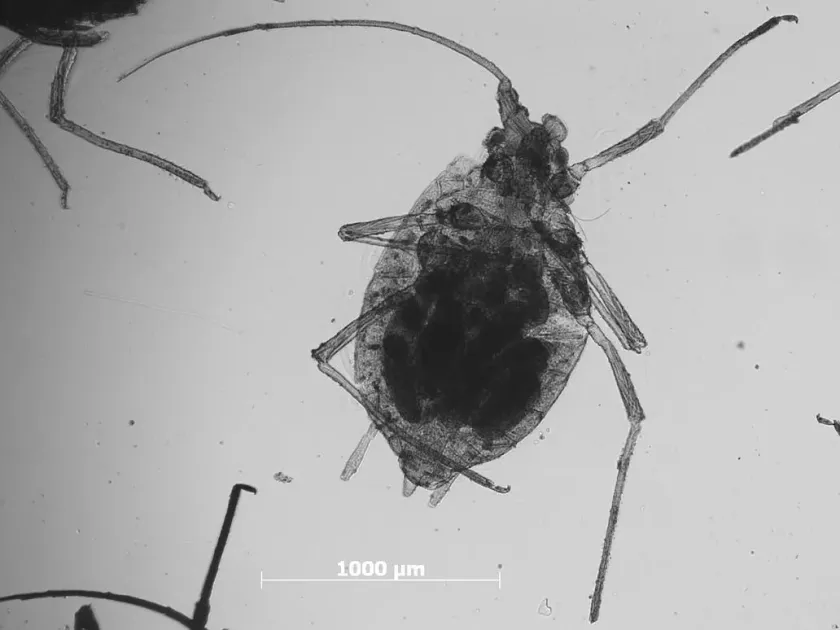
The Violet aphid (Neotoxoptera violae) is a small sap-sucking insect belonging to the family Aphididae. Adults are typically dark brown to black, distinguishing them from the more common green aphid species.
These insects measure approximately 1.5–2 mm in length. Under close inspection, winged forms exhibit dark veins on their wings, which is a key characteristic used for morphological identification.
They are colonial insects, usually found clustered on the undersides of leaves, tender growth tips, and flower stalks. Their rapid parthenogenetic reproduction allows them to establish large colonies quickly.
In greenhouses and indoor environments, they can remain active throughout the year, posing a continuous threat to potted plant collections, especially African violets.
Due to their small size and dark color, they are often overlooked until the colony has already caused visible damage to the plant's architecture.
What it damages
The primary hosts for this species include members of the Violaceae family, most notably Saintpaulia (African violets) and Viola species, along with other ornamental plants.
By piercing and sucking phloem sap, the aphids extract essential nutrients, which weakens the plant and stunts its overall growth and vitality.
Aphids secrete honeydew, a sugary substance that coats the leaves. This serves as a substrate for sooty mold growth, which inhibits photosynthesis and significantly reduces the plant's aesthetic value.
A critical concern is that Neotoxoptera violae is known to act as a vector for various plant viruses. These infections often lead to permanent leaf distortion and plant decline.
Heavy infestations result in distorted leaves, deformed flower stalks, and poor bloom quality, often rendering the plant unsuitable for display or competition.
Signs of infestation
Initial signs of infestation include curling or puckering of young leaves in the plant's crown. The leaves may appear chlorotic or display uneven, stunted development.
Visual inspection of the leaf undersides reveals dark insect clusters. White cast skins, left behind after the aphids molt, are often visible and indicate an active colony.
The presence of a sticky, shiny film (honeydew) on the leaves is a clear symptom. In later stages, this film becomes blackened due to the development of sooty mold fungus.
Distorted or bent flower stalks are a frequent sign of established aphid colonies draining the plant's resources before the flowers can fully open.
Increased ant activity around the plant containers is a secondary indicator, as ants often protect and farm aphids for the honeydew they produce.
Control measures
Mechanical control can be attempted on minor infestations by wiping leaves with a damp cloth or rinsing the plant carefully, though this is rarely sufficient for established populations.
Systemic insecticides are the most effective solution. Products containing imidacloprid, thiamethoxam, or acetamiprid are absorbed by the plant and kill aphids feeding on the sap.
A strict treatment schedule is necessary for success. Multiple applications at 7–10 day intervals are required to target nymphs that emerge from eggs, which are often resistant to initial sprays.
Biological control methods, such as using predatory mites, lacewings, or parasitic wasps (e.g., Aphidius species), can be effective in greenhouse settings if chemical use is restricted.
Always enforce a quarantine protocol. Any new plant entering the collection should be isolated for at least 30 days to ensure it is free of pests before placement near other plants.
Taxonomy
- Latin name
- Neotoxoptera violae
- Order
- Hemiptera (bugs, aphids, leafhoppers)
- Family
- Aphididae
- EPPO code
- NEOTVI
Discussion
No discussions yet — be the first.