
Maple aphid
Neoprociphilus aceris
Description
How to identify
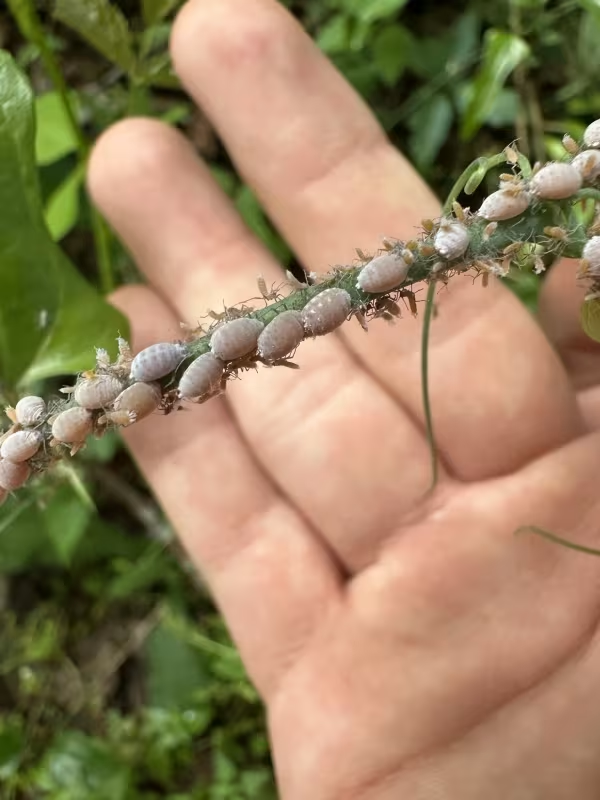
The maple aphid (Neoprociphilus aceris) is a small insect belonging to the family Aphididae. These pests are often identified by a waxy, white, or woolly substance that covers their bodies, providing protection.
They possess specialized piercing-sucking mouthparts that allow them to extract sap directly from the vascular system of the maple tree, which serves as their primary host.
The life cycle of this species is complex and adaptive, involving distinct generations that allow them to thrive across varying environmental conditions.
These aphids tend to form dense colonies on the undersides of leaves or along young, tender shoots, which are the most nutrient-rich parts of the plant.
Their morphological diversity includes both wingless forms for rapid local reproduction and winged forms for dispersal to neighboring trees.
What it damages
Maple aphids primarily target various maple species. They focus their feeding on young leaves, petioles, and non-woody stems where the sap is most easily accessible.
Continuous feeding causes the depletion of essential plant resources, leading to reduced vigor and stunted development of the affected maple tree.
The damage often manifests as leaf curling, chlorosis (yellowing), and premature leaf drop, which significantly impacts the aesthetic quality of the trees.
A major indirect impact is the secretion of honeydew, a sugary byproduct that coats leaves and provides a substrate for sooty mold fungus to colonize.
The resulting sooty mold layer blocks sunlight, which drastically inhibits the tree's photosynthesis and impairs its overall growth and health.
When it appears
The activity begins in early spring as soon as the maple buds open, when the overwintered eggs hatch into the first generation of founders.
The population reaches its peak density during late spring and throughout the summer, when favorable temperatures support rapid life cycles.
As the season progresses, a portion of the population may migrate to secondary hosts, a biological strategy used to ensure survival during periods of stress.
In autumn, the aphids return to their primary host, the maple, to mate and deposit eggs that will survive the winter months.
These overwintering eggs are strategically placed in the cracks of the tree bark, providing a robust defense against winter weather conditions.
Signs of infestation
Leaf curling or distortion is typically the first visible indicator that an aphid colony has become established on the tree.
The presence of sticky honeydew on foliage and stems is a reliable warning sign that an aphid infestation is currently active and spreading.
High ant activity on the tree trunk and branches is often a direct result of ants farming the aphids for their sugary honeydew secretions.
Black, powdery soot-like patches on leaves indicate the secondary growth of sooty mold, which is a common consequence of heavy aphid feeding.
Reduced growth rates and yellowing foliage in young trees serve as symptoms of sustained stress caused by these feeding insects.
Control measures
Management starts with cultural practices, such as removing heavily infested shoots and ensuring the tree remains well-watered to withstand pressure.
Installing sticky traps or physical barriers on tree trunks can help control ants, thereby allowing natural predators better access to the aphids.
Biological control through the encouragement of natural enemies like lady beetles, lacewings, and syrphid flies is highly effective for long-term management.
In cases of severe infestation, the application of horticultural oils or approved systemic insecticides can be used to reduce population numbers.
Early season monitoring is critical; detecting the initial colonies in spring allows for timely intervention before the population reaches damaging levels.
Taxonomy
- Latin name
- Neoprociphilus aceris
- Order
- Hemiptera (bugs, aphids, leafhoppers)
- Family
- Aphididae
- EPPO code
- PARPAC
Discussion
No discussions yet — be the first.