
Conifer aphid
Neophyllaphis
Description
How to identify
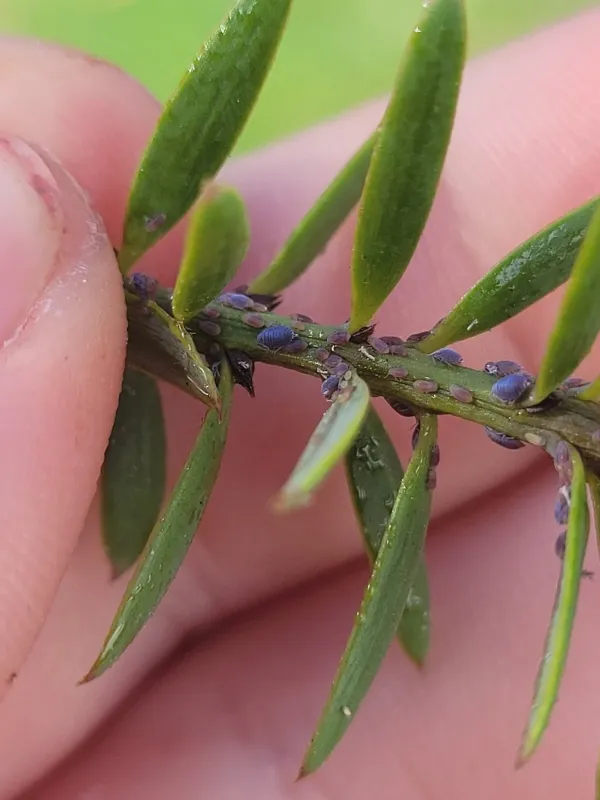
The conifer aphid Neophyllaphis is a genus within the Aphididae family, primarily known for infesting coniferous trees. These insects are highly specialized, targeting plants such as Podocarpus and Araucaria.
They are characterized by a soft body often covered in a whitish or bluish waxy secretion. This powder acts as a natural camouflage and protection against dehydration and predators.
The aphids possess piercing-sucking mouthparts used to extract sap from succulent new growth. Both winged and wingless forms exist, with winged individuals playing a critical role in spreading the infestation to new hosts.
Their reproduction is largely parthenogenetic during the growing season, allowing for rapid population growth in favorable climates. They usually congregate in dense clusters on the underside of needles.
Using a magnifying lens is recommended for identification, as these insects often blend in with the natural wax or resin deposits of the host plant.
What it damages
These aphids primarily damage ornamental conifers, especially species within the Podocarpus and Araucaria families. They show a clear preference for the tender shoots produced during the current season.
By feeding on phloem sap, the aphids drain the plant of essential nutrients and moisture. This metabolic stress manifests as stunted growth and a general decline in the plant's health.
A major indirect symptom is the production of honeydew, a sticky substance that promotes the growth of sooty mold. This black fungus covers the needles, significantly reducing the plant's photosynthetic capacity.
Severe infestations lead to needle curling, yellowing, and premature needle drop. In young plants, the loss of vigor may result in the death of terminal leaders.
The weakened state of the plant makes it susceptible to opportunistic secondary pathogens, which can cause twig dieback and long-term structural damage to the tree.
When it appears
The seasonal activity of Neophyllaphis is closely linked to the plant's growth cycles. Activity typically peaks during the spring when the tree produces new, nutrient-rich growth.
In temperate or subtropical regions, the aphids can remain active year-round, continuously producing generations. Dry and warm weather conditions are particularly conducive to population explosions.
As the season progresses toward winter, some populations transition to sexual reproduction to produce eggs. These eggs are laid in bark crevices and near buds, ensuring the survival of the species during cold periods.
Early spring is a critical window for monitoring. Winged females move to new growth, and if left unchecked, the population can reach damaging levels within just a few weeks.
Understanding local weather patterns helps in timing preventive sprays to coincide with the emergence of the first spring generation.
Signs of infestation
Early signs include the curling or twisting of new needles. You may also notice discoloration, with needles fading from deep green to a chlorotic yellow or pale color.
Sticky honeydew on the needles is a primary indicator. If you observe ant activity on your conifers, it is a strong hint that aphids are present, as ants protect aphids to harvest the honeydew.
The presence of sooty mold, appearing as a dark, powdery film on the foliage, confirms that the aphid infestation is well-established and causing secondary problems.
White, translucent cast skins (exuviae) left behind after molting are a clear sign of active feeding and development occurring within the canopy.
Examine the base of the needles, where these aphids prefer to cluster. Shaking the branch over a piece of white paper is an effective way to confirm their presence if they are not immediately visible.
Control measures
Mechanical control is effective for minor infestations. A sharp stream of water can physically knock the aphids off the branches, disrupting their feeding and colonization.
Biological control using entomopathogenic fungi like Beauveria bassiana is an environmentally friendly way to reduce aphid numbers without harming beneficial insects.
Systemic insecticides, particularly those containing imidacloprid or acetamiprid, provide excellent control. They are absorbed by the plant and kill the aphids upon ingestion.
Ensure thorough coverage when applying pesticides, targeting the undersides of the needles where the colonies reside. Always follow label instructions to minimize environmental impact.
- Monitor young shoots regularly during spring and summer.
- Use sticky barriers at the base of the trunk to prevent ants from protecting aphids.
- Maintain optimal plant health through proper fertilization and watering.
- Introduce natural predators like ladybugs or lacewings to the garden.
- Rotate chemical groups to prevent the development of insecticide resistance.
Taxonomy
- Latin name
- Neophyllaphis
- Order
- Hemiptera (bugs, aphids, leafhoppers)
- Family
- Aphididae
- EPPO code
- NEOHSP
Discussion
No discussions yet — be the first.