
Neomyzus
Neomyzus
Description
How to identify
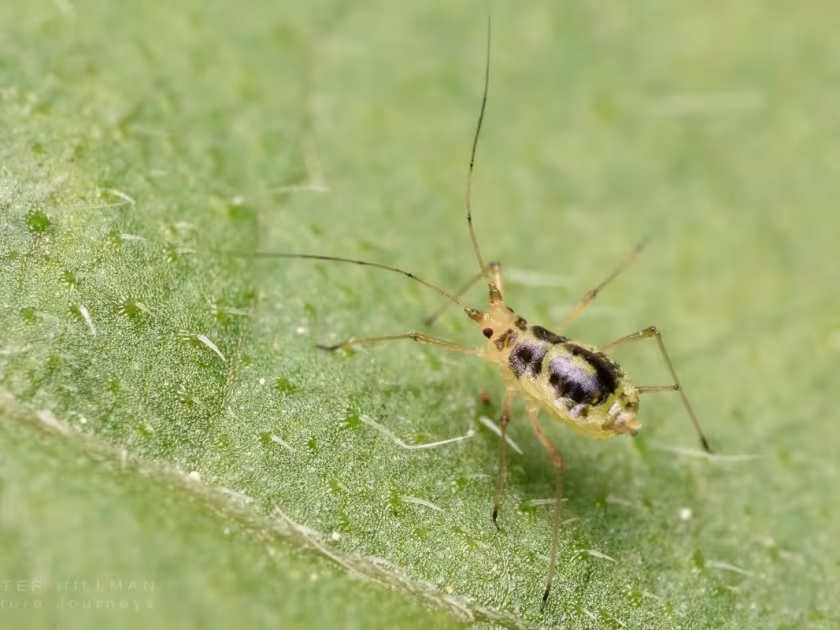
Neomyzus, specifically the species Neomyzus circumflexus (known as the crescent-marked lily aphid), belongs to the order Hemiptera, family Aphididae. It is a small insect, typically measuring 1.5 to 2.5 mm in length.
Adults often display a characteristic pattern on their abdomen resembling a horseshoe or crescent, which gives the species its common name. The body color ranges from pale yellow to light green.
Reproduction occurs parthenogenetically, allowing colonies to expand rapidly under favorable conditions. In greenhouse environments, the population can persist year-round without entering a sexual reproductive phase.
Winged individuals act as dispersers, facilitating the rapid spread of the pest within greenhouse complexes or across garden plots during the summer season.
Identification can be difficult due to their microscopic size, but the presence of the distinct dark "crescent" mark on the abdomen often aids specialists in confirming the species during visual inspections.
What it damages
This species is a polyphage, attacking a wide range of hosts including ornamental plants, vegetables, and flowers in protected cultivation. Aroids, orchids, and solanaceous crops are particularly susceptible.
Aphids suck cell sap from plant tissues, leading to severe depletion of young shoots, flower stalks, and leaves. This feeding behavior disrupts the normal metabolism of the host plant.
The pest is an active vector for various viral diseases, such as mosaic viruses and leaf curl, which often cause significantly greater economic loss than the mechanical damage from feeding itself.
During massive infestations, plant growth is severely stunted, and if left untreated, the crop may lose its market value entirely or young seedlings may perish.
The honeydew secreted by aphids provides an ideal substrate for the growth of sooty mold, which covers leaves in a black layer, obstructing photosynthesis and reducing aesthetic value.
When it appears
Under greenhouse conditions, Neomyzus develops continuously throughout the calendar year, as the climate is optimized for the insect's high metabolic rate.
In open fields, peak activity occurs during the spring and summer when temperatures consistently exceed +18–20°C, providing optimal conditions for aphid reproduction.
Activity decreases in autumn or during sharp temperature drops; however, in protected structures, the developmental cycle remains uninterrupted, creating a persistent source of infection.
One generation can complete its cycle in as little as 7–10 days under optimal humidity and temperature, leading to exponential population growth in a very short time.
Migration of winged forms within facilities is constant, requiring regular monitoring throughout the entire growing season.
Signs of infestation
The first visual sign is the curling of young leaves and shoot tips, which become deformed due to the uneven growth of damaged tissues.
A sticky, shiny coating on the upper surface of leaves located below aphid colonies indicates the active feeding phase (honeydew secretion).
The presence of colonies of small insects on the undersides of leaves, in leaf axils, and on flower stalks is direct evidence of the pest's presence.
Black sooty mold on the foliage indicates a long-standing colony that has contaminated the plant surface with its waste products.
The appearance of ants, which tend to "farm" the aphid colonies for honeydew, protecting them from natural predators, is another common indicator of infestation.
Control measures
The primary control method involves the use of systemic insecticides, which translocate within the plant to kill aphids as they feed, providing long-lasting protection.
Biological control methods include the use of natural enemies such as lacewing larvae, aphidius wasps, or specialized ladybird species, which effectively suppress populations in enclosed spaces.
Regular prophylactic inspections and the removal of heavily infested plant parts are essential to reduce the initial infection pressure within the greenhouse.
Adherence to good agricultural practices, including humidity control and weed management inside and around greenhouses, helps limit the pest's migration pathways.
- Use of soap and ash solutions for small localized infestations.
- Routine cleaning and disinfection of facilities during the off-season.
- Deployment of yellow sticky traps for monitoring winged individuals.
Taxonomy
- Latin name
- Neomyzus
- Order
- Hemiptera (bugs, aphids, leafhoppers)
- Family
- Aphididae
- EPPO code
- NMYZSP
Discussion
No discussions yet — be the first.