
Green bottle fly (Neomyia laevifrons)
Neomyia laevifrons
Description
How to identify
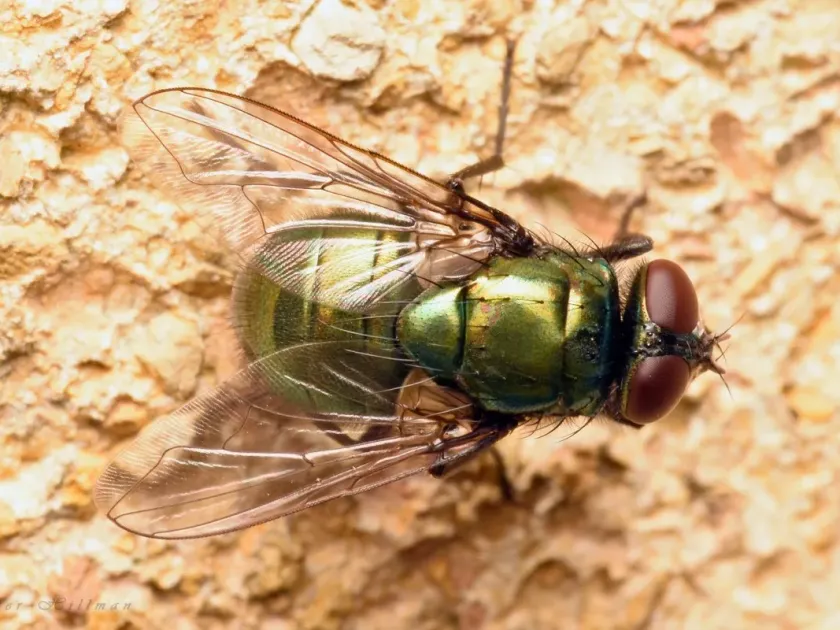
The green bottle fly (Neomyia laevifrons) belongs to the Muscidae family within the order Diptera. This insect is characterized by its brilliant metallic-green body, which makes it easily distinguishable from other fly species found in agricultural fields.
Adult flies measure approximately 6–8 millimeters in length. Males typically have closely set eyes, while females possess widely separated eyes, which serves as a reliable diagnostic feature for identification by entomologists.
The wings are transparent with a vein pattern typical of the Muscidae family. They possess a sponging-lapping mouthpart adapted for liquid food, while their larvae are equipped with strong mouth hooks designed for processing organic substrates.
This species is common in temperate zones, frequently found around pastures, fields, and livestock facilities. Its life cycle is intrinsically linked to the presence of decaying organic matter where the larvae develop.
Adults are active during daylight hours, preferring sunny areas. They act as both agricultural pests and mechanical vectors for various pathogens, contaminating plant surfaces with their waste products.
What it damages
The larvae of Neomyia laevifrons primarily develop in animal dung and decaying vegetable matter, but they can occasionally impact standing crops when population densities are high.
The main damage occurs when adult flies congregate on flowers and young shoots, depositing sticky excreta. This contamination creates a substrate for sooty molds and secondary bacterial infections that weaken the plant.
Vegetable crops and forage grasses grown near livestock sources are at the highest risk. Contaminated foliage suffers from reduced photosynthetic efficiency and diminished market quality, making the crops look unappealing.
Tissue damaged by secondary infections often develops rot, which can lead to significant yield losses. Weakened plants exhibit stunted growth and are more susceptible to further environmental stressors.
While the economic impact is often considered moderate, in greenhouse environments or during humid seasons, the population can spike, leading to noticeable economic damage to the produce.
When it appears
The flight of adults begins as soon as stable warm temperatures arrive in spring, typically in May. Peak activity is observed in June and July when environmental conditions for larval development are ideal.
The life cycle consists of the egg, three larval instars, pupa, and adult. Depending on ambient temperatures, the species can complete multiple generations within a single growing season.
Warm and humid weather accelerates the metabolic rates of larvae in the substrate, leading to a rapid increase in the adult population. Activity decreases as temperatures drop towards late summer and autumn.
Pupation occurs mainly in the soil or in the upper layer of organic refuse. Pupae are often capable of overwintering in sheltered locations, ensuring the population's survival for the following year.
The species is highly mobile, allowing adults to quickly colonize new fields or garden plots if suitable food sources or breeding sites, such as manure or decaying vegetation, are present nearby.
Signs of infestation
The primary indicator of an infestation is the presence of large numbers of shiny metallic-green flies on plants, especially during the morning hours.
Tiny dark spots left by the flies on leaves and stems are common signs. Over time, these spots may turn black due to the growth of fungal colonies feeding on the waste products.
The presence of large clusters of these flies around compost heaps, manure storage, or unharvested vegetable waste indicates a high risk for surrounding crops.
Wilting of terminal shoots and diseased inflorescences, often resulting from secondary bacterial infections transmitted by the flies, are clear evidence of the pest's activity.
A decline in the quality of fruits or flowers, characterized by discoloration, sticky films, or necrotic spots on petals, confirms the presence of Neomyia laevifrons.
Control measures
The most important control measure is strict sanitation: removing and properly composting organic waste far from agricultural fields to eliminate breeding sites.
Clearing crop residues immediately after harvest prevents the pest from accessing food and oviposition sites. Autumn plowing of the soil is effective in destroying overwintering pupae.
The use of sticky traps and insecticidal baits in areas of high fly concentration helps control adult populations without extensive use of broad-spectrum chemicals.
Biological control methods, including the use of entomopathogenic fungi or bacterial sprays, can significantly limit larval development in the substrate.
In cases of severe economic threshold breach, systemic insecticides may be necessary, but these should be applied cautiously, always observing pre-harvest intervals to ensure safety.
Taxonomy
- Latin name
- Neomyia laevifrons
- Order
- Diptera (flies)
- Family
- Muscidae
- EPPO code
- NMYILA
Discussion
No discussions yet — be the first.