
Green manure fly
Neomyia caesarion
Description
How to identify
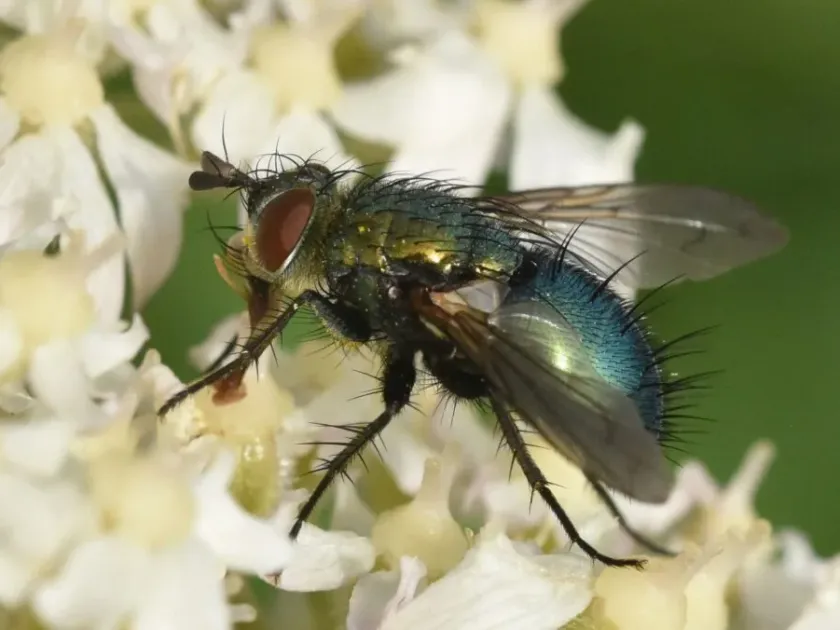
The green manure fly (Neomyia caesarion) is a member of the Muscidae family within the order Diptera. These flies are easily recognized by their brilliant metallic-green coloration and a body length ranging from 6 to 9 millimeters.
Adults possess distinct morphological features, with males having closely positioned eyes and females featuring a wider frons. Their bodies are covered in fine, sparse hairs, and they possess transparent wings with a subtle yellowish tint near the wing base.
The larval stage consists of cylindrical, legless maggots that typically reach about 10 millimeters in length. Their development is strictly tied to organic matter decomposition, and they are usually found in decaying material or manure piles.
The life cycle encompasses four developmental stages: egg, three larval instars, pupa, and adult. Under optimal warm weather conditions, the full cycle can be completed in just a few weeks, leading to multiple generations during the growing season.
Adults are highly mobile and are frequently observed around blooming vegetation, animal waste, and compost sites. Their activity peaks during sunny, warm days, which coincides with the maturation period of many vegetable crops.
What it damages
While not a primary consumer of healthy plant tissues, the green manure fly acts as a significant secondary pest. Its main impact on crops is due to the transfer of pathogenic bacteria and fungi to fruits and vegetables.
When flies deposit eggs on overripe or damaged fruit, the larvae begin to feed on the decomposing tissues. This feeding process facilitates the rapid entry of pathogens, which causes the fruit to rot quickly and renders it inedible.
The most vulnerable crops include tomatoes, cucumbers, and various squash varieties. The damage is often characterized by soft, water-soaked lesions that develop rapidly, eventually leading to the total collapse of the fruit structure.
The fly acts as a mechanical vector. As it traverses between livestock waste and fresh produce, it transfers microbes on its feet and body, effectively spreading diseases across the field or garden plots.
Economic damage is most severe in poorly managed agricultural environments where sanitation is neglected. High concentrations of manure near growing fields can lead to significant yield losses due to rot and bacterial infection.
Control measures
The most effective strategy for managing the green manure fly is strict agricultural sanitation. Removing decaying organic matter and managing compost piles correctly are essential to eliminate breeding sites.
Compost heaps should be covered properly to prevent access by adult flies, which significantly reduces the potential for population outbreaks. Cleanliness in storage and harvesting areas is equally important.
Sticky traps and bait stations can be utilized to monitor and reduce the number of adult flies in greenhouses or protected growing spaces. These tools provide a non-toxic way to manage populations.
Chemical control measures should be considered a last resort. If necessary, products approved for use on edible crops must be applied with strict adherence to pre-harvest intervals to ensure safety.
Biological controls and preventive cultural practices, such as crop rotation and maintaining soil health, help minimize the presence of these flies. Keeping fields free of weeds and debris prevents the creation of micro-environments favorable to the pest.
Taxonomy
- Latin name
- Neomyia caesarion
- Order
- Diptera (flies)
- Family
- Muscidae
- EPPO code
- ORTLCA
Discussion
No discussions yet — be the first.