
Squirrel louse
Neohaematopinus sciuri
Description
How to identify
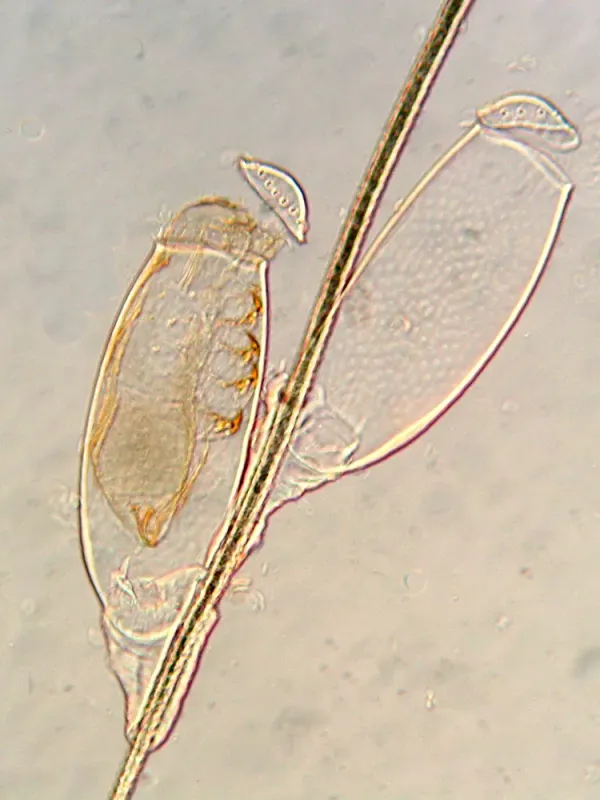
The squirrel louse, scientifically known as Neohaematopinus sciuri, is a highly specialized species of blood-sucking insect belonging to the order Phthiraptera, family Polyplacidae.
These insects have evolved a dorsoventrally flattened body shape, which allows them to move efficiently through the dense fur of their host, the common squirrel.
They are equipped with powerful, specialized claws on their legs, which are perfectly adapted for gripping individual hair shafts to prevent falling off during the host's activity.
Adult lice are relatively small, usually measuring around 2 millimeters, and typically exhibit a brownish-grey coloration that provides camouflage against the squirrel's underfur.
Being obligate parasites, they are wingless and spend their entire life cycle on the host, having lost the evolutionary need for flight or independent movement.
What it damages
Neohaematopinus sciuri is an obligate parasite specifically targeting species within the Sciuridae family, most notably the Eurasian red squirrel.
While this pest does not cause direct damage to agricultural crops, it represents a significant health concern for squirrel populations in zoos, wildlife rehabilitation centers, or fur farms.
Infestation primarily results in a deterioration of the animal's coat quality, which is particularly relevant in captive breeding and conservation management programs.
Besides the physical discomfort caused by blood feeding, these lice can contribute to the transmission of various pathogens, weakening the overall fitness of the host.
Heavy infestations force the squirrels to constantly scratch and bite their skin, leading to self-inflicted wounds that are highly prone to secondary bacterial infections.
When it appears
Lice activity is consistent throughout the year, as the host provides a stable, temperature-controlled environment within its fur for all stages of the insect's development.
The reproduction rate and the development of eggs, commonly known as nits, are accelerated by the body heat of the squirrel, which is maintained regardless of the external weather.
Infestation levels tend to rise during the winter months, when squirrels frequently huddle together in shared nests for warmth, facilitating the transmission of parasites between individuals.
During spring and summer, when squirrels undergo molting, the total population of lice on a single host may fluctuate slightly but generally remains stable.
The life cycle is relatively short, allowing for rapid population growth, which can lead to significant parasite loads on individual squirrels within a short period.
Signs of infestation
The primary clinical sign of a Neohaematopinus sciuri infestation is noticeable restlessness and an increase in grooming behavior, often accompanied by frequent scratching.
Close visual inspection of the animal's fur will reveal the presence of nits, which appear as tiny, pale, egg-like structures cemented firmly to the base of the hair shafts.
Affected skin areas often display signs of irritation, localized dermatitis, redness, and patchy fur loss due to the squirrel's attempts to alleviate persistent itching.
Severe infestations often lead to anemia, which can be identified by pale mucous membranes and an overall lackluster or lethargic appearance of the animal.
Prolonged parasite pressure compromises the squirrel's immune system, potentially making the host more susceptible to secondary parasitic or infectious diseases.
Control measures
Management of the squirrel louse is rarely required in wild populations, but it is a critical aspect of veterinary care in captive and laboratory environments.
Chemical control measures must be handled with caution, as squirrels are sensitive to many standard insecticides and require specifically formulated veterinary products.
- Application of safe, veterinarian-approved insecticidal powders or spot-on treatments.
- Rigorous cleaning and disinfection of cages, artificial nest boxes, and nesting materials.
- Quarantine procedures for all newly introduced or suspected infected squirrels.
- Maintaining high standards of hygiene and environmental enrichment to reduce stress.
A comprehensive approach focusing on individual animal health and clean housing is the most effective way to keep lice populations under control in captivity.
Taxonomy
- Latin name
- Neohaematopinus sciuri
- Family
- Polyplacidae
- EPPO code
- NHAESC
Discussion
No discussions yet — be the first.