
Rabbit louse
Haemodipsus ventricosus
Description
How to identify
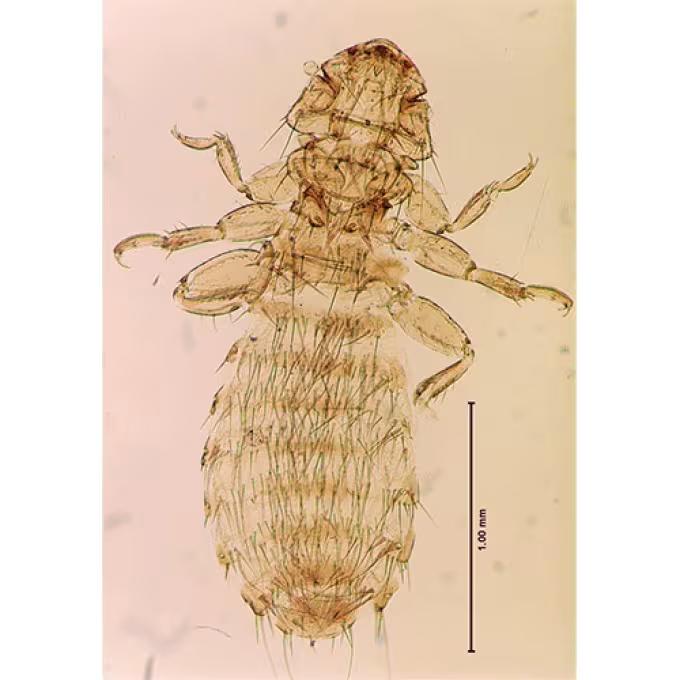
The rabbit louse (Haemodipsus ventricosus) is a small, wingless insect that acts as a specific parasite of rabbits and hares. It belongs to the order Phthiraptera and is a blood-sucking louse that spends its entire life cycle on the host.
The body of an adult louse is oval-shaped, flattened, and usually measures about 1.5 to 2 mm in length. Its color is generally yellowish-gray, allowing it to blend well with the rabbit's fur, making detection difficult during early stages of infestation.
These parasites possess specially adapted claws on their legs, which allow them to cling firmly to the hair shafts. This morphological adaptation makes them very difficult to remove simply by grooming or scratching.
The life cycle involves eggs (nits) being laid and cemented to the base of the hair. Each female can lay numerous eggs over her lifespan, leading to a rapid buildup of the louse population in crowded environments.
Haemodipsus ventricosus is host-specific, meaning it only infests rabbits. It does not survive for long periods away from the host, which is a key factor to consider when planning facility sanitation.
What it damages
The rabbit louse causes significant distress to both domestic and wild rabbits. By feeding on the host's blood, these parasites weaken the animals and lead to a decline in their overall health condition.
Heavy infestations lead to extreme itching and severe irritation of the skin. This results in the rabbit scratching itself constantly, which damages the fur quality and can lead to secondary skin infections or weeping sores.
A major concern is that the rabbit louse is a known vector for tularemia, a serious bacterial disease. The transmission of this pathogen through louse bites poses a high risk to animal welfare and potentially human health.
In young or stressed rabbits, high parasite loads can cause anemia. This is evidenced by pale mucous membranes and an overall failure to thrive, which is detrimental to the productivity of any rabbitry.
The economic impact of an unchecked louse infestation includes medical costs, decreased growth rates in kits, and loss of pelt quality, ultimately affecting the commercial viability of the rabbit farm.
Signs of infestation
Restlessness and persistent scratching are the primary indicators that a rabbit is infested with lice. The animal may show signs of frustration, rubbing against cage walls and twitching its ears frequently.
Visual observation often reveals nits, which appear as small, whitish or transparent egg capsules attached to the fur at the roots. They are most commonly found in the neck, behind the ears, and along the back.
The skin in infested areas may show redness, scabs, and signs of dermatitis. In severe cases, hair loss (alopecia) becomes noticeable, with the skin appearing inflamed and damaged due to excessive grooming and scratching.
A lack of appetite and lethargy in rabbits are behavioral signs that the parasite burden has reached a level that is significantly impacting the animal's physical comfort and metabolic health.
During the grooming process, observant breeders may notice that the rabbit's fur has lost its luster and appears matted or unkempt, despite the animal's attempts to clean itself.
Control measures
Control is achieved primarily through the application of veterinary-approved insecticides. Treatments are available in forms such as topical spot-ons, sprays, or dusting powders specifically formulated for lagomorphs.
Sanitation of the environment is essential for successful eradication. Cages, nesting boxes, and all shared equipment must be thoroughly cleaned and treated to ensure that surviving lice or eggs in the environment are neutralized.
- Isolate affected individuals to prevent the spread to the rest of the herd.
- Apply repeat treatments after 10–14 days to target newly hatched lice from the eggs.
- Maintain high standards of hygiene and reduce overcrowding in rabbit cages.
- Implement strict quarantine protocols for any new rabbits entering the colony.
Always consult with a veterinarian regarding the appropriate dosage and safety of products, as some ingredients found in general insect killers can be highly toxic to rabbits.
Preventative measures involve regular health checks and minimizing contact with wild rabbits, which are natural carriers of this species. Consistent vigilance is the best strategy for maintaining a parasite-free rabbitry.
Taxonomy
- Latin name
- Haemodipsus ventricosus
- Family
- Polyplacidae
- EPPO code
- HAEOVE
Discussion
No discussions yet — be the first.