
Rabbit louse
Haemodipsus
Description
How to identify
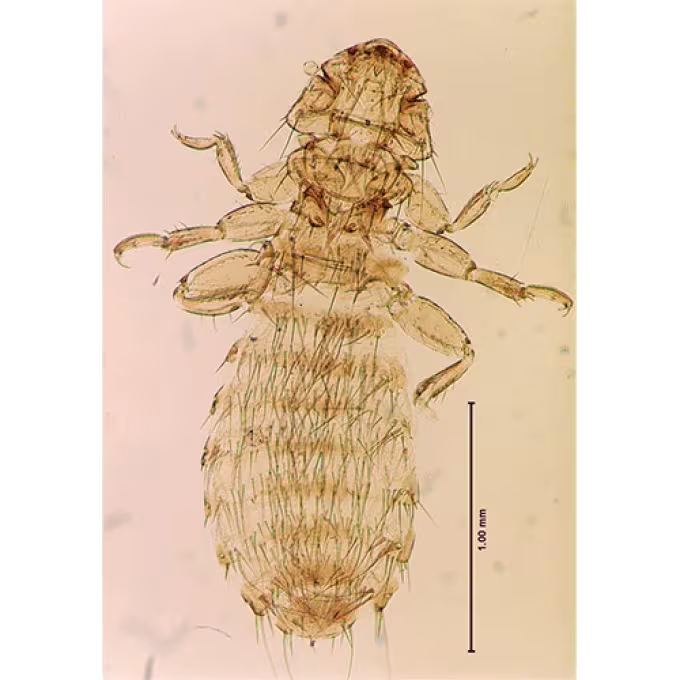
The rabbit louse (Haemodipsus ventricosus) is a host-specific ectoparasite belonging to the order Phthiraptera. It is commonly found on domestic and wild rabbits worldwide.
Adult lice are small, wingless insects, typically measuring 1.5 to 2.5 mm in length. Their bodies are dorsoventrally flattened, allowing them to move easily through the dense fur of the host.
They possess specialized mouthparts adapted for piercing the skin and feeding on the host's blood. Their legs are equipped with claws designed for gripping hair shafts securely.
The life cycle consists of three stages: egg, nymph, and adult. The female louse deposits its eggs (nits) on the hair, cementing them firmly to the base to ensure development.
These parasites are entirely dependent on their host for survival and cannot complete their life cycle away from the rabbit for more than a few days.
What it damages
Infestation with the rabbit louse, medically referred to as hematopinosis, can cause significant health issues for the animals, especially in intensive breeding operations.
The lice feed on blood, causing intense irritation and itching. This leads to persistent scratching, which often results in excoriations, secondary bacterial skin infections, and hair loss.
In young or debilitated rabbits, severe infestations can lead to anemia due to constant blood loss, causing lethargy and significantly impaired growth rates.
The stress caused by heavy infestations decreases the animal's immune response, making them more susceptible to other diseases and environmental stressors.
Furthermore, these lice act as vectors, potentially transmitting blood-borne diseases or viral infections, including myxomatosis, which poses a lethal threat to rabbit colonies.
When it appears
While rabbit lice can be present throughout the year, infestations are most prevalent during the colder months when rabbits are kept in crowded, poorly ventilated indoor conditions.
High humidity and moderate temperatures within the barn environment provide optimal conditions for the lice to thrive and multiply rapidly across the herd.
Transmission occurs primarily through direct physical contact between rabbits, or indirectly through contaminated grooming equipment and bedding material.
The generation time of the parasite is relatively short, allowing for population explosions in stable environments where sanitation is neglected or overcrowding is permitted.
During the warmer seasons, grooming behavior and potential changes in housing can sometimes lower the parasite burden, but the risk of reinfestation remains a constant concern.
Signs of infestation
Clinical signs often begin with noticeable changes in animal behavior. Rabbits may appear restless, constantly grooming, or rubbing themselves against cage surfaces.
Visual inspection of the fur reveals patches of hair thinning or breakage. White or yellowish nits (eggs) are frequently found attached to the hair near the skin, especially around the ears and neck.
The skin may appear inflamed, crusty, or reddened due to constant biting and scratching. In severe cases, matted fur with accumulation of debris and dried serum is common.
During a close physical examination, the lice themselves can be seen moving rapidly near the skin surface, particularly if the fur is parted in heavily affected areas.
- Increased scratching and restlessness.
- Patchy hair loss (alopecia) and matted fur.
- Visible nits attached to individual hair shafts.
- Redness, crusts, or sores on the skin surface.
- Visible presence of lice upon parting the coat.
Control measures
Effective management requires a regular health monitoring program. Once an infestation is confirmed, all rabbits in the colony should be treated to prevent spread.
Therapy involves the use of approved insecticides, such as fipronil-based sprays or spot-on treatments. It is critical to follow veterinary guidelines to ensure rabbit safety.
Thorough cleaning and disinfection of cages and equipment are essential steps. Since lice can survive for short periods in the environment, all bedding should be replaced.
Preventive measures include maintaining proper hygiene, avoiding overcrowding, and implementing a strict quarantine period for any new rabbits entering the facility.
Treatment must be repeated after an interval (usually 10–14 days) to kill any nymphs that have hatched from eggs present during the first application.
Taxonomy
- Latin name
- Haemodipsus
- Family
- Polyplacidae
- EPPO code
- HAEOSP
Discussion
No discussions yet — be the first.