
Chrysanthemum leaf miner
Nemorimyza maculosa
Description
How to identify
The chrysanthemum leaf miner (Nemorimyza maculosa) belongs to the Agromyzidae family of dipteran insects. It is a significant pest known for its cryptic lifestyle, which complicates detection in the early stages of infestation.
The adult is a small, dark-colored fly. While the adults feed on plant juices, the real damage is caused by the larvae, which are small, legless, and whitish-yellow, residing entirely inside the leaf tissue.
The life cycle encompasses several stages: egg, larva (three instars), pupa, and adult. Under ideal greenhouse conditions, this cycle can be very rapid, allowing for multiple generations to overlap during a single season.
Female flies use an ovipositor to insert eggs into the leaf mesophyll. This precise placement provides larvae with immediate access to food upon hatching, protecting them from many external environmental factors.
Because the larvae are shielded by the leaf epidermis, conventional contact insecticides are often ineffective, necessitating the use of specialized management strategies.
What it damages
This pest targets a wide range of hosts within the Asteraceae family, with chrysanthemums being the primary economic concern. Other ornamental crops such as gerberas, zinnias, and asters are also frequently infested.
In commercial ornamental production, the cosmetic damage caused by the mining activity renders cut flowers or pot plants unsaleable, leading to substantial financial losses for growers.
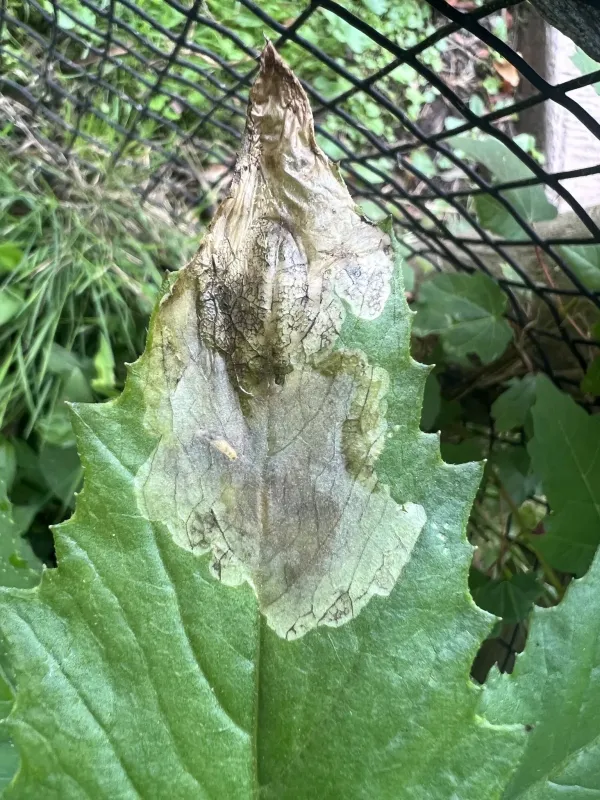
Larval feeding results in characteristic winding, serpentine mines that appear light or translucent initially and turn necrotic or brown as the leaf tissue dies off.
Heavy infestations reduce the plant's photosynthetic capacity, leading to stunted growth, premature leaf senescence, and reduced floral quality, which can eventually kill the plant if left unchecked.
The punctures made by adult flies and the tunnels created by larvae can serve as entry points for various bacterial and fungal pathogens, further compromising plant health.
When it appears
In greenhouses, the chrysanthemum leaf miner can reproduce year-round, as the environment provides the constant warmth and moisture necessary for continuous development.
Outdoor activity typically aligns with the growing season, peaking in warmer summer months when the developmental rate from egg to adult is at its fastest.
Temperature is the primary driver of the pest's population dynamics; higher temperatures shorten the generation time, which can create explosive population growth in a matter of weeks.
Dispersal between facilities or fields is often facilitated by the movement of infested plant material, such as cuttings or seedlings, which have not been thoroughly inspected for signs of early colonization.
Integrated pest management protocols require consistent monitoring, especially during the establishment phase of the crop, to identify the presence of adults before significant larval damage occurs.
Signs of infestation
The most diagnostic sign is the appearance of winding, pale-colored tracks (mines) on the leaves. As the larvae grow, these tunnels become broader and may eventually overlap, covering a large portion of the leaf surface.
Adult flies create tiny, round, white stippling marks on the foliage while feeding. These marks are often the first sign of an emerging problem and can be detected with regular scouting.
Close observation of the mines may reveal small, dark, granular spots; these are the frass (excrement) of the larvae deposited systematically as they move through the leaf tissue.
Severe infestations cause leaves to yellow and wilt prematurely, leading to a ragged appearance that significantly detracts from the plant's aesthetic value.
- Winding, serpentine tracks on leaf surfaces.
- Numerous tiny white feeding punctures.
- Premature yellowing and desiccation of foliage.
Control measures
Effective management begins with strict quarantine of new plant material. Inspection of cuttings for any signs of mining or stippling is essential to prevent entry into production areas.
Biological control using parasitoid wasps, such as Diglyphus isaea, is highly effective. These beneficial insects locate larvae inside the leaves and parasitize them, helping to keep populations below economic thresholds.
Chemical control should rely on systemic insecticides that translocate into the leaf tissue. It is crucial to rotate chemical modes of action to prevent the development of insecticide resistance, which is common in this species.
Cultural practices, such as the rapid removal and destruction of infested foliage, interrupt the life cycle and reduce the number of emerging adults.
Monitoring with yellow sticky traps is a vital tool for assessing adult fly density and timing the application of control interventions for maximum effectiveness.
Taxonomy
- Latin name
- Nemorimyza maculosa
- Order
- Diptera (flies)
- Family
- Agromyzidae
- EPPO code
- AMAZMA
Discussion
No discussions yet — be the first.