
Clover aphid
Nearctaphis bakeri
Description
How to identify
The clover aphid (Nearctaphis bakeri) is a member of the family Aphididae, characterized by its specific morphological traits and life cycle patterns.
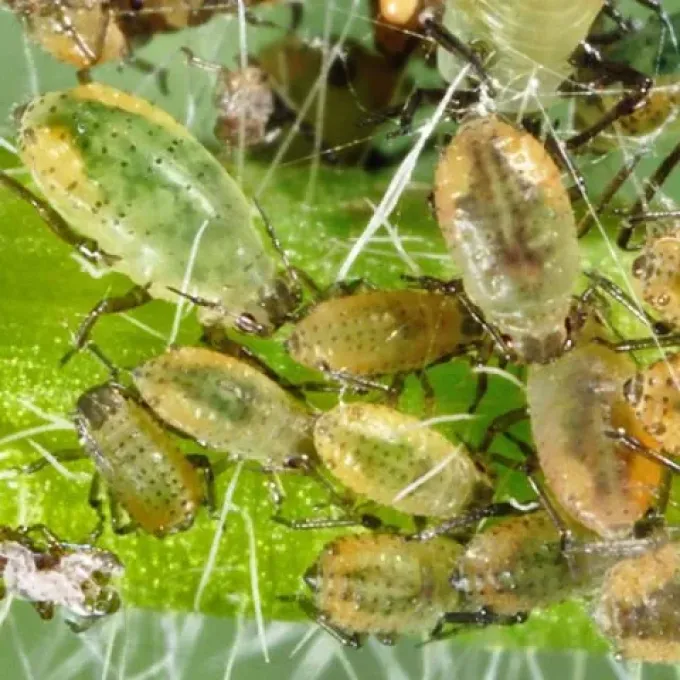
Adult aphids are small, typically ranging from 1.5 to 2 mm in length, with a body color that can shift between pale yellow and reddish-brown depending on the host plant.
Identification often relies on examining the siphunculi and the antennae structure, which are distinct enough for accurate diagnosis by agricultural scouts.
The species exhibits a cyclical parthenogenesis, where asexual reproduction during the summer allows for rapid population explosions in suitable environmental conditions.
Morphologically, both winged and wingless forms exist, with winged individuals playing a critical role in the dispersal across agricultural fields.
What it damages
This pest primary infests clover species (Trifolium), but it is also known to cause significant damage to other legumes like alfalfa and sweet clover.
By sucking phloem sap from the plant tissues, the aphid induces stunted growth and general decline in plant vigor, significantly reducing biomass yield.
Damage to the reproductive parts of the plant is particularly detrimental for seed production fields, leading to reduced seed set and lower harvest quality.
Heavy infestations not only drain nutrients from the host but also weaken the plants, making them more susceptible to drought and secondary infections.
The transmission of plant viruses remains a significant concern, as the aphid acts as a vector for various viral diseases that can destroy entire stands.
When it appears
The seasonal activity begins in early spring when eggs deposited on winter hosts hatch into stem mothers, starting the first generation of the season.
During the peak of the growing season, multiple generations overlap, allowing the population to reach damaging levels within a relatively short timeframe.
Hot and dry weather conditions in mid-summer are typically associated with rapid population growth, requiring vigilant monitoring of legume crops.
As temperatures decline in the autumn, the aphid produces sexual forms that mate and lay eggs, which serve as the overwintering stage for the population.
Effective management requires tracking the arrival of winged migrants, which often move from secondary hosts to clover fields as the season progresses.
Signs of infestation
Early symptoms of infestation include the curling and twisting of young leaves, which protects the colonies from environmental factors and natural predators.
The accumulation of honeydew on the leaves is a classic sign of infestation, often attracting ants and providing a medium for sooty mold to grow.
Sooty mold manifests as a black, dusty coating on foliage, which interferes with photosynthesis and further weakens the already stressed plants.
Visual inspection of the underside of leaves will reveal clusters of aphids, often accompanied by shed exuviae, which are white skins left after molting.
- Curled or deformed leaf tips.
- Presence of sticky honeydew residues.
- Growth of black sooty mold on surfaces.
- Stunted plant growth and reduced internode length.
- Increased ant activity around clover patches.
Control measures
Cultural control strategies include frequent mowing of the clover, which interrupts the life cycle and reduces the available food source for the colony.
Maintaining a balanced ecosystem that supports beneficial insects such as lady beetles, lacewings, and parasitic wasps is essential for natural suppression.
Field sanitation, including the removal of weeds and crop debris around field margins, helps to eliminate potential reservoirs for overwintering aphid eggs.
When populations exceed the economic threshold, systemic insecticides may be necessary to protect the crop, particularly in high-value seed production fields.
Integrated Pest Management (IPM) practices should be prioritized, focusing on scouting and precise timing of interventions to minimize chemical residues.
Taxonomy
- Latin name
- Nearctaphis bakeri
- Order
- Hemiptera (bugs, aphids, leafhoppers)
- Family
- Aphididae
- EPPO code
- NEARBA
Discussion
No discussions yet — be the first.