
Nearctaphis
Nearctaphis
Description
How to identify
Nearctaphis is a genus of aphids belonging to the family Aphididae. These insects are known for their association with various fruit-bearing trees, particularly within the Rosaceae family, where they act as significant plant pests.
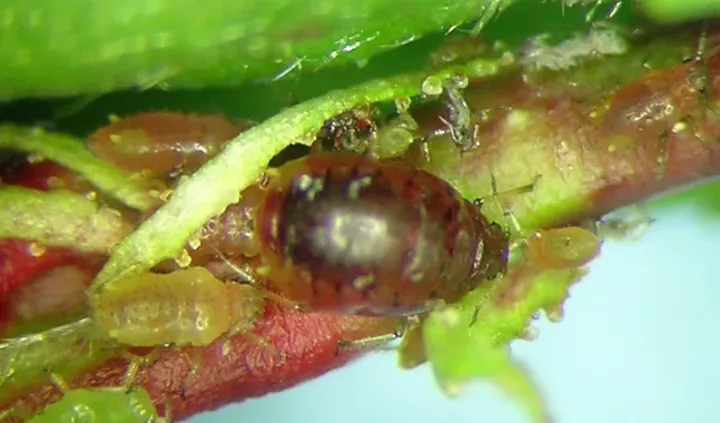
Adult aphids possess a characteristic pear-shaped body and a piercing-sucking mouthpart. Their coloration usually ranges from pale green to dark brown, providing effective camouflage against the bark and foliage of host plants.
The taxonomic classification places them within the order Hemiptera. Like many aphids, they exhibit complex life cycles involving both parthenogenetic reproduction during the growth season and sexual reproduction during autumn.
Reproductive success is highly dependent on environmental factors such as temperature and humidity, which influence the rate of development and the size of the aphid colonies on the host tree.
Their interaction with ants is a well-documented biological trait. Ants provide protection against predators in exchange for honeydew, a sugary substance secreted by the aphids during their feeding process.
What it damages
The primary host for Nearctaphis is the pear tree. Depending on the species and environmental conditions, they may also infest other related fruit trees, utilizing them as either primary or secondary hosts.
Damage is caused by the aphids extracting plant sap, which deprives the tree of essential nutrients. This feeding process leads to reduced plant vigor and can severely impact the tree's overall development.
The most visible damage is the deformation of leaves and shoots. Infested leaves often curl, turn yellow, and wither prematurely, which significantly reduces the photosynthetic area of the plant.
Fruit set and development are also negatively affected. The feeding activity can cause fruit malformation, premature drop, and a decrease in the overall market value of the harvested produce.
Furthermore, these aphids can transmit various plant viruses, causing systemic infections that weaken the tree's immune system and make it more susceptible to opportunistic fungal diseases.
When it appears
The pest survives the winter as eggs, which are deposited in the crevices of the tree bark or near the base of dormant buds. This strategy ensures the survival of the population through harsh winter conditions.
In the spring, as buds begin to swell and open, the overwintering eggs hatch into fundatrices (stem mothers). These individuals start feeding on the young tissues, initiating the rapid growth of the spring colony.
Summer is characterized by multiple generations, with population numbers peaking in late spring and early summer. Ideal temperatures allow for high reproductive rates, enabling the colony to spread rapidly.
As the season progresses toward autumn, sexual forms emerge. These individuals mate, and the females lay the eggs that will persist through the winter, completing the annual cycle.
Signs of infestation
Visible curling and twisting of young leaves at the tips of shoots are early indicators of an infestation. If leaves are folded back, colonies of aphids are typically found inside.
The presence of honeydew—a sticky, shiny substance on the leaf surfaces—is a clear sign of aphid activity. This secretion often leads to the growth of black sooty mold on the foliage.
A high density of ants patrolling the tree branches is a common indirect sign of aphid presence, as ants tend and defend these colonies for the honeydew harvest.
Stunted growth of new shoots and the premature yellowing or wilting of leaves during the growing season are indicative of severe infestation levels that require immediate attention.
Fruit malformation and unexpected fruit drop are also significant symptoms, often appearing after the pest has been active for several weeks on the developing reproductive organs.
Control measures
Cultural control measures, such as the pruning and removal of heavily infested shoots, are highly effective in limiting the spread of the pest during the early stages of infestation.
Encouraging the presence of natural predators like ladybugs, lacewings, and hoverflies can help keep aphid populations below the economic injury level without the use of chemical intervention.
When necessary, systemic insecticides may be applied. These should be used judiciously, following integrated pest management guidelines to minimize the impact on non-target beneficial insects.
Horticultural oils or insecticidal soaps can be used as a mechanical control method. These substances work by suffocating the aphids on contact and are generally safer for the environment.
Regular monitoring using yellow sticky traps is recommended for orchards. This allows for the timely detection of winged migrants and helps determine the optimal timing for protective applications.
Taxonomy
- Latin name
- Nearctaphis
- Order
- Hemiptera (bugs, aphids, leafhoppers)
- Family
- Aphididae
- EPPO code
- NEARSP
Discussion
No discussions yet — be the first.