
Nasonovia
Nasonovia
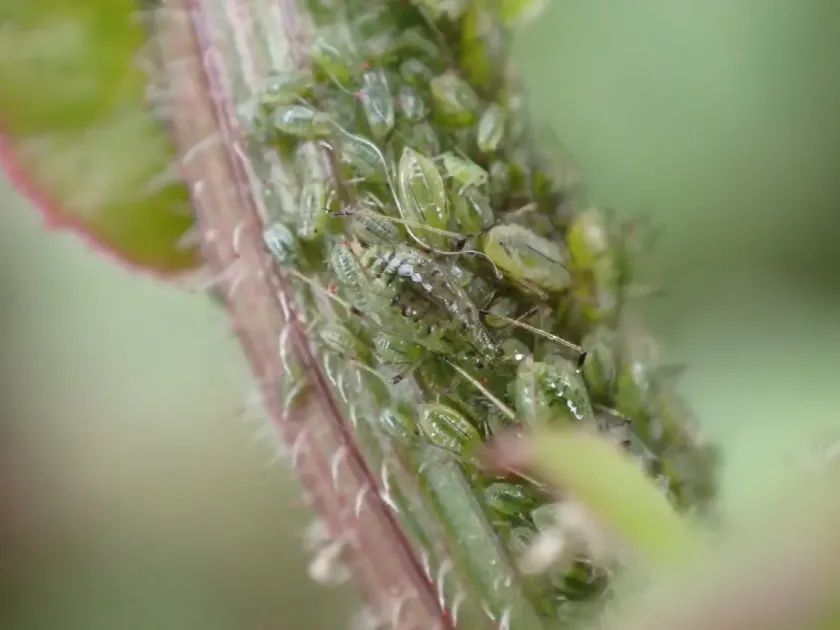
Description
How to identify
Nasonovia ribisnigri, commonly known as the lettuce aphid, is a significant member of the Aphididae family, distinguished by its rapid reproduction rate.
The adult aphids are typically 1.5 to 2.5 mm long, ranging in color from yellowish-green to deep green, with dark markings on the abdomen and long, characteristic antennae.
This species is highly mobile, with winged forms capable of migrating over large distances to locate suitable host plants for colonization.
The life cycle involves an alternation of hosts, typically overwintering on currants and migrating to lettuce and other Asteraceae during the spring months.
Microscopic examination of the cornicles and cauda is often required for precise taxonomic identification compared to other common aphid species found on vegetables.
What it damages
Lettuce is the primary target for this pest, as the aphids colonize the heart and inner leaves of the plant, making physical inspection or chemical control very difficult.
By feeding on the plant sap, these aphids cause severe stunted growth, leaf deformation, and a reduction in the overall head quality of the lettuce.
Beyond direct damage, Nasonovia ribisnigri is a known vector for various plant viruses, most notably the Lettuce Mosaic Virus, which can lead to total crop loss.
The accumulation of honeydew on the leaves supports the growth of sooty mold, rendering the foliage unmarketable for fresh consumption or processing.
High infestation levels lead to complete yellowing and necrosis of the younger leaves, which effectively destroys the commercial value of the crop.
When it appears
The migration from primary hosts to lettuce usually begins in late spring, triggered by rising temperatures and the development of favorable host plant stages.
Population density peaks during mid-summer, when the warm and dry conditions allow for multiple reproductive cycles in a short window of time.
As daylight hours decrease in autumn, the aphids begin their return migration to overwintering woody hosts to deposit eggs for the next season.
In controlled greenhouse environments, the seasonal cycle is often disrupted, allowing the aphid to thrive year-round if temperature and light are managed.
Weather patterns significantly influence the timing of migration, and monitoring local temperatures is essential for predicting the onset of potential outbreaks.
Signs of infestation
The most distinctive sign of a Nasonovia infestation is the curling and distortion of leaves in the center of the lettuce head where aphids hide.
Visible stickiness on the leaves due to honeydew secretion and the subsequent appearance of black sooty mold are classic symptoms of a severe infestation.
The presence of ant activity around the plants often indicates the presence of aphid colonies, as ants farm aphids to feed on their sugary secretions.
A closer inspection of the undersides of the leaves near the plant center will usually reveal crowded colonies of aphids during the early morning hours.
Overall decline in plant vigor, leaf chlorosis, and the failure of lettuce heads to firm up are strong indicators that the crop is being heavily attacked.
Control measures
Breeding and utilizing aphid-resistant lettuce varieties is the most effective long-term strategy for managing Nasonovia ribisnigri infestations.
Biological control agents, such as predatory lady beetles, hoverfly larvae, and parasitic wasps like Aphidius species, play a crucial role in suppressing populations.
Chemical control should be used judiciously, focusing on systemic insecticides early in the season, while strictly adhering to safety intervals before harvest.
- Implementing crop rotation to break the aphid life cycle.
- Using fine-mesh insect screens in greenhouses to prevent colonization.
- Yellow sticky traps for monitoring population spikes and migration waves.
- Sanitation by removing weeds that serve as alternative hosts near fields.
Cultural practices, such as optimizing fertilization to avoid overly succulent growth, can also make the plants less attractive to incoming aphids.
Taxonomy
- Latin name
- Nasonovia
- Order
- Hemiptera (bugs, aphids, leafhoppers)
- Family
- Aphididae
- EPPO code
- NASOSP
Discussion
No discussions yet — be the first.