
Chicory leaf miner
Napomyza cichorii
Description
How to identify
The chicory leaf miner (Napomyza cichorii) is a small dipteran insect belonging to the family Agromyzidae. Adult flies are typically very small, often measuring only a few millimeters, with dark-colored bodies that help them blend into their surroundings.
The larval stage of this pest is the most significant in terms of damage. Larvae are legless, maggot-like, and spend their entire developmental period mining the inner tissues of the leaves of host plants.
These insects are well-adapted to their niche. They utilize specific host plants to complete their life cycle, which can involve several generations per year depending on environmental temperature and humidity.
Adult females use a specialized ovipositor to pierce the surface of the leaf and deposit eggs within the parenchyma layer. This ensures that the newly hatched larvae have an immediate food source available.
Pupation generally occurs either inside the leaf mine or within the soil. This diversity in pupation sites is a survival strategy that allows the species to persist under varying agricultural conditions.
What it damages
This pest primarily attacks chicory and other related plants within the Asteraceae family. The damage is caused by the larval feeding habit, which involves creating winding tunnels, or mines, inside the leaf structure.
By consuming the photosynthetic tissue (parenchyma), the larvae reduce the plant's ability to produce energy. This leads to stunted growth, loss of vigor, and can significantly decrease total biomass and final yield.
In cases of heavy infestation, the leaves become severely yellowed and may die prematurely. This is particularly devastating for young seedlings, which may not recover from extensive leaf tissue loss.
Beyond direct damage, the mining tunnels create entry points for secondary infections. Pathogens such as fungi and bacteria can easily penetrate these damaged areas, leading to further decay of the foliage.
For root-producing varieties, severe leaf damage interrupts the transport of nutrients to the roots. This negatively impacts both the size and the chemical composition of the harvested product.
Signs of infestation
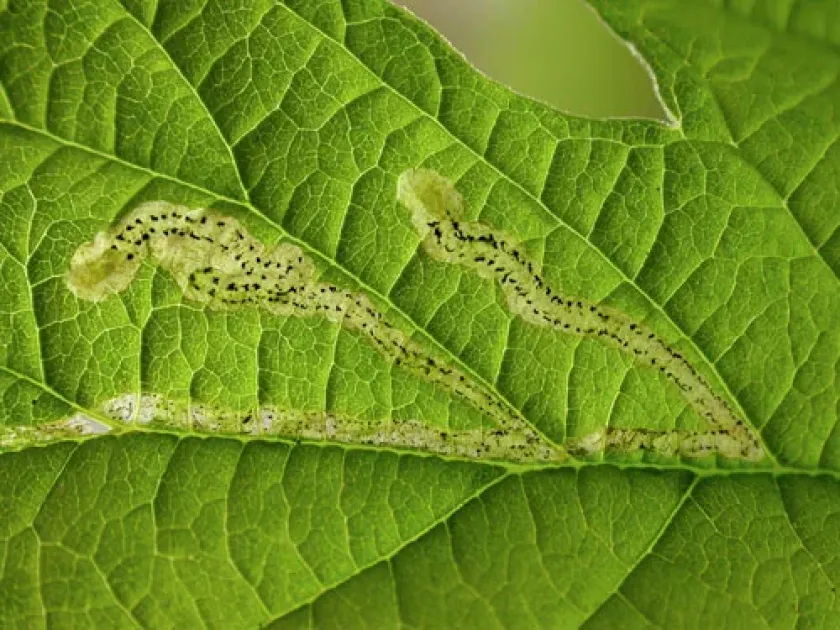
The most visible sign of an infestation is the appearance of winding, pale-colored tracks on the surface of the leaves. As the larva grows, these tunnels become wider and more apparent.
Inside the tunnels, it is common to find fine, dark-colored fecal deposits arranged in a linear pattern. These deposits are a key diagnostic feature distinguishing leaf miner activity from other types of leaf damage.
Affected plants often show signs of general stress, such as wilting, drooping, and leaf curling. In the early stages, look for tiny white spots on the leaf surface, which represent the initial entry sites made by the female fly.
Frequent scouting of the fields is essential to detect the pest early. Focus on the lower and middle canopy levels where humidity is higher and infestations are most likely to begin.
- Winding, light-colored mines on leaf surfaces.
- Linear arrangements of dark frass inside the tunnels.
- Premature yellowing and drying of the leaf foliage.
- Leaf deformation and reduced photosynthetic activity.
- Presence of pupae inside the mines or in the surrounding soil.
Control measures
Effective management begins with strict crop rotation. Avoiding planting chicory in the same soil for consecutive years helps to break the life cycle of the pest by removing the host source.
Sanitation is equally critical. Removing weeds, especially those related to the Asteraceae family, from field edges and surrounding areas significantly reduces the alternative host population available for the pest.
Physical barriers like row covers can be very effective in protecting young crops from adult flies, preventing the initial deposition of eggs during the critical early growth stages.
Chemical control should rely on systemic insecticides that can penetrate the leaf tissue to reach the larvae living inside the mines. Treatment should be applied based on local scouting and economic thresholds.
Implementing monitoring systems, such as yellow sticky traps, helps to track the population density of adult flies. This data is essential for timing the application of control measures effectively.
Taxonomy
- Latin name
- Napomyza cichorii
- Order
- Diptera (flies)
- Family
- Agromyzidae
- EPPO code
- NAPOCI
Discussion
No discussions yet — be the first.