
Napomyza
Napomyza
Description
How to identify
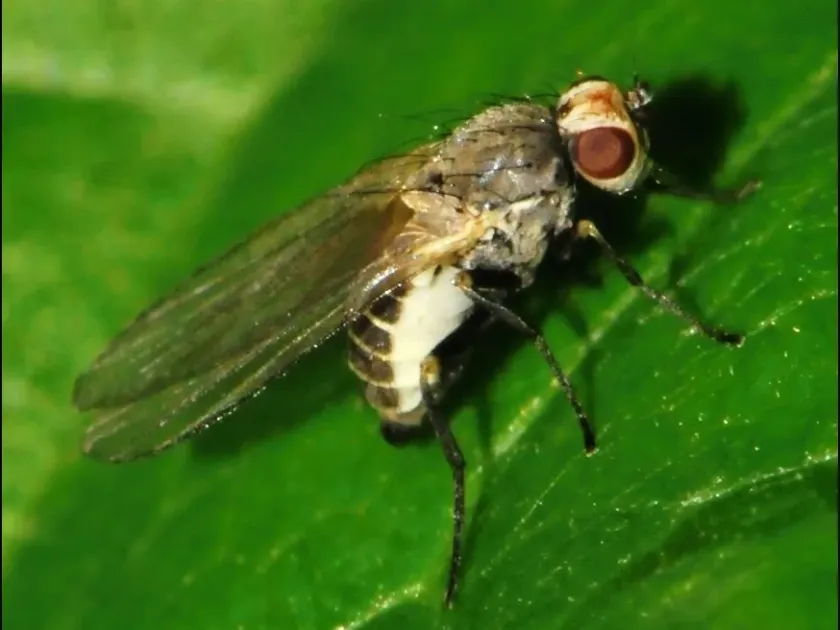
Napomyza is a genus of leaf-mining flies belonging to the Agromyzidae family. These are tiny insects, typically measuring between 1.5 to 3 mm in length, often characterized by dark, metallic, or blackish coloration.
Adult flies are active during the day. They possess transparent wings with a distinct venation pattern, which is a key diagnostic feature for entomologists when identifying members of the Agromyzidae family.
The larvae of Napomyza are maggot-like, legless, and lack a distinct head capsule. They spend their entire larval stage inside the host plant tissues, which provides them protection from many external predators and environmental stressors.
The life cycle typically consists of four stages: egg, three larval instars, puparium, and adult. They often overwinter as pupae buried in the soil or within the dry stalks of the host plant.
Distinguishing Napomyza from other leaf miners often requires microscopic examination of the adult genitalia or the specific feeding patterns left by the larvae in the plant foliage.
What it damages
Napomyza larvae are primary pests of various agricultural and ornamental crops. They demonstrate a preference for hosts within the Asteraceae and Poaceae families, causing significant economic damage.
The damage is caused primarily by the larvae, which consume the leaf mesophyll, creating narrow, meandering tunnels known as mines. These mines disrupt the photosynthetic capacity of the leaves, weakening the plant.
Adult females contribute to the damage by using their ovipositors to puncture the leaf surface to lay eggs or feed on the plant sap. These puncture wounds can cause localized cell death and serve as entry points for bacterial or fungal infections.
High levels of infestation result in premature leaf drop and stunted plant growth. This reduction in the leaf area directly correlates with decreased crop yield and poor quality of the harvested produce.
In cases of severe infestation, the integrity of the stem or petiole may also be compromised, leading to structural instability of the plant, which makes it more susceptible to lodging during adverse weather.
When it appears
The activity of Napomyza is highly dependent on temperature and seasonal weather patterns. The emergence of overwintering adults usually starts in early spring as temperatures rise above +12°C.
Depending on the climatic zone, Napomyza can produce multiple generations per year. The duration of each generation varies, typically accelerating during the warmer summer months.
The peak of larval activity usually coincides with the vegetative growth stages of the crops. During this time, the plant leaves are tender and contain sufficient nutrients for rapid larval development.
Late summer generations prepare for diapause as daylight hours decrease and temperatures begin to drop. This preparation involves finding suitable locations for pupation, such as the soil surface or plant debris.
Environmental conditions such as excessive moisture or drought can affect the population density of the pest, with prolonged dry spells potentially reducing the survival rate of the early larval instars.
Signs of infestation
The most visible sign of Napomyza infestation is the presence of winding, pale-colored mines on the leaves. These tracks contrast sharply with the green tissue of the leaf blade.
Tiny necrotic spots appear on the leaves where adult flies have fed or deposited eggs. As these spots accumulate, they cause the leaf to lose its uniform color and eventually turn yellow or brown.
The tunnels often contain dark, fragmented lines consisting of larval excrement (frass). This is a reliable diagnostic feature that helps differentiate Napomyza mines from other types of leaf damage.
- Winding, silvery trails across the leaf surface.
- Yellowing and necrosis of the leaf blades.
- Premature dropping of leaves during the peak growth phase.
- Leaf deformation and shriveling due to heavy mining.
- Multiple tiny punctures visible on the upper leaf epidermis.
Control measures
Cultural control is the first line of defense against Napomyza. Implementing a strict crop rotation schedule prevents the build-up of populations by disrupting the life cycle of the pest.
Deep plowing in the autumn is a highly effective method to bury the puparia deep into the soil. This prevents the emerging adults from reaching the surface in the following spring.
Weed management is essential, as many common weeds serve as alternative hosts for the fly. Eliminating these plants from field margins helps maintain low population levels throughout the season.
When chemical intervention is necessary, systemic insecticides are the most effective. Because larvae live inside the leaf, contact sprays have limited success, whereas systemic products ensure the toxin reaches the pest through the plant sap.
Biological control methods involve the use of parasitoid wasps that specifically target Napomyza larvae. Preserving these natural enemies by minimizing the use of broad-spectrum pesticides is a key strategy in sustainable farming.
Taxonomy
- Latin name
- Napomyza
- Order
- Diptera (flies)
- Family
- Agromyzidae
- EPPO code
- NAPOSP
Discussion
No discussions yet — be the first.