
Nagelus nematode
Nagelus obscurus
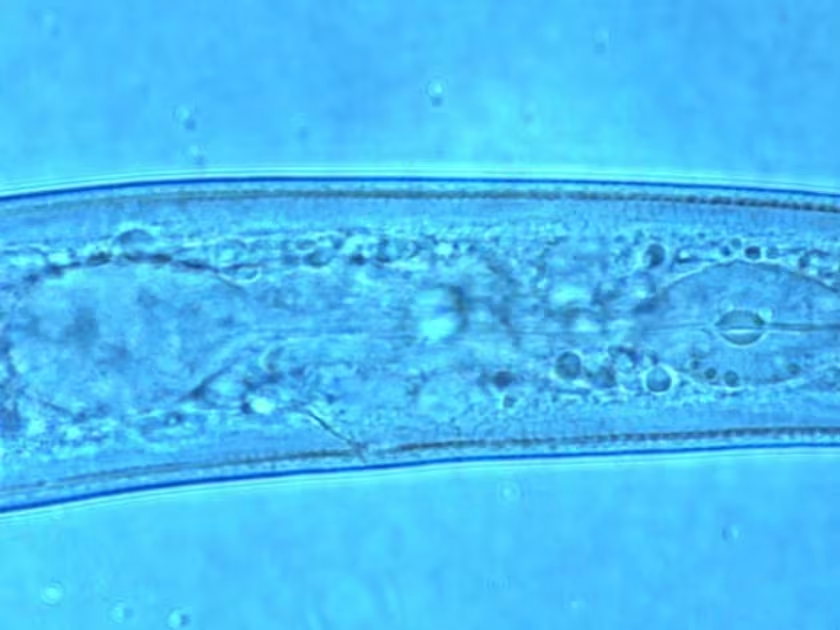
Description
How to identify
The Nagelus obscurus nematode, formerly classified under the Tylenchorhynchus genus, is a microscopic plant-parasitic nematode belonging to the order Tylenchida. It is primarily a root-ectoparasite, meaning it feeds on the outside of plant roots.
These organisms are very small, typically ranging from 0.6 to 0.9 mm in length, and possess a slender, worm-like body. Their most notable morphological feature is a sclerotized stylet used for piercing and feeding on epidermal cells of root systems.
Identification requires specialized laboratory techniques, such as the Baermann funnel method or sugar centrifugal flotation, to extract the nematodes from soil samples and confirm their taxonomic identity under a microscope.
They thrive in well-aerated, light-textured soils. Their distribution within a field is usually aggregated, reflecting their slow migration patterns through the soil pore water.
As ectoparasites, they do not enter the root tissue fully, which allows them to move between different roots and continue feeding, making them highly efficient at damaging multiple root sections of the same host plant.
What it damages
The host range of Nagelus obscurus is vast, encompassing a wide array of agricultural crops including cereals like wheat, barley, and oats, as well as various perennial grasses used in turf and forage production.
The damage is primarily inflicted on the root hairs and tips, causing the cessation of lateral root formation and overall inhibition of the root system's ability to uptake water and nutrients.
While the direct damage involves mechanical wounding, the biological impact includes an increased vulnerability of the plant to environmental stressors like drought and secondary pathogen infections.
The combined effect of nematode feeding and subsequent root rot infections often leads to uneven field emergence, stunted plant growth, and a reduction in both grain quality and overall yield.
In high-density populations, the cumulative damage can result in significant economic loss, particularly in cereal crops where the root system health is critical for tillering and ear development.
Signs of infestation
The most common sign in the field is the occurrence of patchy growth patterns, where affected areas appear chlorotic and exhibit significant stunting compared to the rest of the crop.
Upon physical examination of the roots, one may observe symptoms such as shortened, thickened, or darkened root tips, often lacking the typical dense network of fine root hairs found in healthy plants.
Plants suffering from heavy infestation show signs of general nutrient deficiency and wilting, especially during periods of water stress or high temperatures, even when soil moisture seems adequate.
Reduction in the number of fertile tillers and smaller grain size are typical late-season indicators that the crop's physiological development was hindered by root-zone damage earlier in the cycle.
Because these symptoms can mimic soil fertility problems or other root-borne diseases, precise diagnosis requires soil and root sampling for professional laboratory analysis.
Control measures
The primary control strategy is the implementation of integrated pest management (IPM) practices, emphasizing crop rotation with non-host species to disrupt the nematode life cycle.
Cultural practices, such as maintaining optimal soil fertility and avoiding moisture stress, help plants tolerate low-to-moderate nematode populations through increased vigor.
Thorough weed control is essential, as many common field weeds can serve as alternative hosts, maintaining the nematode population even when the primary crop is absent.
The use of nematicides is generally reserved for cases of severe infestation, given their potential environmental impact and high cost, making biological alternatives increasingly popular.
Biological control agents, particularly nematophagous fungi like Arthrobotrys oligospora, are being explored for their ability to naturally suppress populations of parasitic nematodes in the soil environment.
Taxonomy
- Latin name
- Nagelus obscurus
- Order
- Nematodes
- Family
- Dolichodoridae
- EPPO code
- NAGEOB
Discussion
No discussions yet — be the first.