
Sting nematode
Belonolaimus longicaudatus
Description
How to identify
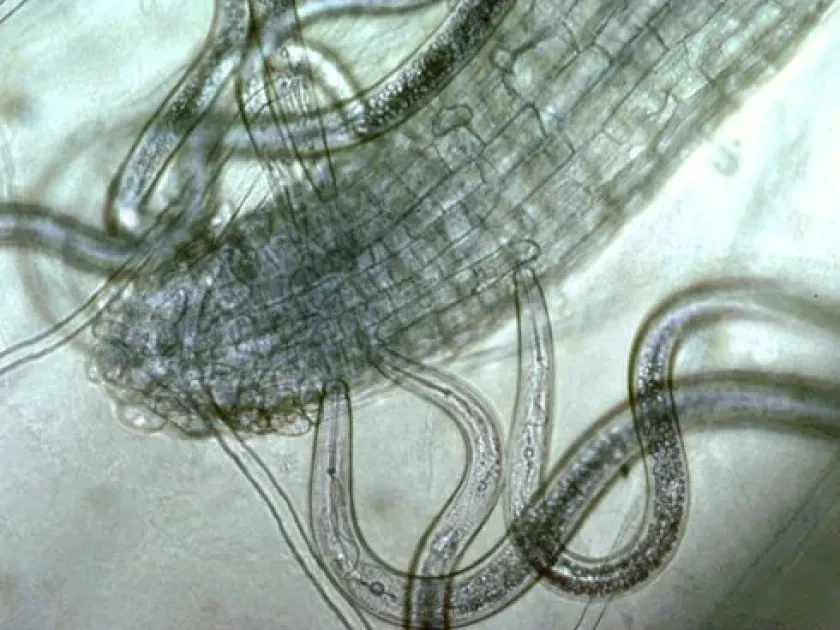
The sting nematode, scientifically known as Belonolaimus longicaudatus, belongs to the family Belonolaimidae. It is a highly specialized ectoparasite that feeds on the roots of plants from the exterior.
The adult nematode is relatively long, reaching approximately 2 to 3 millimeters, which makes it one of the largest plant-parasitic nematodes. It possesses a very long, needle-like stylet used to penetrate deep into root tissues.
This species is highly dependent on soil texture and thrives in sandy soils with low clay content. The physical properties of sand allow these nematodes to move rapidly in search of suitable root systems.
The life cycle involves multiple developmental stages. Eggs are deposited in the soil near the host plant, and juveniles emerge to begin feeding immediately upon locating a compatible root tip.
Environmental factors such as moisture and temperature significantly influence their activity. They are most active during the growing season when soil temperatures favor root metabolism and nematode movement.
What it damages
Belonolaimus longicaudatus is an extreme polyphagous pest, meaning it attacks a vast range of plants. It causes severe damage to vegetables, strawberries, turfgrasses, corn, and various fruit trees.
The feeding mechanism involves the insertion of the stylet into root cells to inject digestive enzymes. This process causes immediate cell death and necrosis of the root tip meristem.
Plants infested with sting nematodes exhibit signs of nutrient and water deficiency. Because the root tips are destroyed, the plant cannot absorb sufficient water to survive transpiration demands, leading to wilting.
In addition to direct damage, the feeding wounds create pathways for secondary pathogens. Fungal and bacterial infections often exploit these wounds, leading to root rot and premature plant death.
If not managed, sting nematode populations can cause complete crop failure in localized areas, particularly in agricultural lands characterized by light, sandy soils.
Signs of infestation
Above-ground symptoms typically manifest as stunting, chlorosis, and wilting. Plants may appear uneven across a field, creating irregular patterns of stunted growth.
The root system is the most diagnostic indicator. Roots appear stunted, stubby, and often exhibit necrotic lesions. The lack of lateral root development gives the main root a coarse appearance.
In turfgrass, infestation often results in patches of thinning or dead grass that may be mistaken for drought stress, but the damage persists even after intensive irrigation.
Early-season emergence of crops is often poor in infested soils. Seedlings may die shortly after germination as the nematodes focus their feeding on the tender, developing root radicles.
Verification of the presence of Belonolaimus longicaudatus requires professional laboratory diagnostics involving soil sampling and microscopic extraction of the specimens from root-zone soil.
Control measures
Managing the sting nematode requires an integrated pest management (IPM) approach. The primary challenge is the nematode's ability to live deep in the soil and move between soil layers.
Crop rotation with non-host species is a vital strategy, although the wide host range of this pest can make finding suitable rotation partners quite difficult in some regions.
- Use of soil fumigants prior to planting to reduce population levels in high-risk areas.
- Sanitation protocols to ensure that machinery does not transport contaminated soil between fields.
- Monitoring soil nematode density to make informed decisions regarding pre-plant treatments.
- Enhancing plant vigor through balanced fertilization and appropriate irrigation management.
Biological controls, including beneficial microbes and nematode-trapping fungi, are being researched and utilized as part of sustainable management programs to suppress nematode populations.
Weed control is also essential, as many common weeds can serve as alternate hosts, allowing the sting nematode population to survive and multiply even in the absence of a primary crop.
Taxonomy
- Latin name
- Belonolaimus longicaudatus
- Order
- Nematodes
- Family
- Dolichodoridae
- EPPO code
- BELOLO
Discussion
No discussions yet — be the first.