
False root-knot nematode
Nacobbus dorsalis
Description
How to identify
The false root-knot nematode Nacobbus dorsalis is a member of the order Tylenchida and the family Pratylenchidae. It is a highly specialized plant-parasitic nematode known for causing significant damage to the roots of various host crops.
Unlike common root-knot nematodes, this species exhibits a complex migratory behavior. Both larvae and adult females are capable of moving through the soil and within plant tissues, making its management and localization particularly challenging.
This organism is considered a serious quarantine pest in many parts of the world. Its ability to spread through infested soil, farm machinery, and planting material necessitates strict regulatory oversight and phytosanitary measures.
Morphologically, the nematode utilizes a well-developed stylet to penetrate host cell walls. This allows it to establish feeding sites that disrupt normal root physiology and lead to the development of characteristic galls.
The lifecycle of Nacobbus dorsalis is highly responsive to environmental factors, specifically soil temperature and moisture, which dictate the pace of its development and the intensity of its attack on plant roots throughout the growing season.
What it damages
The host range of this pest is quite broad, including major economic crops such as tomatoes, peppers, potatoes, sugar beets, and several species of legumes that are vital for agricultural productivity.
Once inside the roots, the nematode induces the formation of galls. These structures restrict the uptake of water and essential nutrients, leading to physiological stress that manifests as stunted growth and reduced crop yields.
Beyond direct damage, the mechanical injury caused by the nematode creates entry points for various soil-borne pathogens. This leads to secondary infections by bacteria and fungi, causing root rot and systemic wilting.
Economic losses are severe, especially in monocultural farming systems where the population density of the nematode can reach extremely high levels if left unchecked by agricultural practices.
- Severe stunting and yellowing of the foliage.
- Wilting of plants during the warmest parts of the day.
- Distorted and misshapen roots or tubers.
- Overall decline in plant vigor and biomass.
- Significant reduction in both quantity and quality of marketable produce.
Signs of infestation
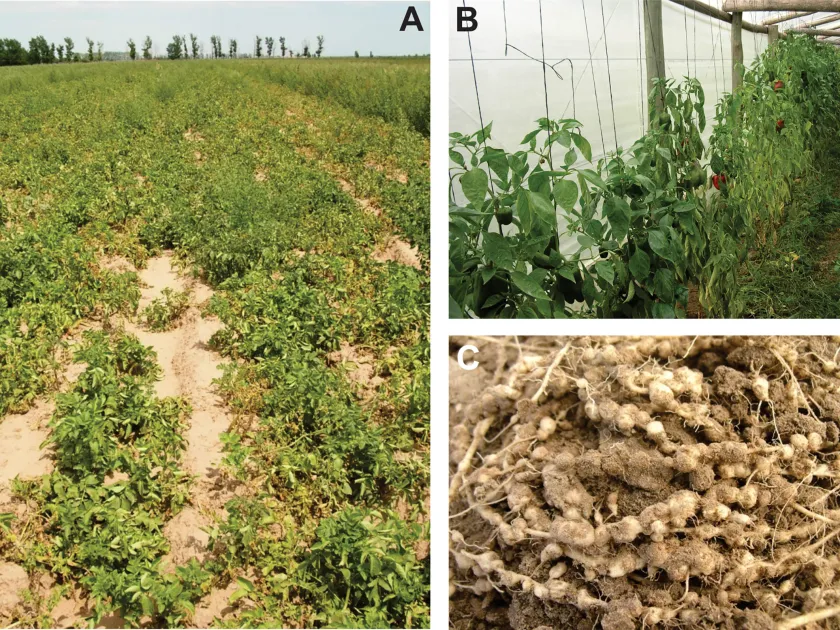
The most visible sign of infestation is the development of irregular, knot-like galls on the root system. These often appear more distorted compared to the damage caused by other gall-forming nematode species.
Above-ground symptoms resemble mineral nutrient deficiencies or chronic drought stress. Plants may appear chlorotic and exhibit poor development even under optimal irrigation conditions due to damaged root vascular tissue.
In greenhouse environments, infestation typically manifests as localized patches of sick plants that progressively expand over time, often following the flow of irrigation water or the movement of contaminated soil.
Necrotic tissue is frequently observed within the gall zones upon closer inspection, indicating a combination of feeding damage and colonization by secondary micro-organisms that worsen the plant's health.
Definitive identification of Nacobbus dorsalis requires a laboratory diagnostic procedure, including soil sampling and morphological or molecular analysis of the extracted nematode specimens.
Control measures
Preventative measures are the most critical component of management. This includes enforcing quarantine regulations to prevent the movement of infested soil or plant materials from known endemic regions.
Crop rotation remains a fundamental agricultural strategy. Incorporating non-host crops or trap crops into the rotation cycle can effectively reduce the nematode population density in the soil over time.
The breeding and deployment of resistant crop cultivars provide the most sustainable long-term solution, reducing reliance on chemical inputs and ensuring better yields in regions prone to infestation.
Integrated Pest Management (IPM) practices, including solarization of the soil and the application of biological control agents like nematophagous fungi, offer effective alternatives for greenhouse and small-scale field cultivation.
Chemical control using nematicides should be used only as a last resort and under strict adherence to safety regulations, given the environmental risks associated with these potent chemical substances.
Taxonomy
- Latin name
- Nacobbus dorsalis
- Order
- Nematodes
- Family
- Pratylenchidae
- EPPO code
- NACODO
Discussion
No discussions yet — be the first.