
False root-knot nematode
Nacobbus aberrans
Description
How to identify
The false root-knot nematode (Nacobbus aberrans) is a member of the family Pratylenchidae. It is a highly destructive endoparasitic nematode known for its wide host range and significant economic impact.
The nematode undergoes a complex life cycle, with juveniles in the second stage being the most mobile and infectious form, moving through soil water to reach new roots.
Adult females exhibit a sedentary lifestyle inside the plant tissue, where they swell and become pear-shaped, creating specialized feeding sites within the host's vascular system.
This species is considered a quarantine pest in many regions, as it is easily transported through contaminated soil, agricultural equipment, and infested plant material.
Its ability to tolerate temperature fluctuations allows it to survive in various environments, making it a persistent challenge for farmers worldwide.
What it damages
Nacobbus aberrans can parasitize over 80 species of plants, with major economic crops such as tomatoes, potatoes, peppers, and beans being the primary targets.
The nematode disrupts the root system's ability to transport water and nutrients to the plant, leading to significant physiological stress and stunted growth.
Heavy infestations can lead to complete failure of the root system, causing crop losses that may range from 50% up to total field destruction.
In addition to physiological stress, the lesions caused by nematode feeding provide entry points for secondary infections, including various soil-borne fungal pathogens.
Reduced crop yield and quality make it a severe threat to commercial agriculture, particularly in intensive vegetable production systems.
Signs of infestation
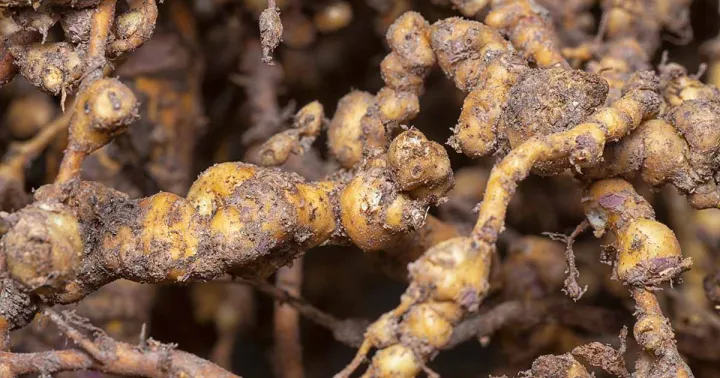
The hallmark sign of infection is the development of galls on the roots. Unlike standard root-knot nematodes, these galls are often elongated, beaded, or spindle-shaped.
Above-ground symptoms include wilting, chlorosis, and general stunting of the plant, which often fail to respond to irrigation or fertilization.
Patches of unhealthy, yellowing, or stunted plants are common indicators of nematode infestation in a field or greenhouse setting.
Visual inspection of the root system often reveals necrosis and malformation in areas where the nematodes have penetrated and established feeding sites.
Confirmation of the presence of Nacobbus aberrans requires microscopic identification of the nematodes in root tissue samples and surrounding soil.
Control measures
Stringent quarantine and hygiene practices are the first line of defense, preventing the spread of infested soil and contaminated planting material between fields.
Cultural control includes deep plowing, fallowing, and the use of rotation crops that are poor hosts for this specific nematode species.
- Planting resistant crop varieties or certified healthy transplants.
- Applying soil solarization or steam sterilization in greenhouse settings.
- Using nematode-suppressive green manure crops like mustard.
Chemical control with nematicides is possible but usually restricted due to environmental concerns and the high cost associated with large-scale application.
Biological control, such as the use of predatory fungi or beneficial bacteria, offers a promising, sustainable alternative to synthetic chemicals for managing nematode populations.
Taxonomy
- Latin name
- Nacobbus aberrans
- Order
- Nematodes
- Family
- Pratylenchidae
- EPPO code
- NACOBA
Discussion
No discussions yet — be the first.