
Cherry aphid
Myzus sakurae
Description
How to identify
The cherry aphid (Myzus sakurae) is a small sap-sucking insect belonging to the family Aphididae. These pests are known for their ability to rapidly colonize young growth on stone fruit trees, particularly cherries.
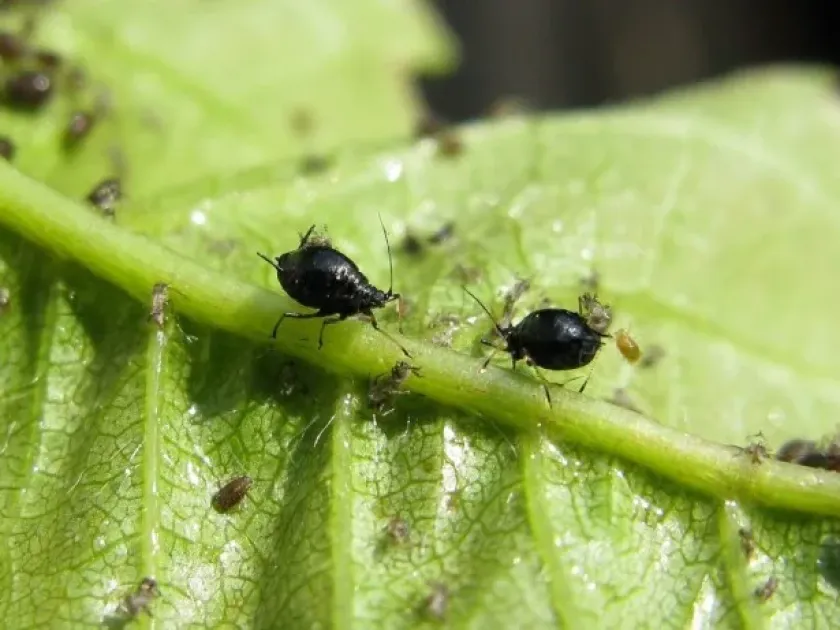
Adults can exist in winged or wingless forms, with coloration ranging from dark brown to black. They possess piercing-sucking mouthparts that allow them to extract vital fluids directly from the plant's vascular tissues.
They reproduce through parthenogenesis for most of the season, which allows them to build massive populations in a very short amount of time. This reproductive strategy ensures they can quickly exploit favorable conditions during spring and early summer.
The species has a life cycle tied to the phenology of the host plant. They rely on the succulent growth of new shoots to support their nutritional needs, making them highly dependent on the host tree's developmental stages.
Winter survival is achieved through eggs deposited in bark crevices or near bud scales. As soon as temperatures rise and buds begin to swell, these eggs hatch, starting the cycle anew.
What it damages
Cherry aphids primarily damage cherry and sweet cherry trees. By feeding on tender leaves and succulent tips, they cause significant physiological stress to the tree, leading to stunted growth.
Feeding damage causes leaves to curl, twist, and deform, which significantly hinders photosynthesis. This reduction in the plant's food production capacity results in weaker trees and lower fruit yields.
Young trees are particularly vulnerable to infestation. Persistent feeding can kill off new terminal shoots, forcing the tree to develop lateral branches and potentially altering its desired shape.
Beyond direct damage, aphids excrete a sugary substance known as honeydew. This substance promotes the growth of sooty mold, a black fungus that covers leaves and blocks sunlight, further reducing plant health.
Aphids are also known vectors for various plant viruses. Introducing these pathogens into the tree can lead to long-term decline and may necessitate the removal of infected specimens to protect the rest of the orchard.
When it appears
The activity begins in early spring as soon as the first green tissue appears. Overwintered eggs hatch into fundatrices, which initiate the colony growth cycle.
The peak of infestation typically occurs between late May and June. During this window, warm weather conditions accelerate reproduction rates, leading to rapid colonization of the entire canopy.
As the season progresses toward autumn, the aphids produce sexual forms that mate and lay eggs. These eggs remain on the host plant until the following spring, ensuring the pest's survival.
Signs of infestation
The most recognizable symptom is the curling of new leaves at the tips of shoots. When these curled leaves are opened, large groups of dark aphids are usually found underneath.
The presence of ants patrolling the branches is a strong indicator of an aphid colony. Ants protect the aphids from predators in exchange for the honeydew they produce.
Sticky, shiny foliage or shoot tips indicate honeydew accumulation. If left untreated, this area will eventually become coated in a black, powdery-looking sooty mold.
Reduced shoot elongation and failure of young buds to open properly are classic signs of a heavy infestation. The tree may appear generally sickly with yellowing leaves during the height of the summer.
Fruit quality is also affected. Heavy infestations can lead to smaller, malformed, or underdeveloped fruit that fails to reach maturity properly.
Control measures
Dormant oil sprays applied in early spring can be very effective at suffocating overwintering eggs before they hatch. This is one of the most critical steps in preventing early season outbreaks.
Chemical control involving systemic insecticides is effective when applied before leaf curling occurs. Once leaves are curled, the aphids are physically protected from many contact-based treatments.
Biological control, by encouraging beneficial insects like lady beetles, hoverflies, and lacewings, plays a vital role. Minimizing the use of broad-spectrum pesticides helps these natural enemies thrive.
Ant management using sticky barriers on the tree trunks can significantly limit the aphids' protection, making them more vulnerable to their natural predators and easier to control.
- Use of systemic insecticides during early growth stages.
- Application of horticultural oils during dormancy.
- Installation of trunk barriers to block ants.
- Promotion of natural aphid predators within the orchard.
Taxonomy
- Latin name
- Myzus sakurae
- Order
- Hemiptera (bugs, aphids, leafhoppers)
- Family
- Aphididae
- EPPO code
- MYZUSA
Discussion
No discussions yet — be the first.