
Green peach aphid
Myzus persicae
Description
How to identify
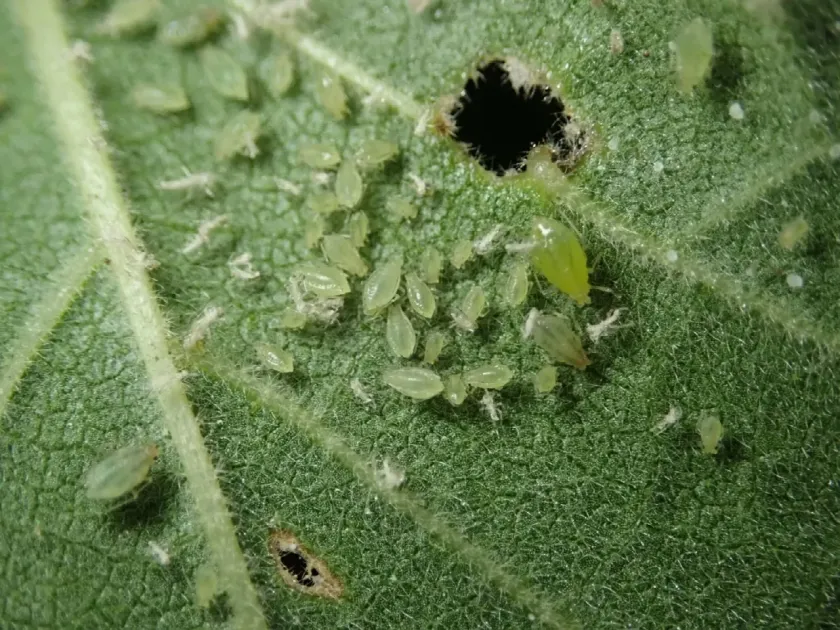
The green peach aphid (Myzus persicae) is a small sap-sucking insect belonging to the family Aphididae. Adults are typically 1.5–2.5 mm long, with a body color ranging from light green to yellowish-green or sometimes pinkish.
The life cycle of this species is complex and heteroeceous, meaning it migrates between primary hosts (like peach trees) and secondary hosts (various herbaceous plants). It overwinters as eggs on woody hosts, hatching into nymphs in early spring.
During the growing season, they reproduce parthenogenetically, meaning females produce live young without mating. This reproductive strategy allows populations to explode in numbers within a very short time frame, often within a few weeks.
Winged forms are produced as food resources dwindle or population density increases, allowing them to migrate to new hosts. These winged aphids are highly mobile and play a critical role in spreading viral pathogens throughout fields and gardens.
They prefer to feed on the undersides of leaves, tender shoots, and developing flower buds, where they can easily access the phloem sap of the plant.
What it damages
Myzus persicae is an extreme polyphagous pest, known to infest over 400 different plant species. In orchards, it is a primary pest of peaches, nectarines, and apricots, causing stunted growth and leaf distortion.
In vegetable production, it is particularly devastating to crops such as potatoes, tomatoes, peppers, spinach, and cruciferous vegetables like cabbage. It is also a significant pest in greenhouses on ornamental crops.
The primary direct damage is caused by the extraction of large amounts of plant sap, which weakens the plant, stunts growth, and reduces fruit yield. High densities of aphids can lead to the wilting and death of young seedlings.
The most severe economic impact often comes from the indirect damage caused by the transmission of plant viruses. It is considered the most efficient vector for over 100 different plant viruses, including Potato Leafroll Virus.
Feeding often results in yellowing (chlorosis) of the leaves, followed by curling and deformation. The plant's overall health and photosynthetic capacity are significantly reduced as the infestation progresses.
Signs of infestation
The most visible sign of an infestation is the curling and twisting of young, succulent leaves at the terminals of the plant. These leaves often appear crinkled and may show signs of chlorosis or mosaic patterns.
Aphids excrete a substance known as honeydew, a sticky, sugary liquid that coats the leaves. This substance often supports the growth of sooty mold, a black fungus that further interferes with photosynthesis by blocking sunlight.
Look for clusters of aphids on the undersides of leaves or along stems. You may also notice discarded white exoskeletons (cast skins), which appear as small, shiny flakes on the foliage or the ground beneath the plant.
The presence of ants is a strong indicator of an aphid infestation, as ants are attracted to the honeydew and will actively protect the aphid colonies from natural predators.
In cases of severe viral transmission by the aphids, the plant may exhibit stunting, yellowing, or abnormal growth patterns that persist even after the aphids themselves have been eliminated by insecticides.
Control measures
Effective management begins with cultural controls, such as removing weeds that serve as alternate hosts and ensuring that crops have adequate fertilization to avoid over-stimulating succulent growth that aphids prefer.
Biological control is highly effective in many environments. Encouraging natural enemies like lady beetles (ladybugs), lacewings, hoverflies, and parasitic wasps can significantly reduce aphid populations without the need for chemicals.
Chemical control often involves systemic insecticides that are absorbed by the plant, killing aphids as they feed. It is crucial to choose products that have a lower impact on beneficial insects whenever possible.
- Use yellow sticky cards for early detection and monitoring.
- Implement proper crop rotation to break the cycle of infestation.
- Rotate insecticide modes of action to prevent the development of resistant populations.
Regular scouting is essential, particularly in early spring and during peak temperature windows. If treating with contact sprays, ensure thorough coverage of the underside of leaves to reach the colonies hidden from view.
Taxonomy
- Latin name
- Myzus persicae
- Order
- Hemiptera (bugs, aphids, leafhoppers)
- Family
- Aphididae
- EPPO code
- MYZUPE
Discussion
No discussions yet — be the first.