
Ornate aphid
Myzus ornatus
Description
How to identify
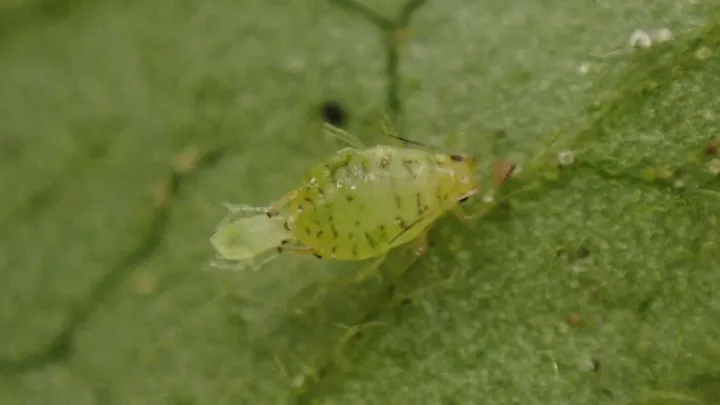
The ornate aphid (Myzus ornatus) is a small sap-sucking insect belonging to the family Aphididae. Adults are typically 1.5–2 mm long and have a distinctive yellowish-green body with dark transverse spots on the abdomen.
This species is highly adapted to indoor environments, where it reproduces almost exclusively through parthenogenesis. Females give birth to live nymphs, allowing for rapid population growth without the need for mating.
The nymphs go through several molting stages, appearing similar to the adults but smaller and flightless. They gather in dense colonies, typically on the underside of leaves and near the succulent growing tips of plants.
The ornate aphid is known for its wide host range, making it a common nuisance for greenhouse growers and indoor gardeners alike, as it can easily jump from host to host.
The species has an extremely high reproductive rate, which means that even a few survivors can lead to a massive re-infestation of a plant collection within a very short period.
What it damages
Ornate aphids primarily damage ornamental plants, including violets (Saintpaulia), primulas, and chrysanthemums. They feed by inserting their piercing-sucking mouthparts into the plant tissue to extract nutrients.
Feeding leads to cellular destruction, causing leaves to curl, yellow, and eventually wither. The loss of sap significantly reduces the plant's overall vigor and developmental pace.
A critical aspect of the damage caused by Myzus ornatus is the transmission of plant viruses. This aphid species is an efficient vector for numerous viral pathogens that can cause permanent disfigurement or death of the host.
Aphids excrete a sugary substance known as honeydew. This sticky residue coats the leaves, providing a perfect substrate for the growth of sooty mold, which blocks sunlight and stifles photosynthesis.
Heavy infestations result in stunted growth, failure to bloom, and overall decline of the plant, which often becomes susceptible to other diseases and environmental stressors.
When it appears
In greenhouses and indoor home environments, ornate aphids do not follow a strict seasonal cycle. They can thrive year-round provided that temperatures remain within a favorable range.
Outdoor populations are most active during the spring and summer months. However, when indoor temperatures are kept stable, the aphids remain active throughout the winter months as well.
The emergence of winged adults, or alatae, typically happens when a colony becomes overcrowded. These individuals can fly or be carried by air currents to new hosts within the same room or greenhouse.
Dry indoor air, common during the heating season, does not deter these pests and can actually facilitate faster colony spread by stressing the host plants and making them more susceptible.
The life cycle from nymph to reproductive adult can take as little as 10 days at 20-25 degrees Celsius, allowing the population to explode rapidly if left unchecked.
Signs of infestation
The earliest signs of an infestation include the curling of young leaves and the distortion of new growth. Plants may appear droopy even when the soil moisture levels are adequate.
The presence of sticky honeydew on the foliage or the surface below the plant is a major indicator of aphid activity. Over time, this honeydew may turn black due to sooty mold growth.
Small, translucent white shed skins (exuviae) are often visible on the leaves, indicating that the aphids have been molting and the population is actively growing.
If you notice ants climbing on your plants, this is a strong hint of aphid presence, as ants are known to tend to aphids to protect them and consume their honeydew.
Bud deformation or the sudden dropping of buds before they open is a hallmark sign that aphids have been feeding on the developing flower tissues.
Control measures
Physical removal using a mild soap solution and a soft brush can reduce numbers, but it is rarely enough to eradicate the entire population during a serious outbreak.
Systemic insecticides, particularly those containing neonicotinoids, are generally the most effective method for controlling Myzus ornatus, as the poison moves through the plant sap.
Repeated applications are necessary to ensure that any nymphs hatching from eggs after the first treatment are also eliminated. Follow the label instructions for frequency.
Strict quarantine measures should be applied to all new plants entering your home. Keep new additions isolated for at least 3 weeks before placing them near other plants.
- Inspect plants weekly for pests
- Use systemic insecticides
- Isolate new plants immediately
- Keep growing areas clean and debris-free
- Manage ant populations near plants
Taxonomy
- Latin name
- Myzus ornatus
- Order
- Hemiptera (bugs, aphids, leafhoppers)
- Family
- Aphididae
- EPPO code
- MYZUPO
Discussion
No discussions yet — be the first.