
Tobacco aphid
Myzus nicotianae
Description
How to identify
The tobacco aphid (Myzus nicotianae) is a specialized insect pest belonging to the Aphididae family, primarily known for causing significant losses in tobacco production.
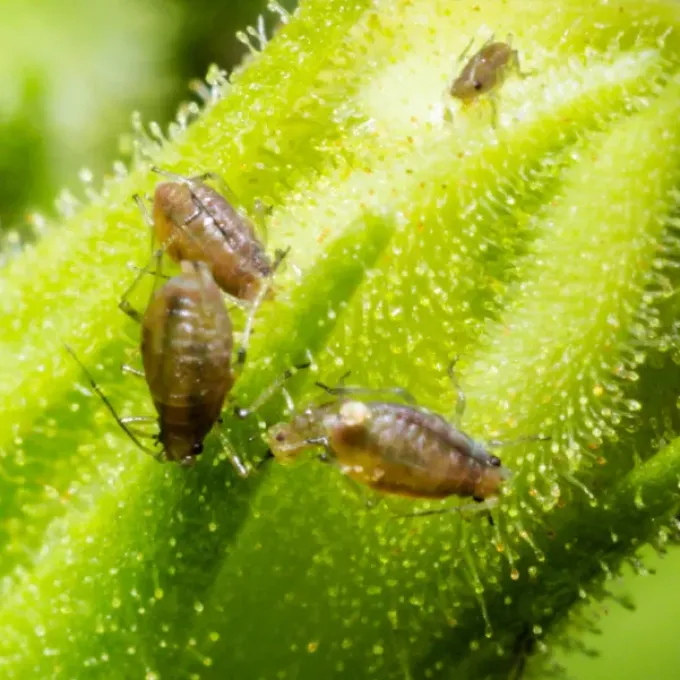
These small insects typically measure 1.5–2 mm and vary in color from yellowish-green to reddish-brown, depending on the host plant and the environment.
They possess a pear-shaped body with two distinct structures called cornicles at the rear, which are used to secrete a sugary substance known as honeydew.
The species reproduces through parthenogenesis during the growing season, allowing for rapid colonization of host plants without the need for mating.
Winged and wingless morphs exist, enabling the pest to disperse quickly across fields and infest new areas throughout the agricultural season.
What it damages
While named for its preference for tobacco, this aphid frequently infests other solanaceous crops, including tomatoes, peppers, potatoes, and eggplants.
The insects feed by piercing plant tissues and sucking out phloem sap, which deprives the plant of essential nutrients and stunts its overall growth.
Damage symptoms include leaf curling, yellowing, and severe deformation of the growing tips, which significantly reduces plant vigor and yield.
Tobacco aphids are recognized as efficient vectors for various plant viruses, such as the tobacco mosaic virus, which can be devastating to crop quality.
The accumulation of honeydew on the leaves fosters the growth of sooty mold, a fungus that further hinders photosynthesis and lowers the market value of the crop.
When it appears
The lifecycle typically begins in the spring, triggered by rising temperatures and the availability of succulent new growth on host plants.
Population growth accelerates rapidly during mid-summer when favorable temperature and humidity conditions allow for multiple successive generations.
During hot and dry spells, aphids may concentrate on the shaded undersides of leaves, which protects them from excessive heat and desiccation.
As the season progresses into autumn, the insect populations may transition to winter host plants or shelter in protected areas to survive colder months.
In greenhouses and indoor environments, the lifecycle remains continuous, necessitating year-round monitoring and proactive management strategies.
Signs of infestation
The primary visual indicator of an infestation is the curling and distortion of new, tender leaves at the apex of the plant stem.
Close inspection of the underside of leaves often reveals dense colonies of aphids, ranging from juvenile nymphs to mature adults.
The presence of ants roaming over plant stems is a strong clue, as they tend the aphids to collect the nutrient-rich honeydew secretions.
A sticky, shiny residue on the leaves indicates the presence of honeydew, which serves as a definitive sign that a large colony is present.
Premature leaf drop and generalized wilting of the plant are signs that the infestation has reached a severe, damaging level.
Control measures
Effective management begins with strict weed control, as many wild host plants serve as breeding grounds for aphids before they migrate to crops.
Biological control methods, such as encouraging native predators like lady beetles and lacewings, can successfully suppress small aphid populations.
When populations exceed economic thresholds, the application of systemic insecticides is often necessary to provide long-term protection.
Rotating products with different modes of action is crucial to delay the development of insecticide resistance, a common issue with tobacco aphids.
Regular field scouting allows growers to identify initial clusters, facilitating targeted spot-treatments and reducing the overall need for chemical usage.
Taxonomy
- Latin name
- Myzus nicotianae
- Order
- Hemiptera (bugs, aphids, leafhoppers)
- Family
- Aphididae
- EPPO code
- MYZUNI
Discussion
No discussions yet — be the first.