
Myzus myosotidis
Myzus myosotidis
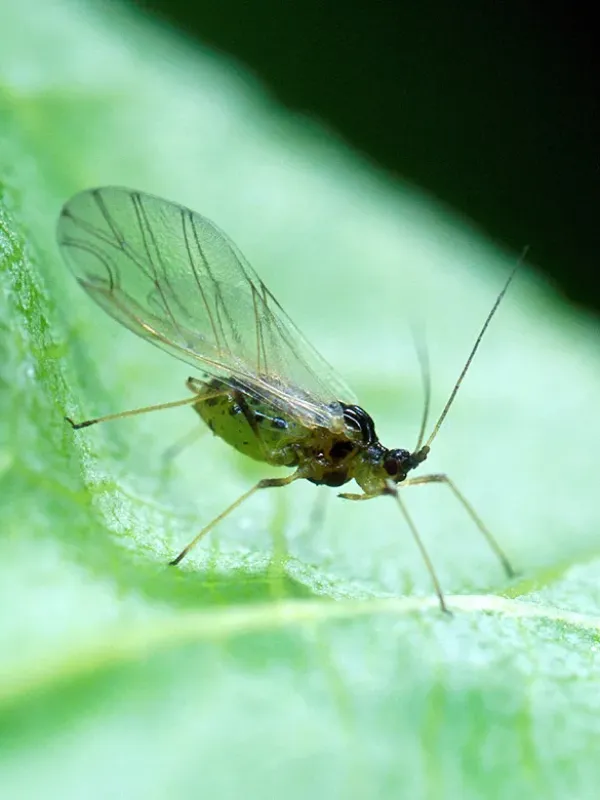
Description
How to identify
Myzus myosotidis is a small insect belonging to the order Hemiptera and the family Aphididae. These aphids are often found in shades of green or yellow-brown, allowing them to blend effectively into the foliage of their host plants.
Identification is based on the presence of well-developed frontal tubercles directed inwards, which is a characteristic feature of the Myzus genus. Measuring between 1.5 and 2.5 millimeters in length, these aphids are typically found in dense clusters on host plants.
The life cycle is closely tied to host plant availability and environmental conditions. Myzus myosotidis undergoes several nymphal stages and can reproduce through parthenogenesis, allowing for rapid population growth during favorable warm conditions.
Morphological traits, such as the shape of the siphunculi and the cauda, are key for specialized entomological identification. Understanding these traits allows growers and garden managers to accurately monitor for the presence of this specific pest.
This species is highly host-specific, favoring plants in the Boraginaceae family, particularly the Myosotis genus. Their survival depends on finding suitable young, succulent plant growth where they can establish colonies.
What it damages
The primary hosts for Myzus myosotidis are plants within the Boraginaceae family, specifically forget-me-nots. They are adapted to extract nutrients from these specific hosts throughout their active growing season.
By using their piercing-sucking mouthparts, these aphids extract essential plant sap. This feeding process results in severe physiological stress, stunted growth, and a general decline in the health and vigor of the infested plant.
A significant byproduct of aphid feeding is the production of honeydew, a sticky substance that promotes the growth of sooty mold. This fungal layer impairs photosynthesis, potentially leading to leaf yellowing and a reduction in the plant's overall photosynthetic efficiency.
Heavy infestations lead to leaf curling, stunted shoots, and sometimes even the complete deformation of floral parts. Such damage makes the plant unattractive and highly susceptible to other environmental stresses or opportunistic pathogens.
Furthermore, Myzus myosotidis acts as a vector for various plant viruses. When these aphids feed, they can transmit viral pathogens via their saliva, which often leads to systemic infections and irreversible damage to the host plant's development.
Signs of infestation
Early symptoms of an infestation include the curling of young leaves and the distortion of shoot tips. A close inspection of the undersides of these leaves usually reveals the presence of small, clustered aphids.
The presence of honeydew, appearing as a sticky sheen on leaves and stems, is a clear indicator of aphid activity. This honeydew often attracts ants, which frequently protect the aphid colonies from natural predators.
The development of a black, powdery-looking layer (sooty mold) is a sign of an advanced infestation. At this stage, the plant has already suffered significant nutrient loss and requires immediate care to recover.
Bud deformation or premature blossom drop is another sign of Myzus myosotidis colonization. Flowers may fail to open correctly or may appear wilted, significantly impacting the decorative value of the garden plant.
General wilting during peak sunlight hours, despite adequate soil moisture, can be a sign that aphids are extracting enough sap to compromise the plant’s ability to maintain proper turgor pressure.
Control measures
Cultural control involves regular monitoring and the manual removal of heavily infested plant parts. Maintaining proper plant nutrition, avoiding excessive nitrogen, helps prevent the overly soft growth that attracts aphid populations.
Biological control can be highly effective by encouraging natural predators such as ladybugs, lacewings, and hoverflies. Reducing the use of broad-spectrum pesticides ensures that these beneficial insects remain present to regulate aphid numbers.
Chemical control should be reserved for situations where the pest population exceeds economic thresholds. Systemic insecticides are generally the most effective, as they are absorbed by the plant and provide long-lasting protection against sucking pests.
To prevent the development of resistance, it is crucial to rotate insecticides with different modes of action. Applications should be timed for early morning or evening to minimize the risk to non-target species like pollinators.
Integrated management should also include ant control, as ants act as "shepherds" for aphids. Using sticky traps or barriers on stems can effectively disrupt this symbiosis and protect the plants from rapid colonization.
Taxonomy
- Latin name
- Myzus myosotidis
- Order
- Hemiptera (bugs, aphids, leafhoppers)
- Family
- Aphididae
- EPPO code
- MYZUMY
Discussion
No discussions yet — be the first.