
Lythrum aphid
Myzus lythri
Description
How to identify
The Lythrum aphid (Myzus lythri) is a member of the Hemiptera order and the Aphididae family. It is a tiny insect known for its complex life cycle, which often involves moving between primary and secondary host plants.
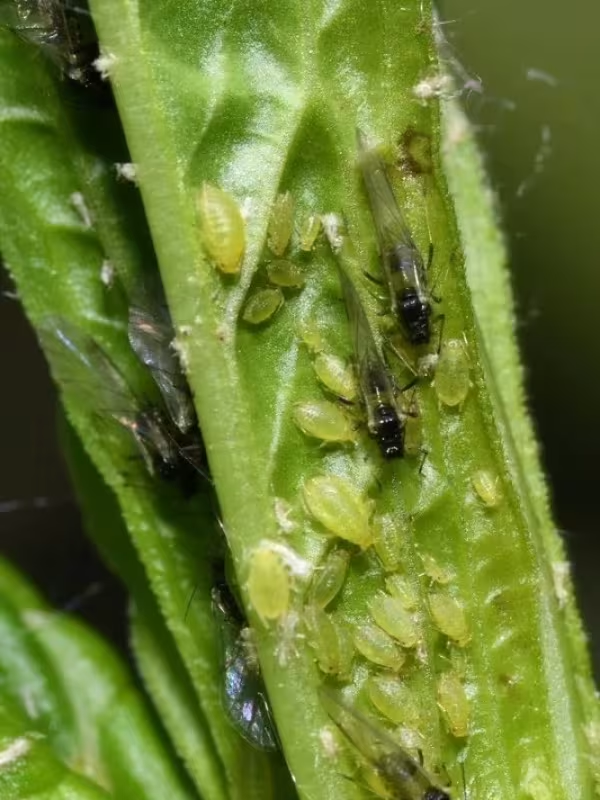
Adult aphids are typically pear-shaped, measuring between 1.5 and 2.5 mm in length. Their coloration ranges from pale green to yellowish-brown, allowing them to blend into the undersides of leaves where they feed.
The population consists of wingless females, which reproduce asexually, and winged females, which facilitate the dispersal of the colony to new plants when resources become scarce or density is too high.
A key diagnostic feature for entomologists is the structure of the siphunculi (tubular structures on the abdomen), which help distinguish Myzus lythri from other closely related aphid species.
Field identification requires close inspection of the growing tips of susceptible plants, as aphids tend to aggregate in these areas to access nutrient-rich plant sap.
What it damages
While the primary host is the loosestrife (Lythrum salicaria), these aphids are known to migrate to various stone fruit trees, including cherries and peaches, causing significant stress to young trees.
By feeding on phloem sap, the aphids extract essential nutrients, which leads to stunted growth, curling of the leaves, and overall weakening of the plant's health and vitality.
One of the most serious aspects of their damage is their role as vectors for various plant viruses, which can lead to permanent structural damage or reduced fruit production in orchards.
Feeding often causes the leaves to twist or roll, creating a sheltered environment for the aphids, which makes direct contact insecticides less effective once the infestation is established.
Severe infestations can lead to premature leaf drop, which impairs the plant's ability to store energy for the winter, potentially increasing the risk of cold damage in the following months.
When it appears
The life cycle of Myzus lythri typically begins in the spring, when eggs that have overwintered on the bark of trees or on wild hosts hatch into a generation of stem mothers.
As spring progresses, the population grows exponentially through rapid parthenogenesis, coinciding with the flush of new growth on garden plants that provides abundant food sources.
Mid-summer is marked by the production of winged forms that seek out secondary hosts, ensuring the survival of the species during periods when the primary host quality declines.
The development of multiple overlapping generations allows the aphid to colonize large areas quickly, necessitating timely intervention by gardeners to prevent severe outbreaks.
As temperatures drop in autumn, sexual reproduction occurs, leading to the deposition of cold-hardy eggs that will survive the winter and start the cycle again the following spring.
Signs of infestation
The most prominent sign of an infestation is the curling and distortion of young leaves, often accompanied by a light yellowing or chlorotic pattern on the affected foliage.
Sticky, shiny deposits, commonly known as honeydew, accumulate on the leaves and stems. This substance is a sugary byproduct excreted by the aphids as they feed.
Sooty mold, a type of dark fungus, often grows on the honeydew, giving the plant a dirty appearance and further interfering with the plant's ability to perform photosynthesis.
Ants are frequently found near these colonies, as they protect the aphids from predators like ladybugs and lacewings in exchange for the sugary honeydew the aphids produce.
Close examination of the underside of leaves or the tender buds at the tip of the branches will usually reveal colonies of these small insects huddled together.
Control measures
Management starts with cultural practices, such as removing wild loosestrife and other host weeds from the vicinity of the garden to reduce the source of initial infestation.
Encouraging natural predators, such as lady beetles, hoverflies, and parasitic wasps, is an essential strategy. These beneficial insects can often keep aphid populations below damaging levels.
Biological control using sprays based on insecticidal soaps or neem oil is effective against early-stage infestations and is generally safer for the local ecosystem than broad-spectrum chemicals.
For high-pressure infestations, systemic insecticides may be necessary. It is crucial to apply these correctly and rotate chemical classes to prevent the development of resistant populations.
- Monitor tender plant tips regularly throughout the spring.
- Use physical barriers or sticky bands to manage ant populations that protect aphids.
- Time preventive treatments to occur just before the major spring growth spurt.
Taxonomy
- Latin name
- Myzus lythri
- Order
- Hemiptera (bugs, aphids, leafhoppers)
- Family
- Aphididae
- EPPO code
- MYZULY
Discussion
No discussions yet — be the first.