
Privet aphid
Myzus ligustri
Description
How to identify
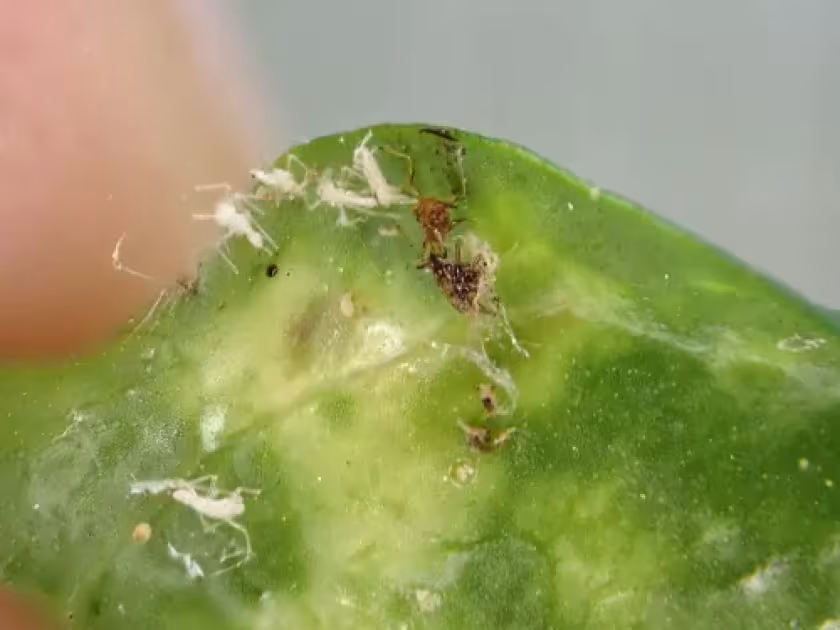
The Privet aphid (Myzus ligustri) is a small sap-sucking insect belonging to the family Aphididae. Adults typically measure between 1.5 and 2.5 mm in length.
They are characterized by a pale yellow or light green coloration, which provides excellent camouflage against the foliage of their host plants.
The insects possess a piercing-sucking mouthpart, allowing them to extract nutrients directly from the phloem of young shoots and leaves.
Both winged and wingless forms exist within a population, with winged individuals facilitating the rapid spread of the species during the summer months.
They live in dense colonies, typically clustering on the undersides of leaves and on newly developing growth where the plant sap is most concentrated.
What it damages
The primary host for this pest is the common privet (Ligustrum vulgare), widely used in landscape hedging and formal garden designs.
By feeding on the sap, these aphids cause significant stress to the plant, which often leads to reduced vitality and poor development of new shoots.
Feeding damage can lead to the stunting of young plants, making them less capable of recovering from pruning or environmental stress.
The continuous loss of nutrients results in stunted growth, yellowing foliage, and a general lack of aesthetic appeal for ornamental hedges.
Furthermore, these aphids can transmit various plant viruses, which cause long-term health issues and can eventually kill individual branches.
When it appears
The life cycle begins in early spring when eggs that overwintered on the woody stems of the privet hatch into the first generation of nymphs.
The population experiences a rapid explosion in numbers during the warm months of May and June, coinciding with the peak of spring growth.
Hot and dry weather can sometimes slow down development, but steady moisture usually supports constant reproduction throughout the summer.
As temperatures begin to drop in the autumn, the aphids produce overwintering eggs, which are deposited in bark crevices and buds.
The pest density is highly dependent on hedge density; overgrown, poorly ventilated hedges provide ideal microclimates for aphid protection.
Signs of infestation
The most visible symptom is the curling and distortion of young leaves, which often roll up into tight, crumpled shapes to protect the aphid colonies inside.
A sticky substance known as honeydew is excreted by the aphids, coating the leaves and encouraging the growth of black sooty mold.
Leaves affected by the feeding tend to turn yellow and may drop prematurely, leaving the hedge looking sparse and unhealthy.
The presence of ants is a major indicator of an infestation, as they actively protect the aphids to feed on the sugary honeydew they produce.
- Curled and deformed leaves at the tips of shoots.
- Sticky residue on foliage and stems.
- Black sooty mold spots on leaves.
- Increased ant activity around the shrubs.
Control measures
A proactive control strategy involves applying dormant oils in early spring to eliminate overwintering eggs before they have a chance to hatch.
If an infestation becomes evident, the use of systemic insecticides is recommended as they are absorbed by the plant and provide long-lasting protection.
Biological control methods include encouraging natural predators such as ladybugs, lacewings, and hoverflies that naturally hunt aphid colonies.
Maintaining proper hedge hygiene, including regular thinning and pruning, ensures better air circulation and reduces the habitat suitability for aphids.
Avoiding over-fertilization with nitrogen helps keep plant growth at a natural pace, making tissues less succulent and attractive to sucking pests.
Taxonomy
- Latin name
- Myzus ligustri
- Order
- Hemiptera (bugs, aphids, leafhoppers)
- Family
- Aphididae
- EPPO code
- MYZULG
Discussion
No discussions yet — be the first.