
Almond aphid
Myzus amygdalinus
Description
How to identify
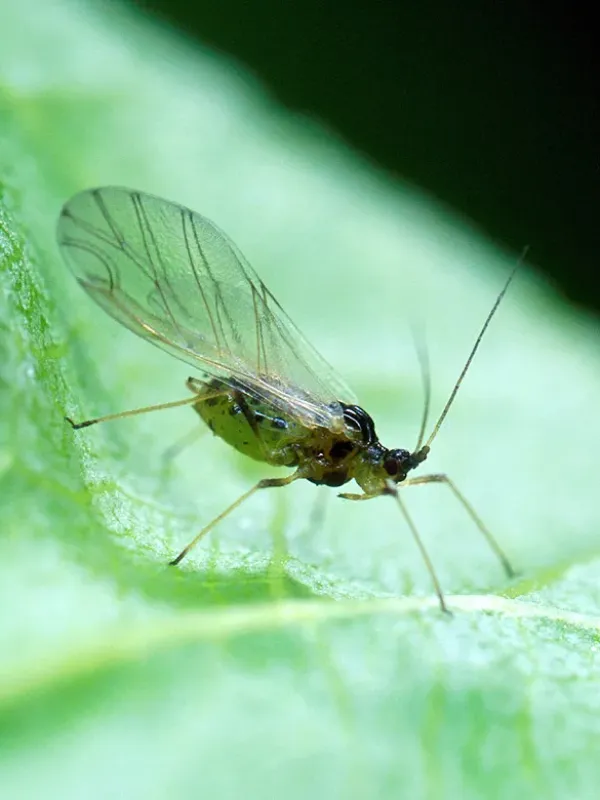
The almond aphid (Myzus amygdalinus) is a member of the Aphididae family. This small insect undergoes several development stages, including apterous (wingless) and alate (winged) forms throughout its life cycle.
The body is typically oval-shaped, with coloration ranging from pale green to yellowish-brown. They possess well-developed sensory organs and characteristic siphunculi on the abdomen used for secreting defensive fluids.
Winged adults have net-like wing venation, enabling them to migrate to new host plants during the growing season. Nymphs look similar to adults but are smaller in size and lack fully developed reproductive organs.
The pest overwinters in the egg stage, typically found in bark crevices or near buds on almond and other stone fruit trees. Spring warming triggers the hatching of fundatrices (stem mothers).
The reproductive rate is remarkably high, with populations capable of expanding rapidly under optimal temperature and humidity conditions in the spring and early summer.
What it damages
The primary host is the almond tree, but the pest also infests peach, apricot, and plum trees. This wide range of hosts makes it a significant threat to stone fruit production.
Aphids feed by piercing plant tissues and extracting sap, which causes severe stress to the host tree. This nutrient loss results in stunted growth and weakened overall plant vitality.
Beyond direct feeding damage, they act as vectors for various plant viruses. Introducing these pathogens during feeding can lead to long-term health decline in orchard trees.
Severe infestations cause leaves to curl and yellow, severely reducing the tree's photosynthetic capacity. In extreme cases, this can lead to premature leaf drop and fruit loss.
The secretion of honeydew promotes the growth of sooty mold, which covers the leaf surface, effectively blocking sunlight and interfering with the tree's normal metabolic processes.
Signs of infestation
Leaf curling on the tips of new shoots is the most prominent indicator of an infestation. Close inspection of the underside of leaves usually reveals dense colonies of aphids.
The presence of honeydew, a sticky substance left on leaves and stems, is a hallmark sign. It often attracts ants, which farm the aphids and protect them from predators.
Affected shoots may exhibit significant growth deformation or necrosis. Young buds may fail to open properly, and the overall appearance of the canopy becomes ragged and distressed.
White, papery exoskeletons scattered on leaves are remnants of molting, providing evidence of an active, growing population. The presence of these sheds is a clear sign that control is needed.
If left unmanaged, the tree may show signs of chlorosis and reduced vigor. The development of black sooty mold on the foliage is a definitive visual clue of an established aphid problem.
Control measures
Cultural management starts with thorough orchard sanitation, including the removal of suckers and weeds that can harbor populations. Maintaining tree health through proper irrigation and nutrition increases resistance.
Biological control plays a key role, as lady beetles, lacewings, and hoverflies are effective predators. Minimizing the use of broad-spectrum pesticides preserves these natural enemies.
Chemical control should be initiated when pest numbers exceed the economic threshold. Using systemic insecticides helps ensure the chemical reaches the aphids within curled leaves.
Always rotate insecticide classes to prevent the development of resistance. Apply treatments in the early morning or late evening to minimize impacts on beneficial pollinators.
- Application of systemic insecticides during the early growth stages.
- Encouraging and conserving natural predatory insects in the orchard.
- Sanitary pruning of severely infested shoots and branches.
- Monitoring pheromone or sticky traps to detect early colonization.
Taxonomy
- Latin name
- Myzus amygdalinus
- Order
- Hemiptera (bugs, aphids, leafhoppers)
- Family
- Aphididae
- EPPO code
- MYZUAG
Discussion
No discussions yet — be the first.