
Ambrosia aphid
Myzus ambrosiae
Description
How to identify
The Ambrosia aphid (Uroleucon ambrosiae) is a small insect belonging to the family Aphididae, order Hemiptera, known for its specific host plant preference.
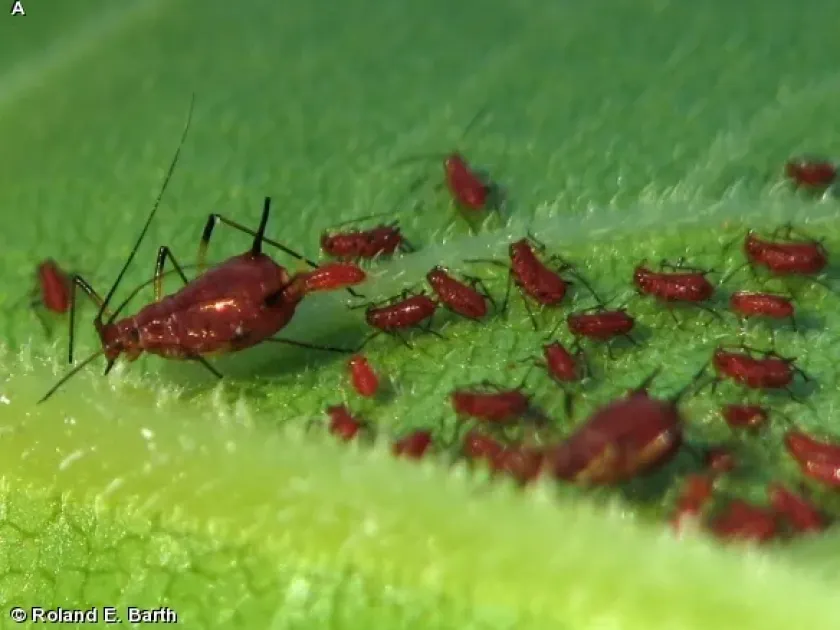
Adults typically exhibit a pear-shaped body, with a dark reddish-brown color that provides effective camouflage on stems and leaves.
A key identifying feature is the presence of long, dark siphunculi (tubes on the abdomen) which are often as long as or longer than the antennae.
The species reproduces rapidly through parthenogenesis, allowing populations to explode in size when environmental conditions are optimal.
Both apterous (wingless) and alate (winged) forms occur, facilitating the spread of the colony to new areas within the field.
What it damages
While primarily associated with common ragweed (Ambrosia artemisiifolia), this aphid can affect various plants within the Asteraceae family.
The insects feed by inserting their stylets into the phloem, extracting sap and weakening the plant structure significantly.
Feeding damage often causes stunted growth, leaf curling, and in severe cases, the death of young shoots or developing flower buds.
The reduction in plant vigor leads to lower yield quality and can affect the overall health of the agricultural crop being targeted.
Furthermore, the aphid acts as a mechanical vector for several plant viruses, which can cause long-term damage to the field's health.
Signs of infestation
Visible curling and yellowing of the youngest leaves are the first indicators that an aphid colony is actively feeding on the plant.
Leaves and stems become sticky due to the excretion of honeydew, a sugary substance produced by the aphids during feeding.
Sooty mold growth often follows the honeydew secretion, appearing as black fungal patches that inhibit the photosynthesis process.
Ants are frequently observed moving along stems, as they actively protect the aphids to feed on the sugary honeydew produced by them.
Flower buds may fail to develop correctly or abort entirely, leading to poor seed set and reduced reproductive success for the plant.
Control measures
Integrated Pest Management starts with cultural practices, such as the systematic removal of ragweed hosts from field margins and surrounding areas.
Encouraging natural predators, including lady beetles (Coccinellidae), lacewings, and hoverflies, is a highly effective way to manage population numbers.
If economic thresholds are exceeded, the application of systemic insecticides is necessary to ensure the elimination of colonies hidden within the plant canopy.
Regular field scouting is critical, especially during dry spells when plants are under stress and more susceptible to heavy infestations.
Maintaining a balanced crop rotation and controlling broadleaf weeds reduce the availability of food sources, limiting the aphid's ability to survive.
Taxonomy
- Latin name
- Myzus ambrosiae
- Order
- Hemiptera (bugs, aphids, leafhoppers)
- Family
- Aphididae
- EPPO code
- MYZUAM
Discussion
No discussions yet — be the first.