
Ajuga aphid
Myzus ajugae
Description
How to identify
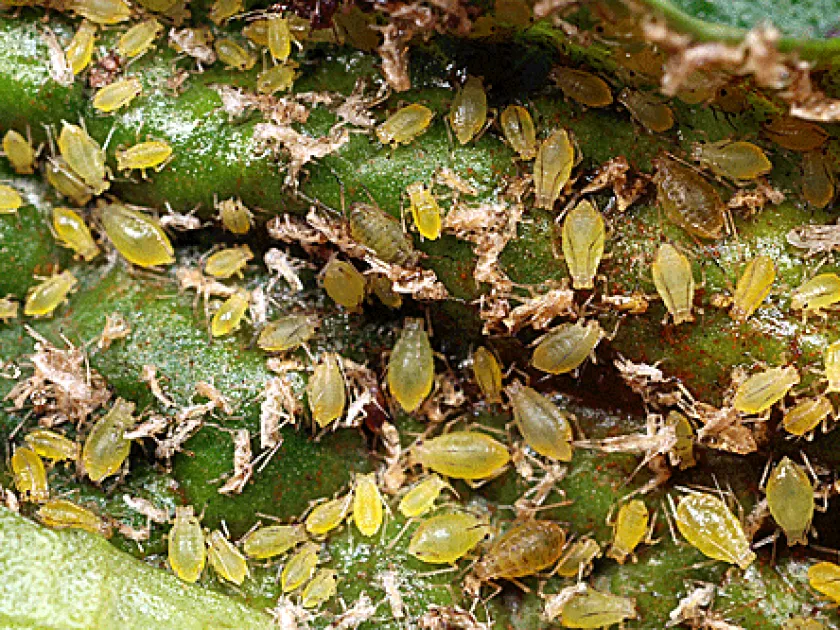
The Ajuga aphid (Myzus ajugae) is a small sap-sucking insect belonging to the family Aphididae. Adults are typically 1.5–2 mm long, ranging in color from pale green to yellowish-brown, which provides camouflage on the host plant.
This species is highly specialized, primarily targeting the genus Ajuga (bugleweed). They form dense colonies, usually hidden on the underside of leaves or within the heart of the leaf rosettes, making them difficult to detect at early stages.
Their reproduction cycle includes parthenogenesis during the growing season, allowing for rapid population growth. In autumn, they switch to sexual reproduction to produce eggs that overwinter in plant debris.
Monitoring the plant for ant activity is a key identifying strategy. Ants are frequently attracted to the honeydew produced by these aphids, serving as a biological indicator of an existing infestation.
For professional identification, morphological features such as the shape of the siphunculi and the antennae are analyzed, but in garden settings, the presence of these insects on Ajuga is definitive enough.
What it damages
The Ajuga aphid primarily damages Ajuga reptans and various horticultural cultivars. By piercing the plant tissues and extracting sap, they severely weaken the host plant's vigor.
Damage is most severe during the spring and early summer growth phases. Heavily infested plants exhibit stunted growth, reduced flowering capacity, and a generally sickly appearance, which is particularly detrimental to groundcover displays.
Beyond direct damage, these aphids act as vectors for various plant viruses, which can cause permanent leaf distortion, mosaic patterns, and chlorosis across the entire colony of plants.
The sugary honeydew excreted by the aphids facilitates the growth of sooty mold (black fungi). This mold covers the leaf surface, significantly blocking photosynthesis and reducing the overall health and aesthetics of the plant.
Prolonged infestations can lead to the collapse of the plant mat, especially in young or stressed plantings, leaving gaps in the ground cover that are susceptible to weed encroachment.
When it appears
Ajuga aphids become active in the spring when temperatures consistently rise above 10–12°C. The peak of their population density usually coincides with the period of rapid vegetative growth in May and June.
Summer heat can either accelerate or suppress their development depending on humidity levels. In dry, hot summers, generation times can be as short as 7 to 10 days, leading to potential outbreaks.
As autumn approaches, the aphids produce overwintering eggs. These eggs are laid at the base of the plant rosettes or on the soil surface, remaining dormant throughout the winter and hatching the following spring.
Environmental conditions such as heavy rainfall can naturally suppress populations by physically dislodging the aphids from the foliage, while sheltered, dry spots favor their survival.
Consistent scouting should begin as soon as the first spring foliage appears, as catching the early spring colonies is the most effective way to prevent mid-summer damage.
Signs of infestation
The most prominent sign is the curling and distortion of new, tender leaves. If the leaves appear puckered or fail to unfold properly, it is a clear indicator of feeding by these pests.
A sticky, shiny residue on the foliage indicates the presence of honeydew. This substance is a tell-tale sign that a significant colony is present and feeding nearby.
Yellowing of leaf margins and general chlorosis indicates the plant is losing significant nutrients. The weakening of the host makes it susceptible to secondary pathogens.
The development of black, powdery sooty mold on the leaves is a common consequence of an unchecked aphid infestation, which hampers the plant's ability to breathe and grow.
- leaf curling and distortion;
- sticky honeydew residue;
- active ant presence;
- stunted growth and chlorosis;
- sooty mold buildup.
Control measures
Cultural control involves maintaining proper plant spacing to improve airflow and hand-weeding the area to eliminate secondary host plants that might support aphid populations.
Biological control focuses on encouraging natural predators such as ladybugs, lacewings, and hoverflies. Introducing these beneficial insects or avoiding broad-spectrum pesticides helps keep aphid numbers in check.
For serious infestations, systemic insecticides containing imidacloprid or similar active ingredients are highly effective. These are absorbed by the plant and kill the aphids during feeding.
When applying contact-based insecticides or insecticidal soaps, thorough coverage of the leaf undersides is mandatory, as aphids are usually sheltered there. Multiple applications are often necessary.
Rotation of chemical groups is essential to prevent the development of pesticide resistance, a common issue in rapidly reproducing aphid populations.
Taxonomy
- Latin name
- Myzus ajugae
- Order
- Hemiptera (bugs, aphids, leafhoppers)
- Family
- Aphididae
- EPPO code
- MYZUAJ
Discussion
No discussions yet — be the first.