
Myzus
Myzus
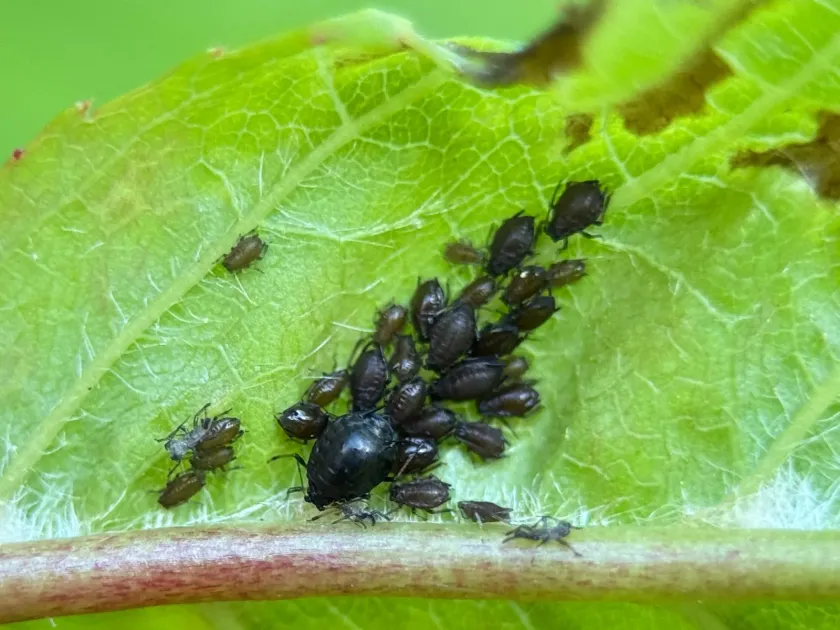
Description
How to identify
The genus Myzus belongs to the family Aphididae, order Hemiptera. The most significant species is Myzus persicae, widely known as the peach-potato aphid.
Adults are small, typically ranging from 1.5 to 2.5 mm in length. Their body color can vary from light green to yellow or pinkish depending on their host plant environment.
Key identifying features include the morphology of frontal tubercles and the structure of the siphunculi, which are usually slightly swollen or cylindrical in shape.
They exhibit high reproductive potential, often reproducing by parthenogenesis (asexual reproduction), allowing for rapid population growth in favorable conditions.
Their ability to develop into winged forms allows them to migrate over long distances and colonize new, healthy plant populations during the growing season.
What it damages
Myzus species are highly polyphagous, attacking a vast array of crops, including stone fruits like peaches, plums, and nectarines, as well as various vegetables.
Significant damage is frequently observed in potatoes, tomatoes, peppers, and various brassica species, where the aphids feed on nutrient-rich phloem sap.
Ornamental plants and greenhouse flowers are also common targets, leading to stunted growth and reduced aesthetic and commercial value.
The feeding activity directly drains plant energy, while the massive infestations often lead to leaf curling, wilting, and premature leaf drop across the entire plant.
Weeds often serve as alternative hosts, acting as a bridge for the pest to survive and spread to primary crops when environmental conditions improve.
When it appears
The life cycle typically starts in spring as overwintering eggs on tree hosts hatch into nymphs that begin feeding on buds and young foliage.
As temperatures rise, winged forms migrate to secondary hosts, including various vegetables and weeds, to continue their reproductive cycles throughout the summer.
Multiple generations of wingless viviparous females are produced during the warm months, quickly forming dense colonies on the undersides of leaves.
In the autumn, sexual forms emerge to mate and lay eggs on primary woody hosts, which serve as the overwintering stage for the following year.
In greenhouses and indoor environments, the lifecycle remains continuous, as stable temperatures remove the need for seasonal diapause or egg production.
Signs of infestation
Primary symptoms include the curling and yellowing of young leaves, caused by the localized depletion of plant fluids and toxic saliva injections.
The secretion of honeydew creates a sticky surface on foliage, which eventually fosters the growth of sooty mold, further hindering the plant's ability to photosynthesize.
Myzus aphids are prolific vectors for over 100 plant viruses, including potato leafroll virus and mosaic viruses, causing systemic plant decline.
The presence of ants, which protect the aphid colonies to harvest the honeydew, is a strong indicator of an active infestation that requires attention.
Stunted plant growth, deformed flowers, and poor fruit development are secondary signs that the aphid population has exceeded the economic threshold.
Control measures
Integrated Pest Management (IPM) is essential for effective control, combining cultural practices, biological control, and targeted chemical applications.
Systemic insecticides are often used to treat heavy infestations, as they are absorbed into the plant tissues where aphids feed.
- Encouraging natural predators such as lady beetles, lacewings, and parasitic wasps.
- Removing weed hosts to minimize the availability of alternative food sources.
- Applying yellow sticky traps to monitor and reduce populations of winged aphids.
- Using insecticidal soaps or horticultural oils for early, localized infestations.
- Implementing proper crop rotation to break the pest's cycle.
It is critical to rotate pesticide classes to manage resistance development and to ensure that applications do not harm beneficial insect populations.
Taxonomy
- Latin name
- Myzus
- Order
- Hemiptera (bugs, aphids, leafhoppers)
- Family
- Aphididae
- EPPO code
- MYZUSP
Discussion
No discussions yet — be the first.