
Oak aphid
Myzocallis discolor
Description
How to identify
The Oak aphid (scientific name Myzocallis discolor) is a small insect belonging to the family Aphididae within the order Hemiptera. It is specifically adapted to feed on various species of oak trees.
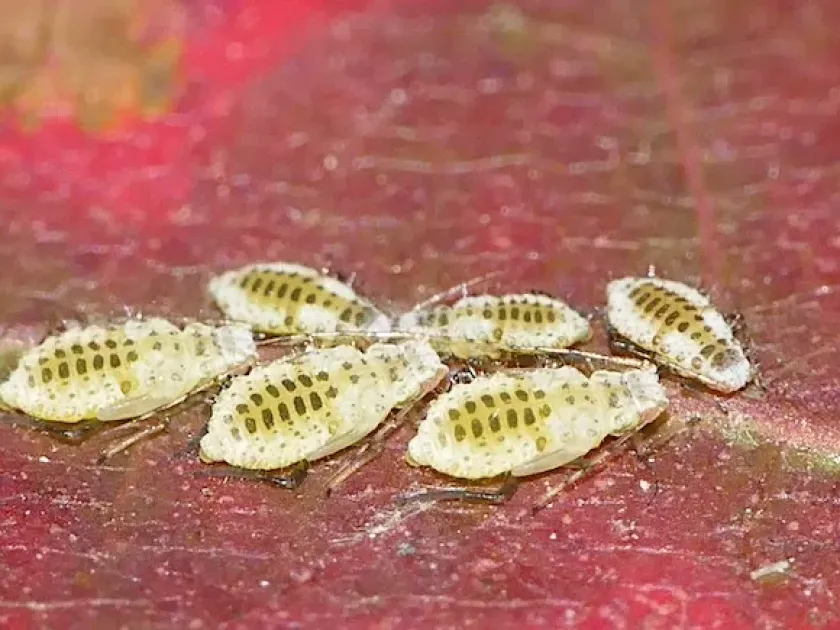
The adults are recognizable by their distinct appearance: a yellowish to greenish body covered with noticeable dark spots. Their wings are transparent with dark markings along the veins, which serves as a primary diagnostic feature for identification under a magnifying glass.
Nymphs, or immature stages, resemble adults but are smaller and wingless. They go through several developmental instars, remaining stationary for long periods as they feed on the phloem sap of the host plant leaves.
Unlike some other aphid species that form massive, thick clusters, this species tends to be more dispersed. They typically inhabit the underside of oak leaves, aligning themselves with the veins for easier access to nutrients.
The life cycle is closely synchronized with the development of the oak tree. The overwintering stage consists of eggs laid in the crevices of the bark, which remain dormant until the favorable conditions of early spring arrive.
What it damages
The primary hosts for Myzocallis discolor are oak trees (Quercus spp.). While established trees can tolerate some level of infestation, young saplings and nursery plants are particularly vulnerable to physiological stress.
As the aphids suck sap from the leaves, the trees lose vital nutrients and water. This weakens the overall vigor of the host plant, potentially leading to stunted growth, particularly in younger specimens during the peak growing season.
The production of honeydew is a significant side effect of their feeding. This sugary waste encourages the growth of sooty mold, which creates a black film over the leaf surface, effectively blocking sunlight and interfering with photosynthesis.
Chronic infestation can lead to leaf yellowing (chlorosis), premature leaf drop, and a general decline in the tree's health. This makes the host more susceptible to secondary pathogens and environmental stressors.
In forest or landscape settings, severe infestations reduce the aesthetic value of the trees and can result in significant annual growth loss, as the tree exhausts its energy reserves to compensate for leaf damage.
When it appears
Activity begins in the spring, triggered by the bud break of the oak trees. The first generation of nymphs emerges from the overwintering eggs and immediately begins feeding on the newly developed foliage.
Multiple generations occur throughout the spring and summer months. Due to their rapid reproductive rate, populations can increase exponentially during warm, dry periods when environmental resistance is low.
The peak of the infestation is usually observed mid-summer, when colonies are most active and visible on the lower canopy. At this stage, the effects of the sap depletion become most apparent on the leaves.
As autumn approaches, the aphid cycle shifts towards sexual reproduction. Females lay the next generation of overwintering eggs on the twigs and bark, ensuring the survival of the species through the winter.
Environmental factors such as temperature and humidity significantly regulate the population dynamics. A rainy spring can naturally suppress the initial expansion, while hot, dry summers promote rapid population growth.
Signs of infestation
The most immediate sign of an infestation is the presence of sticky honeydew on the foliage or the ground beneath the tree. This substance often attracts ants, which farm the aphids for their sugary secretions.
Yellow or brown mottled spots on the leaf surface indicate where the aphids have been feeding. These areas represent localized damage to the leaf tissue caused by the insects' piercing-sucking mouthparts.
The development of a black, powdery coating known as sooty mold on the leaves or branches is a clear indicator of a long-standing aphid colony. The mold grows specifically on the honeydew deposits.
Leaf curling or distortion may occur, especially on young or rapidly growing leaves. This is a common physiological reaction to the stress induced by heavy sap extraction.
Close observation of the leaf underside will reveal the insects themselves. Their spotted appearance is quite unique, distinguishing them from the more common solid-colored aphid species found on other plants.
Control measures
Effective management starts with cultural practices. Maintaining tree health through proper irrigation and soil care increases the tree's natural resilience to aphid attacks.
Biological control is highly effective for this pest. Encouraging beneficial predators such as lady beetles, lacewings, and syrphid fly larvae can keep aphid populations below the economic threshold without the use of chemicals.
If chemical intervention becomes necessary, systemic insecticides (such as those containing acetamiprid or neonicotinoids) are often used to target the aphids from within the plant tissue. Application should be timed to avoid harming pollinators.
Mechanical control, such as a strong blast of water directed at the canopy, can be sufficient for smaller trees or individual nursery plants to remove the insects physically.
- Monitor tree health regularly throughout the growing season.
- Use sticky bands on the trunk to prevent ants from protecting the aphids.
- Prune and destroy heavily infested branches in localized outbreaks.
- Apply targeted insecticides only when population thresholds are exceeded.
- Plant nectar-producing flora to support natural predator populations.
Taxonomy
- Latin name
- Myzocallis discolor
- Order
- Hemiptera (bugs, aphids, leafhoppers)
- Family
- Aphididae
- EPPO code
- MYZCDI
Discussion
No discussions yet — be the first.