
Hazel aphid
Myzocallis coryli
Description
How to identify
The hazel aphid (Myzocallis coryli) belongs to the order Hemiptera and the family Aphididae. It is a highly host-specific pest that feeds exclusively on hazel species, particularly Corylus avellana.
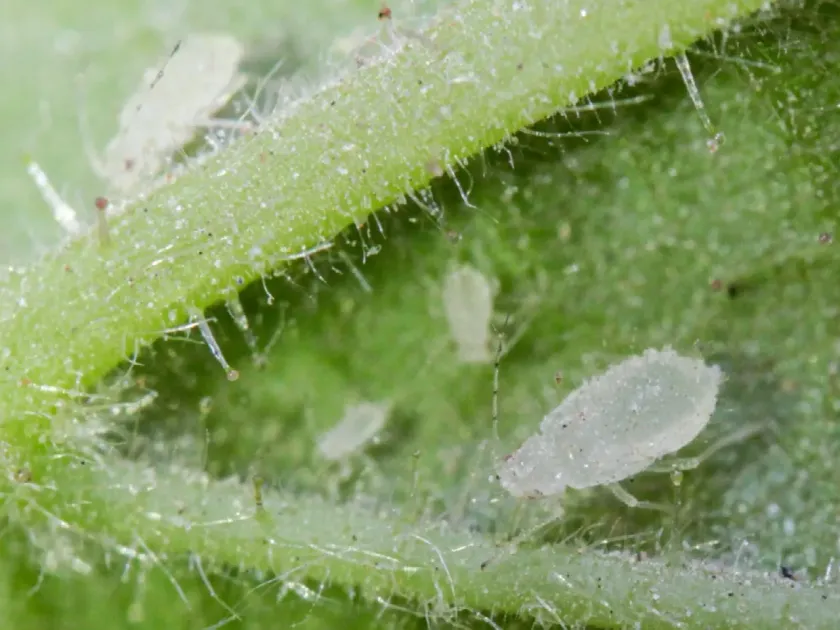
Adult aphids are typically yellowish-green in color. A distinctive feature is the presence of dark spots or transverse bands on their dorsal side, which helps in field identification.
The body length of the adults generally measures between 1.5 and 2 millimeters. They possess clear, transparent wings with a characteristic vein pattern, enabling the dispersal of winged forms within the orchard.
Nymphs resemble smaller, wingless adults and lack reproductive structures. These aphids tend to colonize the abaxial (lower) surface of the leaves, where they remain relatively sheltered.
Being a monophagous insect, this species does not typically migrate to other types of fruit trees, which allows growers to concentrate their monitoring efforts solely on hazelnut plants.
What it damages
Both adults and nymphs cause damage by using their piercing-sucking mouthparts to extract phloem sap. This feeding process results in reduced vigor and slowed growth of the host plant.
The primary symptom of infestation is chlorosis, where leaves turn yellow due to the depletion of nutrients and disruption of photosynthesis caused by the aphid's saliva.
As they feed, they excrete honeydew, a sugary substance that accumulates on the leaves. This honeydew serves as a perfect substrate for the growth of sooty mold, a complex of saprophytic fungi.
The sooty mold forms a black coating on the leaves, which hinders gas exchange and reduces the plant's ability to absorb sunlight, further weakening the hazel bush.
Severe infestations can lead to premature leaf drop, which prevents the tree from storing sufficient energy for the next season, ultimately impacting nut yield and quality.
When it appears
The life cycle is closely synchronized with the phenology of the hazel plant. Overwintering eggs hatch into nymphs in early spring, coinciding with the bud-burst stage.
During the growing season, the aphid undergoes several generations. The population density typically reaches its peak during the mid-summer months, specifically June and July.
In the autumn, sexual forms of the aphid appear. After mating, the females lay eggs in bark crevices or near buds, which will remain dormant throughout the winter until the following spring.
Environmental conditions, especially temperature, play a crucial role in the development rate. Warm and humid conditions significantly shorten the generation time, leading to rapid population outbreaks.
The egg stage is the only survival mechanism during the winter, making the overwintering period a critical point for population management through orchard hygiene.
Signs of infestation
Early identification involves inspecting the underside of the leaves for small, yellowish colonies of aphids. Their presence along the leaf veins is a common sighting.
A sticky, shiny residue on the leaf surface is a definitive sign of aphid activity. This honeydew is often visible before the aphids themselves are noticed.
The presence of sooty mold (black, dusty patches on leaves) indicates that the aphid colony has been established for an extended period and the infection is severe.
Increased activity of ants on the branches is a strong indicator of an aphid infestation, as ants are attracted to the honeydew and often protect aphids from predators.
Visible leaf curling and yellowing are late-stage symptoms. When these appear, it signifies that the tree has already suffered significant stress from sap depletion.
Control measures
Orchard management should focus on cultural practices, such as proper pruning, to maintain an open canopy. This improves airflow and light penetration, creating unfavorable conditions for aphids.
Avoid excessive nitrogen fertilization, as high nitrogen levels make leaf tissues succulent and more attractive to aphids, leading to faster reproduction rates.
Biological control is highly recommended; promoting habitats for natural enemies like ladybirds (Coccinellidae), lacewings, and hoverflies can help keep aphid numbers under control naturally.
If chemical intervention is necessary, select selective insecticides that minimize harm to beneficial insects. Always ensure thorough coverage of the underside of the leaves.
- Regular monitoring starting from early spring to identify infestations early.
- Use of horticultural oils for early season management.
- Systemic insecticides for severe outbreaks, respecting the pre-harvest interval.
Taxonomy
- Latin name
- Myzocallis coryli
- Order
- Hemiptera (bugs, aphids, leafhoppers)
- Family
- Aphididae
- EPPO code
- MYZCCO
Discussion
No discussions yet — be the first.