
Myzocallis bellus
Myzocallis bellus
Description
How to identify
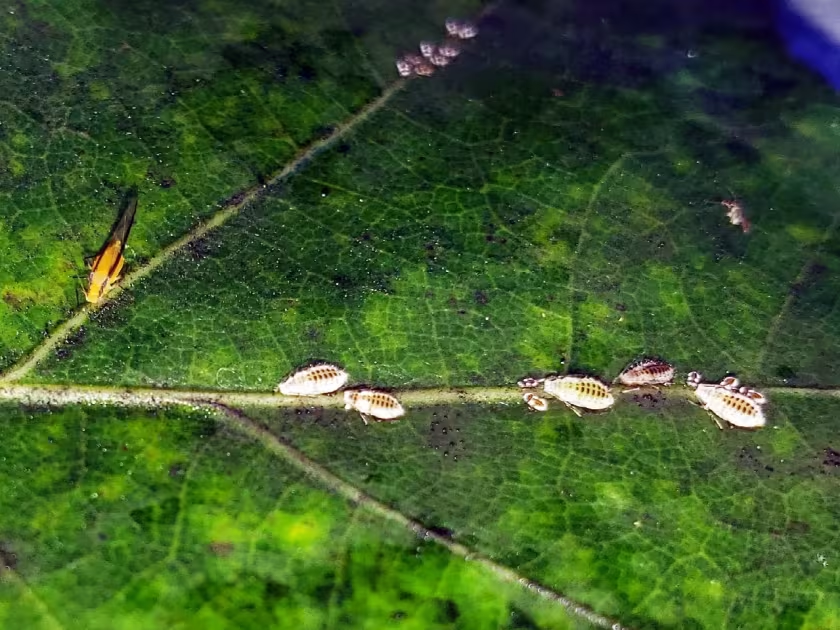
Myzocallis bellus, commonly known as a type of oak aphid, belongs to the family Aphididae. It is a small insect that primarily inhabits the underside of oak leaves, using its pale, mottled coloration to blend in with the leaf surface.
The adults are approximately 1.5–2.5 mm long with slender bodies. They possess long antennae and clear wings, sometimes featuring faint venation. Nymphs resemble miniature adults but lack fully developed wings and reproductive capabilities.
This species is highly host-specific, primarily infesting oak trees (genus Quercus). These insects often live in small groups that can quickly expand during the active growing season.
They exhibit both sexual and asexual reproduction cycles. During the summer, parthenogenesis allows for rapid population growth, while autumn marks the shift to sexual reproduction for winter egg-laying.
The insects overwinter as eggs, which are carefully deposited by females into crevices in the bark or near the leaf buds, ensuring survival during the cold months.
What it damages
Myzocallis bellus feeds on the phloem sap of young oak leaves. While individual feeding causes minimal damage, mass infestation significantly drains the host tree's resources.
Heavy feeding leads to leaf curling, chlorosis (yellowing), and premature leaf drop, which impairs the tree's ability to photosynthesize and store energy for the following year.
A major indirect threat is the secretion of honeydew, a sugary substance that coats the leaves and branches, facilitating the growth of sooty mold, which blocks sunlight and stifles the tree.
These aphids are also documented vectors for various plant viruses, which can lead to long-term health decline and increased susceptibility to fungal diseases in oaks.
Urban landscapes are particularly vulnerable, where trees already stressed by pollution or soil compaction may suffer stunted growth or limb dieback due to severe aphid outbreaks.
When it appears
The life cycle initiates in early spring, synchronized with the bud burst and the emergence of fresh, nutrient-rich oak foliage.
Peak activity and population density typically occur during mid-summer, between June and July, when temperatures are high and the trees are in their most active growth phase.
As autumn approaches and temperatures drop, the aphid population naturally declines as they shift their focus toward reproductive cycles and overwintering preparations.
The duration of the infestation period is often determined by the local climate, with longer, warmer summers leading to more generations per season.
Winter survival is dependent on the availability of protected egg-laying sites on the tree trunk and branches.
Signs of infestation
Early signs include the presence of curled or distorted leaves, particularly on the outer branches of the canopy.
A sticky film of honeydew on the leaves below the colony is a primary indicator of aphid presence and high infestation levels.
The emergence of black sooty mold on leaf surfaces confirms that the aphids have been feeding for an extended period.
Increased activity of ants patrolling the branches is a classic behavioral sign, as ants farm the aphids to collect their honeydew secretions.
Close observation of the leaf undersides usually reveals small, pale insects and their cast-off white skins, which are a hallmark of aphid presence.
Control measures
Biological control is the first line of defense; encouraging natural predators like ladybugs, lacewings, and hoverflies can significantly keep aphid numbers in check.
For ornamental oaks or trees in high-value settings, systemic insecticides applied during the early growth stage can provide effective and long-lasting protection.
Maintaining tree vigor through proper watering and fertilization is essential, as healthy trees are better equipped to tolerate and recover from aphid feeding.
Monitoring programs using yellow sticky traps help detect early arrivals, allowing for targeted interventions before a colony spreads throughout the canopy.
- Encouraging predatory insect populations in the garden.
- Applying systemic insecticides to the soil or trunk.
- Pruning and destroying heavily infested twigs to reduce the initial population.
Taxonomy
- Latin name
- Myzocallis bellus
- Order
- Hemiptera (bugs, aphids, leafhoppers)
- Family
- Aphididae
- EPPO code
- MYZCBE
Discussion
No discussions yet — be the first.