
Myzocallis
Myzocallis
Description
How to identify
Myzocallis is a genus of aphids belonging to the family Aphididae. These insects are highly specialized, with most species primarily infesting oak trees.
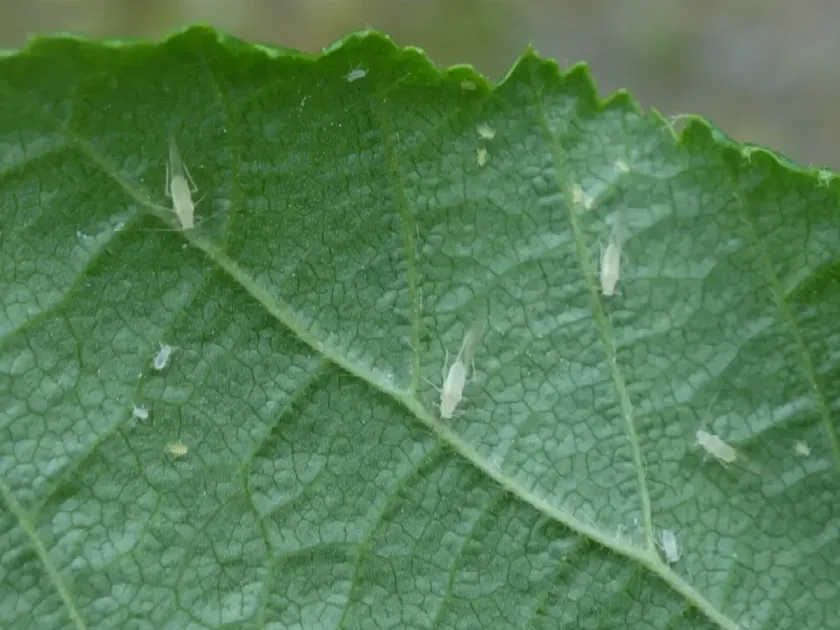
Adult aphids are relatively small, typically ranging from 1.5 to 2.5 mm in length, and often display pale yellow, green, or translucent body colors.
The life cycle involves an alternation between asexual and sexual reproduction, allowing for rapid population growth during favorable spring and summer months.
Both winged and wingless forms exist within the colonies, with winged adults facilitating the spread of the population across the canopy or to neighboring trees.
Overwintering occurs in the egg stage, with eggs typically deposited in bark crevices or near buds to withstand harsh winter conditions.
What it damages
Oak species (Quercus) are the primary hosts for Myzocallis. These aphids inhabit the underside of leaves, where they extract essential plant sap.
By constantly feeding on phloem sap, the aphids disrupt the nutrient transport within the tree, leading to physiological stress and potential growth inhibition.
Heavy infestations can cover a significant portion of the leaf surface, which drains energy from the tree, especially in young saplings or weakened individuals.
While mature trees can often withstand moderate infestations, repeated annual outbreaks can reduce the overall vigor and crown density of the forest stands.
The damage is more pronounced in nurseries, where saplings rely on optimal leaf condition to build reserves for their future development.
When it appears
The activity of Myzocallis begins in early spring, synchronized with the bud break of the host trees, when nymphs emerge from their winter dormancy.
Populations tend to peak during the mid-summer months when temperature conditions are optimal for exponential reproduction and colony expansion.
As summer progresses into autumn, the insects shift their focus towards producing sexual forms to ensure the survival of the next generation.
Egg-laying activity peaks in late autumn as temperatures drop, securing the species for the upcoming year.
The duration of the active season is highly dependent on regional climate, with milder winters potentially leading to earlier onset of pest pressure.
Signs of infestation
One of the most obvious indicators of an infestation is the presence of honeydew, a sticky substance excreted by aphids on the leaf surface.
The growth of sooty mold, a black fungus that thrives on honeydew, is a secondary sign that suggests the colony has been established for some time.
Leaf yellowing, curling, and early senescence are common symptoms indicating that the aphids have extracted too much sap from the foliage.
An increased presence of ants on the tree branches is often a strong signal, as they tend to the aphids to collect their sugary secretions.
Direct inspection of the leaf undersides, especially near the main veins, usually reveals clusters of these small insects or their cast skins.
Control measures
Biological control is highly effective, as many predatory insects such as lady beetles, lacewings, and hoverflies actively hunt aphid colonies.
Systemic insecticides are the preferred chemical method for severe infestations, as they are translocated within the tree's tissues to reach the aphids.
Cultural practices, such as maintaining soil health and providing adequate irrigation, help trees recover from the stress caused by sap-sucking pests.
Pruning infested branches in early spring can help reduce the initial number of overwintering eggs, lowering the potential population size.
Integrated Pest Management (IPM) programs emphasize regular monitoring to determine if and when control measures are necessary to prevent economic damage.
Taxonomy
- Latin name
- Myzocallis
- Order
- Hemiptera (bugs, aphids, leafhoppers)
- Family
- Aphididae
- EPPO code
- MYZCSP
Discussion
No discussions yet — be the first.