
Rose aphid
Myzaphis rosarum
Description
How to identify
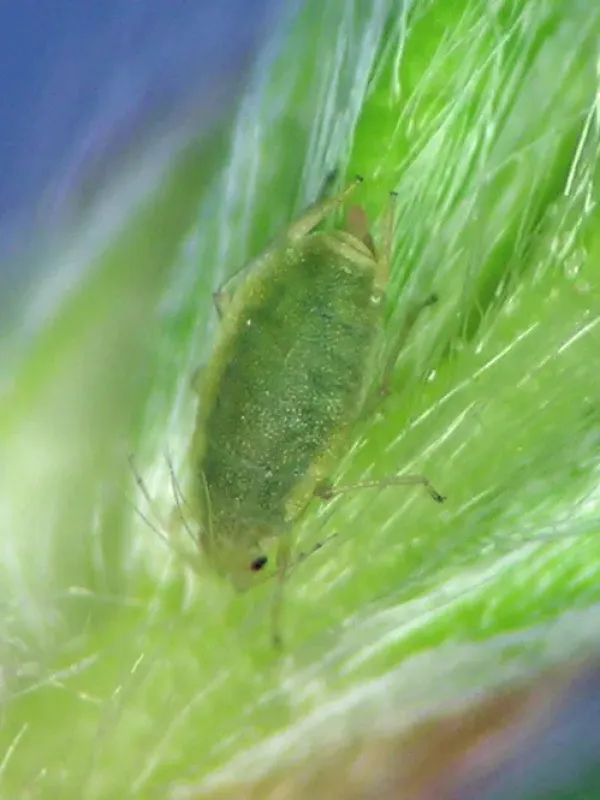
The rose aphid (Myzaphis rosarum) is a small insect species belonging to the family Aphididae, within the order Hemiptera. These insects typically have a slender, pale green or yellowish body, allowing them to camouflage effectively on the young shoots of rose bushes.
Adult aphids generally measure between 1.5 and 2 mm in length. The population includes both wingless forms and winged individuals, the latter of which are responsible for the rapid spread of the colony to neighboring plants during the growing season.
A distinctive biological feature of this species is the cold-hardiness of its eggs. These eggs are oval-shaped, shiny black, and are deposited directly onto the bark of rose shoots for overwintering.
For accurate identification, one should observe the siphunculi (small tubes on the abdomen), which are well-developed and cylindrical in Myzaphis rosarum, providing a key taxonomic trait for this species.
Nymphs, which hatch in early spring, closely resemble adults but are smaller and sexually immature. They immediately begin feeding, going through several molts before reaching adulthood.
What it damages
The primary hosts for Myzaphis rosarum are various species and cultivars of roses. These aphids specifically target the most tender parts of the plant, which leads to significant physiological stress.
Damage is most concentrated on buds, terminal shoots, and the undersides of leaves. By feeding on plant sap, the aphids rob the rose of essential nutrients required for vigorous development.
As they feed, aphids excrete a sugary substance known as honeydew. This sticky residue often promotes the growth of sooty mold, which covers the foliage with a black film and inhibits photosynthesis.
Severe infestations cause leaves to curl, shoots to become stunted or distorted, and floral buds to fail to open correctly. This aesthetic and physical degradation can severely impact the quality of the blooms.
Chronic feeding weakens the host plant, making it more susceptible to environmental stress, secondary fungal infections, and winter damage, ultimately reducing the lifespan of the rose bush.
When it appears
The life cycle of the rose aphid begins in early spring, triggered by rising temperatures. Nymphs emerge from the overwintering eggs as soon as the mean daily temperatures reach about 8–10 degrees Celsius.
Peak activity typically occurs during May and June, coinciding with the rapid vegetative growth of roses. During this phase, aphids reproduce parthenogenetically, resulting in multiple overlapping generations per month.
While extreme summer heat may temporarily slow reproduction, populations often rebound quickly whenever temperatures moderate and humidity remains favorable for plant growth.
In autumn, as day length decreases and temperatures drop, sexual forms appear. After mating, the females deposit their eggs on the permanent woody stems of the rose to ensure survival through the winter.
This cycle ensures that the aphid remains perfectly synchronized with the phenology of the rose, guaranteeing access to nutrient-rich sap throughout the entire growing season.
Signs of infestation
The most immediate sign of an infestation is the presence of clusters of small, green insects on the tips of young shoots or near the flower buds.
Leaf curling is a classic symptom; as aphids feed on the underside of young leaves, the tissue often becomes distorted, causing the foliage to roll inward or twist.
The presence of honeydew—a sticky, shiny substance on the leaves—is a reliable indicator of aphid activity. This residue often attracts ants, which farm the aphids and protect them from natural predators.
The presence of shed white skins (exuviae) on the leaves is a common sign of aphid development, as these insects molt several times as they grow toward adulthood.
Stunted plant growth and the failure of buds to develop properly are clear warnings that the aphid colony has reached a density that is compromising the host plant's health.
Control measures
The first step in control is pruning away heavily infested shoots early in the season, which helps to remove the source of the infestation and eggs for the next cycle.
For chemical control, systemic insecticides are highly effective as they are absorbed by the plant tissues, providing long-lasting protection against feeding aphids.
Encouraging natural predators such as lady beetles, lacewings, and hoverflies is an excellent long-term strategy for organic gardens. Planting diverse flowers can help maintain these populations.
Proper plant nutrition is vital; avoid over-application of nitrogen fertilizers, which can stimulate an excess of succulent growth that is highly attractive to aphids.
- Regularly monitor the undersides of leaves and growing tips.
- Use a strong jet of water to physically dislodge aphids from foliage.
- Apply insecticidal soaps for immediate, localized treatment.
- Rotate different types of insecticides to prevent the development of pesticide resistance.
Taxonomy
- Latin name
- Myzaphis rosarum
- Order
- Hemiptera (bugs, aphids, leafhoppers)
- Family
- Aphididae
- EPPO code
- MYZARO
Discussion
No discussions yet — be the first.