
Rose aphid
Myzaphis bucktoni
Description
How to identify
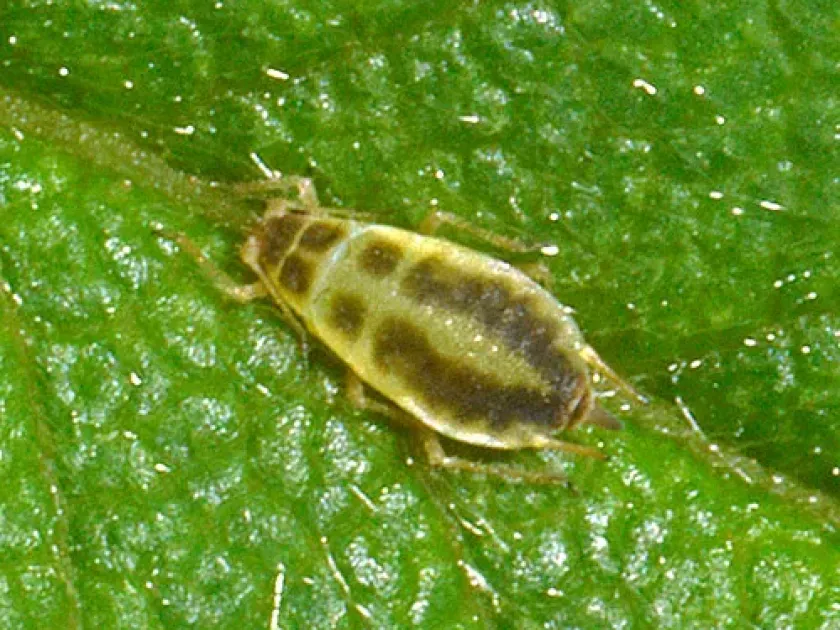
The rose aphid (Myzaphis bucktoni) is a small insect belonging to the family Aphididae within the order Hemiptera. These pests typically measure between 1.5 and 2.5 mm in length.
Their bodies are elongated and range in color from light green to yellowish-green, providing excellent camouflage against the foliage of their host plants.
Key identification features include long antennae that extend beyond the body length and a pair of tubes, known as cornicles, located on the rear of the abdomen.
The species overwinters in the egg stage, with eggs typically laid by females in the crevices of rose bark or near dormant buds during late autumn.
In spring, the eggs hatch into fundatrices (stem mothers), which initiate the colonization process by feeding on the sap of emerging shoots.
What it damages
The primary hosts for this aphid are plants within the genus Rosa, including both wild rose bushes and cultivated garden varieties.
These insects feed by inserting their piercing-sucking mouthparts into the plant tissue, directly depleting the nutrients and moisture essential for growth.
Feeding typically occurs on the most tender parts of the plant, such as new leaf tips, flower buds, and expanding stems, leading to stunted development.
Severe infestations result in leaf curling, yellowing, and the distortion of buds, which may fail to open or produce deformed, unsightly blooms.
The excretion of honeydew by the aphids promotes the growth of sooty mold, which coats the leaves and further inhibits the plant's ability to photosynthesize.
When it appears
The life cycle of the rose aphid is perfectly synchronized with the spring phenology of its host plants, beginning as soon as the buds break.
Population levels typically reach their maximum peak during late spring and early summer, when warm temperatures accelerate the reproduction cycles.
During the heat of mid-summer, the population growth may temporarily stabilize or decrease, provided the plant is not under significant environmental stress.
As autumn temperatures drop, sexual reproduction occurs, leading to the deposition of overwintering eggs to ensure the species' survival through winter.
The rapid generation turnover allows a single infestation to cover an entire rose garden within just a few weeks under favorable conditions.
Signs of infestation
The most immediate sign of infestation is the characteristic curling and twisting of young leaves, often accompanied by a shiny, sticky residue.
Gardeners will often observe ants patrolling the rose bushes, as they feed on the honeydew produced by the aphids and protect them from predators.
Flower buds are particularly vulnerable; they may become stunted, bent, or covered in dense colonies of small, green, soft-bodied insects.
If left unmanaged, the foliage may show signs of yellowing or necrotic spotting caused by the continuous drain of plant sap and secondary infections.
- Curling and distortion of fresh foliage.
- Sticky honeydew buildup on stems and leaves.
- Presence of dense aphid colonies on buds and new growth.
- Reduced vigor of the rose bush and delayed blooming.
Control measures
Cultural control involves regular monitoring of the garden and the manual removal of heavily infested shoots to reduce the initial aphid pressure.
Encouraging natural predators such as lady beetles, hoverflies, and lacewings can provide effective biological control in diverse garden environments.
For significant infestations, the application of systemic insecticides is highly recommended, as they protect the plant from within for an extended period.
When using contact insecticides, thorough coverage is essential; ensure that the spray reaches the underside of the leaves where colonies tend to hide.
Rotating different classes of chemical treatments helps to prevent the development of pesticide resistance in aphid populations over successive seasons.
Taxonomy
- Latin name
- Myzaphis bucktoni
- Order
- Hemiptera (bugs, aphids, leafhoppers)
- Family
- Aphididae
- EPPO code
- MYZABU
Discussion
No discussions yet — be the first.