
Mydaea scutellaris
Mydaea scutellaris
Description
How to identify
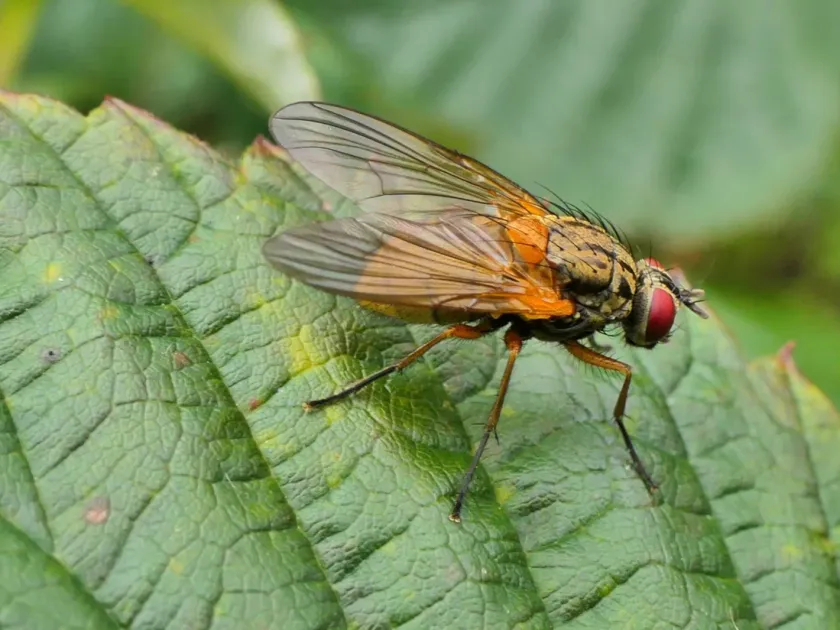
Mydaea scutellaris is a species of fly belonging to the family Muscidae, order Diptera. These insects possess a robust build typical for the family, with a well-developed thoracic section and efficient flight muscles.
The adult fly is characterized by a dark, metallic-gray coloration. Its most prominent feature, which differentiates it from other muscids, is the pale or yellowish scutellum on the dorsal side of the thorax.
Adults typically reach a body length of 6–8 millimeters. Males and females can be distinguished by their eye structure, with males having closer proximity between the eyes compared to the broader gap seen in females.
The larvae are legless, maggot-like, and typically white or yellowish-white. Their mouthparts are specifically adapted to consume organic matter, including soft plant tissues, which often leads to significant agricultural damage.
The life cycle undergoes complete metamorphosis, including egg, three larval stages, pupa, and adult. Each stage is highly dependent on environmental moisture and temperature conditions.
What it damages
The primary damage is caused by the larvae of Mydaea scutellaris, which feed on the root systems of various vegetable crops and decorative plants, causing them to wilt or die.
Young seedlings are particularly vulnerable, as even minor damage to their primary roots can lead to a complete loss of water and nutrient uptake, causing rapid plant collapse.
Feeding activities of the larvae create entry points for various soil-borne pathogens, including bacteria and fungi, which exacerbate the damage by causing secondary root rots.
Adult flies can act as mechanical vectors for plant pathogens, carrying spores on their bodies from infested areas to healthy crops while moving through the field.
In greenhouses and moist garden environments, large populations of this fly can cause substantial economic loss if early detection and intervention are not implemented.
When it appears
The adult activity usually begins in late spring, around May, when temperatures are sufficiently high for larvae development and the movement of flies.
Peak population densities are commonly observed during the warm and humid months of June and July, which are optimal for the insect's reproductive cycle.
Several generations of this fly can develop within a single growing season, leading to a constant threat to crops throughout the summer if the environmental moisture remains high.
As temperatures drop in autumn, the flies begin to enter a dormant state, overwintering as pupae or larvae within the soil or in decomposed organic debris.
The spring emergence is considered the most critical period, as the flies target vulnerable, newly planted seedlings, potentially causing widespread damage across young fields.
Signs of infestation
The first sign of an infestation is sudden wilting of plants on sunny days, which might appear to be caused by drought but persists even after proper watering.
Inspecting the root zone often reveals tunneling or eaten roots, with younger feeder roots showing the most visible signs of destruction by the larvae.
White, cylindrical maggots are often found in the soil directly around the base of the plant, especially if the soil is damp or high in organic content.
Stunted plant growth, yellowing of the lower leaves, and necrotic spots at the stem base near the soil surface are common indicators of larval infestation.
A high number of flies clustering near damp patches or compost heaps provides a strong warning that the pest is breeding in the immediate vicinity of your crops.
Control measures
Crop rotation is the most effective cultural method to prevent the buildup of Mydaea scutellaris populations by removing their consistent food source.
Implementing regular soil cultivation helps to expose larvae to dry air and predators, significantly reducing their ability to complete their life cycle in the upper soil layers.
Applying targeted insecticides, including bio-rational options such as nematode-based treatments, to the soil can successfully control the larval phase of the fly.
- Use yellow sticky traps to reduce the number of adult flies.
- Ensure proper drainage to avoid excessive moisture in the root zone.
- Remove all dead plant material and debris from the garden before winter.
Protecting young seedlings with fine mesh covers can be an effective mechanical barrier against egg-laying flies during the peak of their activity season.
Taxonomy
- Latin name
- Mydaea scutellaris
- Order
- Diptera (flies)
- Family
- Muscidae
- EPPO code
- MYDASC
Discussion
No discussions yet — be the first.