
Mydaea
Mydaea
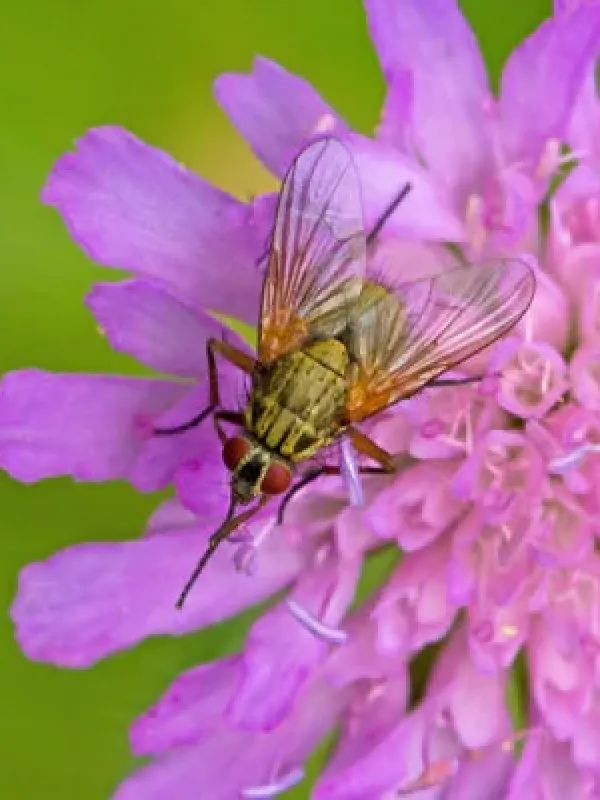
Description
How to identify
Mydaea is a genus of flies belonging to the family Muscidae. These insects are closely related to the common housefly and share many similar physical characteristics, typically appearing grey or dark in color.
Adult flies usually measure between 6 and 9 mm in length. They have a standard dipteran structure with specific wing venation patterns that are crucial for accurate taxonomic classification.
The larvae are typical muscid maggots: cylindrical, headless, and adapted for living in moist, organic-rich environments such as soil or decaying vegetation.
Identifying specific species within the genus Mydaea often proves challenging due to the high morphological similarity among members of the family Muscidae.
Specialists rely on microscopic examination of the male genitalia and other minute features to distinguish between saprophagous species and those capable of damaging plants.
What it damages
While many species are harmless scavengers, some members of the genus can act as secondary pests by invading plants that are already stressed or suffering from decay.
The larvae primarily damage the root systems and the lower stem areas of vegetables and seedlings, especially when these plant parts are in contact with damp soil.
Damage often manifests as tunnelling in the plant tissues, which serves as an entry point for various soft-rot bacteria, eventually killing the host plant.
In greenhouses, these flies can cause significant losses in seedling production if the potting medium is too rich in unsterilized organic components like fresh manure.
The economic impact is generally classified as moderate, as they are usually opportunistic pests that exploit weakened or compromised crop stands.
When it appears
The flight period for adult Mydaea flies begins in late spring and continues throughout the summer as long as temperatures remain favorable for development.
Populations tend to peak during humid and rainy weather, which provides the necessary moisture for larval survival and development in the topsoil.
In protected indoor cultivation environments, the life cycle can continue year-round if temperatures are maintained and constant sources of organic matter are available.
As temperatures drop in the autumn, adults move toward sheltered areas, such as compost heaps or dense vegetation, to undergo hibernation.
The entire developmental cycle is highly temperature-dependent, allowing for multiple generations to occur during a single prolonged growing season.
Signs of infestation
The most evident sign of a Mydaea infestation is the wilting or yellowing of plants, which occurs even when soil moisture appears to be adequate.
Careful inspection of the plant base or the root system often reveals internal tunnelling or the presence of small, white, legless larvae feeding on the tissue.
Secondary signs include the development of slimy, necrotic patches around the root zone, frequently accompanied by an unpleasant odor caused by bacterial decomposition.
Gardeners may observe adult flies resting on damp surfaces near the base of the plants or around piles of decaying organic matter during the daytime.
Patches of dead or severely stunted plants in an otherwise healthy field are strong indicators that a soil-dwelling pest is impacting the root system.
Control measures
The primary control strategy involves good sanitation: removing all crop residues and ensuring that only fully matured, well-composted organic matter is added to the soil.
Improving drainage and avoiding over-irrigation reduces the attractiveness of the soil surface to flies looking for a place to lay their eggs.
In high-intensity greenhouse environments, physical exclusion using fine-mesh netting on vents can prevent the entry of adult flies during the growing season.
Crop rotation helps prevent the buildup of soil-borne pest populations, ensuring that host plants are not grown in the same area for multiple seasons.
- Use high-quality, sterile potting mixes for seedlings.
- Monitor for early signs of wilting in young plants.
- Apply biological control agents where appropriate to manage larval populations.
Taxonomy
- Latin name
- Mydaea
- Order
- Diptera (flies)
- Family
- Muscidae
- EPPO code
- MYDASP
Discussion
No discussions yet — be the first.