
Turaco
Musophaga
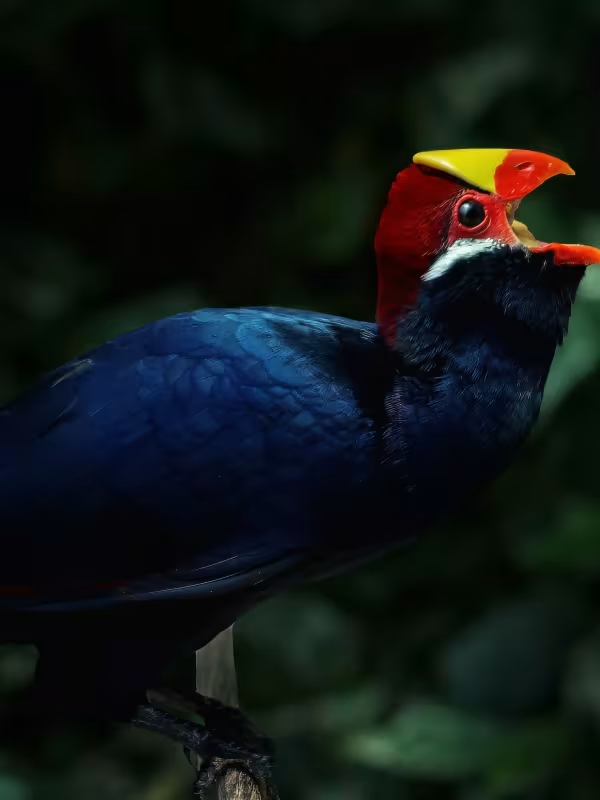
Description
How to identify
The Turaco (genus Musophaga), also known as the plantain-eater, is a bird species belonging to the family Musophagidae.
Taxonomically, they are classified under the order Musophagiformes and are recognized by their vivid plumage and specialized bills designed for fruit consumption.
In agricultural settings, these birds are considered significant pests due to their behavior of feeding on large quantities of cultivated fruits.
Identification is straightforward due to their distinct calls and vibrant red flight feathers that make them highly visible in tropical orchards.
Mature individuals grow to a significant size, allowing them to cause substantial damage to branches and fruit-bearing shoots.
What it damages
The primary economic impact is felt by banana plantations, where these birds feed on developing and ripening fruit bunches.
Beyond bananas, they cause severe damage to crops such as figs, papayas, and various citrus fruits, significantly reducing harvest yields.
Beyond direct consumption, the birds pierce the fruit skins, creating entry points for fungal pathogens and opportunistic pests.
Their physical activity causes mechanical stress on young branches and foliage, potentially stunting the development of the fruit trees.
Accumulation of droppings on the plants can lead to sanitary issues and lower the market quality of the harvested produce.
When it appears
The peak activity of the Turaco correlates directly with the ripening cycle of the fruits within the orchards.
Seasonal patterns determine the migration of flocks, as the birds move across regions following the availability of different food sources.
In arid regions, they tend to congregate near irrigated plantations where fruit serves as a crucial supply of water during the dry season.
Daily foraging occurs most intensely during the early morning and late afternoon hours when temperatures are milder.
Effective pest management requires tracking the phenology of local crops to anticipate periods when the birds are most likely to invade.
Signs of infestation
The presence of deep, puncture-like wounds on fruit surfaces is the most definitive sign of Turaco feeding activity.
An abundance of partially consumed fruit dropped on the orchard floor indicates the presence of a feeding flock.
Damage to the upper canopy, including broken twigs and stripped leaves, signifies frequent visits by these birds to the trees.
Repeated vocalization patterns during specific hours of the day serve as early warnings for orchard managers.
Finding feces containing indigestible seeds from commercial crops around the base of the trees confirms that they are using the site as a feeding ground.
Control measures
The most reliable control measure is the installation of bird-proof netting over the trees to physically exclude the pests from the crops.
Modern orchards utilize acoustic deterrents that emit distress calls or predator sounds to discourage the birds from landing.
Visual deterrents, such as reflective holographic ribbons, can be used temporarily to disturb the birds during the ripening phase.
Good sanitation practices, specifically the quick removal of dropped fruit, are essential to minimize the attractiveness of the site to foraging flocks.
- Regular inspection of crops during the fruit ripening stages.
- Installation of protective netting for high-value orchards.
- Implementation of sensor-based automated sound deterrents.
Taxonomy
- Latin name
- Musophaga
- Family
- Musophagidae
- EPPO code
- MUSOSP
Discussion
No discussions yet — be the first.