
Plantain-eater
Crinifer
Description
How to identify
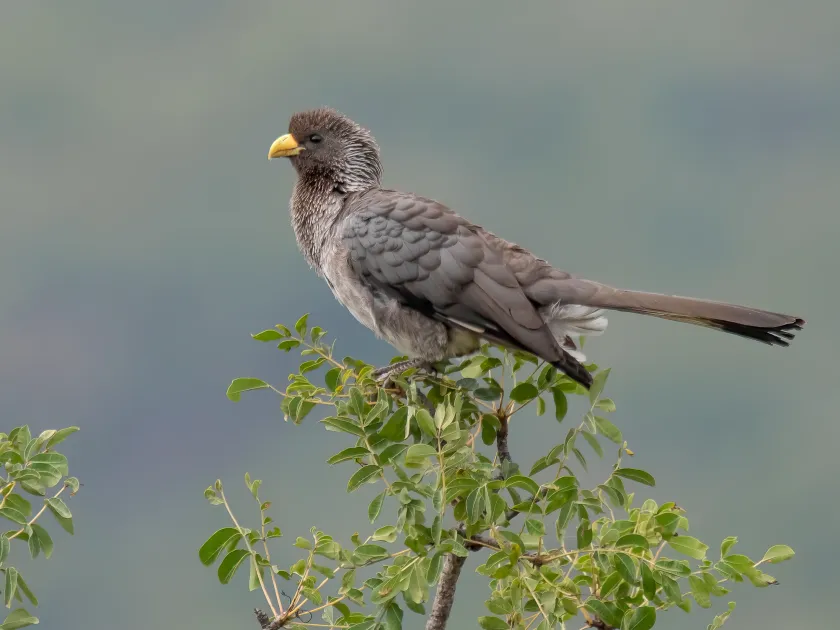
Plantain-eaters, belonging to the genus Crinifer and the Musophagidae family, are medium-sized birds known for their distinct appearance. They possess long tails and sturdy, sharp beaks adapted for a diet consisting largely of fruits, buds, and flowers.
Their plumage is typically brownish-grey, often with speckled patterns that provide excellent camouflage in foliage. A notable feature is their movable crest, which shifts according to their mood or state of alertness while foraging on trees.
Systematically, they are classified under the order Musophagiformes. These birds are highly social and intelligent, often moving in small family groups that establish territories within tropical environments or plantations.
The biology of the Crinifer species is characterized by sedentary behavior, meaning they remain in one area throughout the year. This constancy makes them a persistent threat to local agriculture, as they do not migrate away from food sources.
They build nests high in the canopy of trees, utilizing twigs and branches. Parental care is shared, which ensures a high survival rate for offspring, contributing to the stability of their populations in various landscapes.
What it damages
The primary agricultural concern is the damage caused to ripening fruit, particularly bananas and papayas. These birds pierce the skin of the fruit with their strong beaks to reach the succulent pulp, leaving the crops unmarketable.
Besides eating fruits, plantain-eaters damage young shoots and flower buds, significantly hindering the development of the trees. This results in reduced vegetative growth and lower overall yields per harvest season.
Large groups of these birds can cause devastating damage to plantations in a very short time. They are particularly active during the ripening stage, making timely protection measures essential for commercial fruit producers.
Feeding activities often leave fruit scarred or partially open, which serves as an entry point for secondary infections. Bacteria, fungi, and insects then colonize these damaged areas, leading to rapid rot and further economic losses.
The economic impact of plantain-eaters on small-to-medium-scale farms is significant, as a single flock can consume a substantial portion of the expected annual revenue, requiring dedicated pest management resources.
Signs of infestation
A primary indicator of a plantain-eater infestation is the presence of partially eaten fruit hanging from trees or littered on the orchard floor. The bite marks are usually large and jagged, reflecting the bird’s beak shape.
Their vocalizations are distinct, loud, and harsh, serving as a reliable clue to their presence. Birdwatchers and farmers often hear these calls in the early morning or late afternoon when the birds are most active foraging.
Droppings and scattered feathers found under specific trees often indicate regular roosting or feeding spots. Monitoring these areas provides valuable data on the size and frequency of the flocks visiting the plantation.
Visual disturbances such as broken branches or stripped foliage are signs of heavy feeding activity. Changes in the behavior of smaller local birds, which may scatter upon the arrival of plantain-eaters, can also warn farmers of the threat.
Tracking the movement of flocks across the plantation helps identify vulnerable areas. They often systematically work through a grove as different fruits reach the peak of ripeness, showing a clear pattern of destructive activity.
Control measures
Effective management against plantain-eaters relies on a combination of visual and auditory deterrents. Reflective tapes, holographic discs, and other shiny materials can confuse the birds and discourage them from landing.
Acoustic deterrents, such as devices that play distress calls or the sounds of natural predators like raptors, have proven successful in creating a protective zone around high-value crops and reducing flock activity.
The most reliable method for direct protection is the use of specialized netting or fruit bags. Covering individual fruit bunches (such as banana hands) with permeable fabrics prevents bird access while allowing the fruit to ripen naturally.
Cultural control measures include maintaining tidy plantation boundaries and removing non-commercial wild fruit trees that provide extra food. Reducing potential nesting sites near the orchard can also help decrease the local resident population.
When using predator decoys like hawk or owl effigies, it is critical to move them frequently. Birds are intelligent and will quickly realize the decoys are harmless if they remain in the same spot for extended periods.
Taxonomy
- Latin name
- Crinifer
- Family
- Musophagidae
- EPPO code
- CRIFSP
Discussion
No discussions yet — be the first.