
Eastern grey plantain-eater
Crinifer zonurus
Description
How to identify
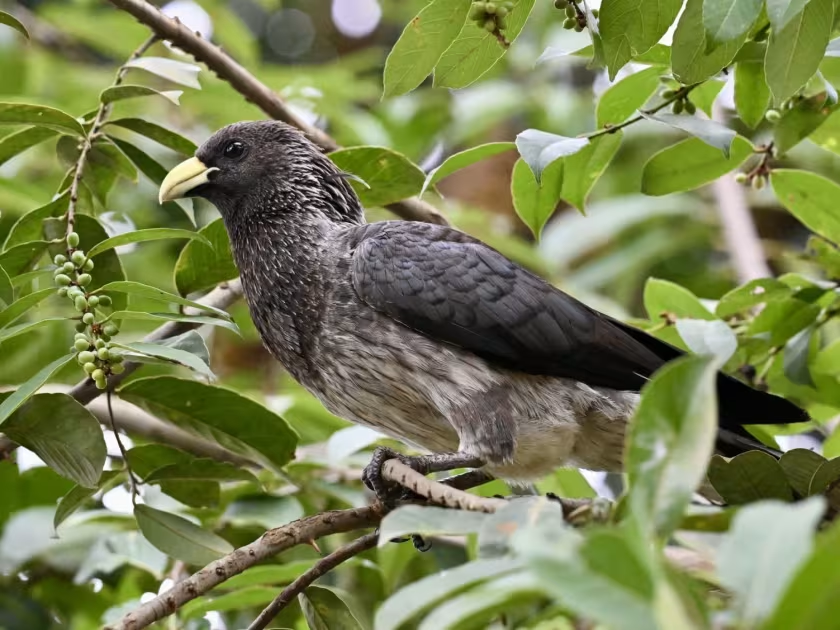
The Eastern grey plantain-eater (Crinifer zonurus) is a large bird species belonging to the family Musophagidae, order Musophagiformes.
The bird is characterized by greyish-brown plumage with distinct white barring on the breast and tail, and a prominent yellow to orange beak.
An adult bird typically measures around 45–50 centimeters in length, with the long tail accounting for a significant portion of its total body size.
These birds are known for their noisy, social behavior and are frequently found moving in small flocks, making their presence quite conspicuous.
Their flight pattern involves alternating short, rapid wingbeats with gliding, and they are exceptionally agile when navigating through tree branches.
What it damages
Their diet consists primarily of fruits, berries, flower buds, seeds, and blossoms from a wide variety of tropical plant species.
They cause significant economic losses in commercial plantations of bananas, papaya, mangoes, and citrus trees throughout their range.
The flocks are capable of decimating berry and fruit harvests by consuming the flesh of ripening fruits and damaging the bark of young shoots.
They pose a threat to young seedlings by stripping away tender terminal buds, which stunts the tree's growth and overall health.
During periods of food scarcity in their natural habitat, they are known to attack vegetable crops, causing mechanical damage to stems and fruits.
When it appears
The activity level of these birds increases during fruit maturation periods when they migrate in large numbers towards orchards and farmlands.
While the breeding season is linked to the rainy months, the pest activity remains high throughout the year depending on the availability of food.
They exhibit the most aggressive foraging behavior during early morning and late afternoon hours, when they descend on fruit-bearing trees.
Migration patterns are heavily dependent on the abundance of natural resources; once wild food is depleted, they shift to agricultural areas.
Seasonal fluctuations in their populations are closely aligned with the harvest schedules of the main commercial crops in the region.
Signs of infestation
The most immediate indicator of their presence is the loud, harsh, and repetitive call that echoes from the treetops.
A classic sign of damage is partially eaten fruit left hanging on branches or strewn across the orchard floor.
One can identify the pest by deep gouges or peck marks on the skin of fruits, which quickly lead to secondary rot and fungal growth.
Accumulated droppings on leaves and twigs, along with discarded feathers near feeding sites, confirm the presence of a bird flock.
Extensive damage to young branches and the complete removal of flower buds on specific tree sections are clear evidence of intense feeding.
Control measures
The primary control strategy involves the use of visual deterrents, such as reflective tapes, spinning mirrors, or realistic predator decoys.
Installing fine-mesh netting over fruit trees or berry bushes is considered the most effective way to prevent access to the harvest.
Acoustic deterrents that broadcast distress calls or natural predator sounds can be highly effective in keeping flocks away from sensitive areas.
Regular pruning of orchard trees helps to reduce perching spots for these birds and simplifies the monitoring of the crop's condition.
- Organizing patrols in agricultural areas during peak feeding hours to harass and drive away the flocks.
- Utilizing non-toxic repellent sprays that make fruits unpalatable to birds.
- Implementing an integrated pest management strategy that combines multiple sensory deterrents.
Taxonomy
- Latin name
- Crinifer zonurus
- Family
- Musophagidae
- EPPO code
- CRIFZO
Discussion
No discussions yet — be the first.