
Muscina levida
Muscina levida
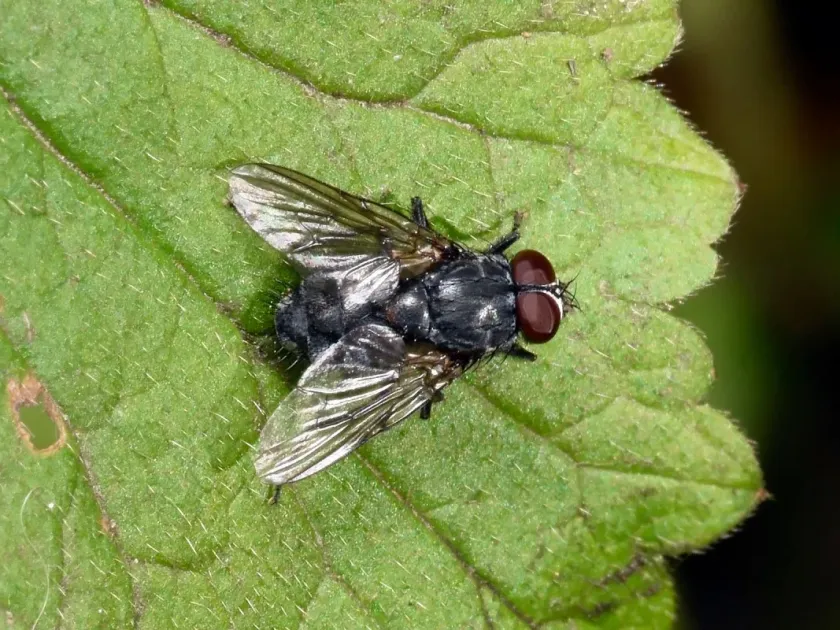
Description
How to identify
Muscina levida belongs to the order Diptera and the family Muscidae. This insect is morphologically similar to the housefly, which is why it is often overlooked during field scouting until significant damage occurs.
Adults are gray-black flies, typically measuring 6 to 8 millimeters in length. They possess distinct wing venation and mouthparts adapted for feeding on liquid organic substances.
The larvae are typically maggot-like, elongated, and lack a distinct head. They develop primarily in decaying organic matter or in the tissues of plants that have been weakened by environmental stress or previous injury.
The life cycle encompasses four stages: egg, larva (three instars), puparium, and adult. The development rate is highly dependent on ambient temperature and moisture levels.
Accurate identification requires examining the posterior spiracles of the larvae or the bristles and wing structure of the adults under a microscope.
What it damages
Muscina levida is primarily known to infest vegetable crops, particularly bulb crops, root vegetables, and occasionally solanaceous plants. It acts as a opportunistic pest.
The larvae bore into the succulent tissues of stems, bulbs, and roots. This mechanical damage disrupts nutrient transport and facilitates the entry of pathogenic bacteria and fungi.
As secondary invaders, these larvae accelerate the decay of plant tissues, turning them into a mushy, foul-smelling mass which makes the produce unmarketable.
Heavy infestations can lead to substantial yield losses, particularly in carrot, onion, and potato fields during peak development periods.
- Onion and garlic bulbs.
- Root vegetables like carrots and beets.
- Potato tubers and tomato stems.
- Compost and decomposing organic matter.
When it appears
Adult flies emerge from overwintering puparia in early spring as temperatures rise, typically starting in May depending on the local climate.
The fly remains active throughout the summer months, with multiple generations possible during a single growing season if the weather remains warm and humid.
Larval activity is most pronounced during mid-to-late summer, coinciding with the rapid growth phase of host crops such as carrots and onions.
As temperatures decline in autumn, the larvae complete their development and pupate in the soil, where they survive the winter months.
Monitoring the flight of adults is crucial for determining the timing of control measures, as peak infestation corresponds with periods of high humidity.
Signs of infestation
Early symptoms of infestation include flagging or wilting of the foliage, especially during the hottest parts of the day when water demand is at its peak.
Inspecting the soil-level parts of the plants will reveal softened or darkened tissue. The presence of a pungent, rotting odor is a strong indicator of larval activity inside the plant.
Excavating the root or bulb reveals internal tunnels created by the larvae, which are often filled with larval excrement and decaying plant debris.
Leaves start to yellow prematurely, and affected plants exhibit stunted growth compared to healthy neighboring crops.
Localized patches of dying or rotting plants are a classic sign, indicating that the female fly has likely laid eggs on or near the host plants.
Control measures
Implementing a robust crop rotation strategy is the primary method to prevent the buildup of Muscina levida populations in the soil.
Sanitation is critical; all crop residues and decaying organic matter should be removed and destroyed after harvest to eliminate overwintering sites.
Biological control agents, such as specific fungi or beneficial nematodes that target fly larvae, can be used to mitigate population growth without relying on harsh chemicals.
If chemical intervention is necessary, it should focus on targeting adult flies to prevent egg-laying, utilizing insecticides with short pre-harvest intervals.
Cultural practices like proper irrigation management and deep soil cultivation can disrupt the pupal stage and make the environment less favorable for the pest.
Taxonomy
- Latin name
- Muscina levida
- Order
- Diptera (flies)
- Family
- Muscidae
- EPPO code
- MUSIAS
Discussion
No discussions yet — be the first.