
Muscina
Muscina
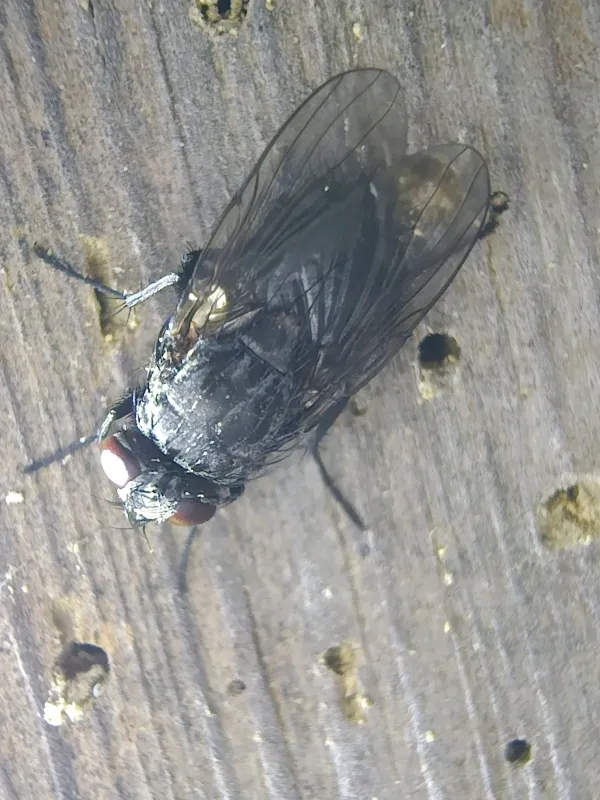
Description
How to identify
The genus Muscina belongs to the family Muscidae, commonly known as house flies. These insects are distributed worldwide and are frequently found in agricultural environments with high organic content.
Adult flies are typically greyish or black in color with a robust build. Their wings have a characteristic venation pattern that helps entomologists distinguish them from other similar-looking species.
The larvae are legless, cylindrical, and white-yellowish in appearance. They possess distinct mouthparts adapted for rasping and consuming decaying organic matter or living plant tissues.
The life cycle involves complete metamorphosis, consisting of eggs, larvae, pupae, and adults. Each stage is adapted to survive in specific environmental niches, often associated with soil or organic waste.
Pupae are the primary overwintering stage. They remain in the soil or protected organic debris until spring, when favorable temperatures trigger the emergence of the first generation of adults.
What it damages
The larvae are the most damaging stage, as they feed on the roots, bulbs, and stems of various vegetable crops. They can burrow deep into plant tissue, causing significant structural damage.
Commonly affected crops include carrots, onions, potatoes, and various brassicas. Infested plants often show signs of stunted growth, wilting, and eventual collapse of the root system.
Damage caused by larvae often creates entry points for secondary bacterial and fungal pathogens, which exacerbate the injury and lead to rapid tissue decay and rot.
In post-harvest situations, Muscina larvae can infest vegetables stored in warehouses, leading to substantial economic losses and deterioration of product quality.
- Destruction of root system integrity.
- Increased susceptibility to soil-borne diseases.
- Reduced yield due to necrosis of plant stems.
- Economic losses from damaged stored vegetables.
When it appears
Adult activity typically begins in early spring when temperatures rise above 10-12 degrees Celsius, signaling the end of the overwintering pupal stage.
Peak population levels usually occur during mid-summer. The warmth and higher humidity levels create optimal conditions for rapid development and reproduction of successive generations.
The pest relies heavily on the availability of decomposing organic matter, which is why infestations often spike in fields near manure heaps or poorly composted areas.
As autumn approaches, the number of active adults decreases, and the remaining population enters the pupal stage to survive the winter months.
Depending on the geographic region, there may be several overlapping generations per season, making management throughout the growing period essential.
Signs of infestation
The first observable sign is often the sudden wilting of leaves during the day, even when soil moisture levels are adequate for the crop.
An inspection of the base of the plant or root area usually reveals the presence of tunnels and small, white, maggot-like larvae actively feeding on the tissue.
Dark, mushy lesions on roots or bulbs are another classic symptom. These areas often emit a foul smell due to the secondary decomposition of plant tissue.
The presence of adult flies hovering around vegetable patches or organic waste piles is a reliable indicator of potential infestation in the vicinity.
In stored vegetables, signs include softened tissues, dark trails of rot, and the occasional presence of barrel-shaped brown pupae within the infested materials.
Control measures
Proper sanitation is the most effective preventative measure. Eliminating organic waste and composting debris removes the breeding grounds for the flies.
Implementing crop rotation helps break the life cycle of the pest, preventing it from establishing a persistent population in a specific field over multiple years.
Using physical barriers such as floating row covers during the early stages of plant growth can effectively block adult flies from laying eggs on the crops.
Biological control agents, such as beneficial nematodes or entomopathogenic fungi, can be applied to the soil to manage larval populations in an eco-friendly manner.
Chemical control should be considered as a last resort, using targeted insecticides and strictly adhering to safety guidelines regarding harvest intervals.
Taxonomy
- Latin name
- Muscina
- Order
- Diptera (flies)
- Family
- Muscidae
- EPPO code
- MUSISP
Discussion
No discussions yet — be the first.