
Eye gnat
Musca sorbens
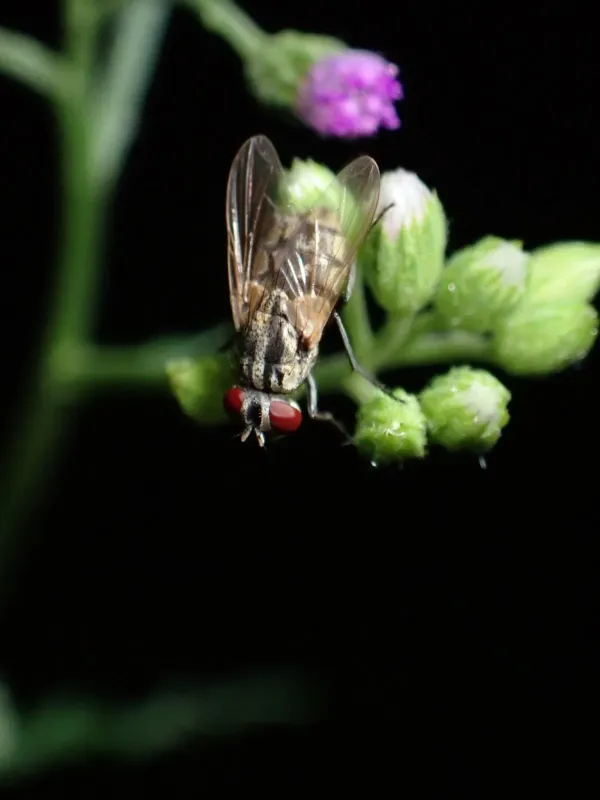
Description
How to identify
The eye gnat (Musca sorbens) is a dipteran insect belonging to the Muscidae family. It is a synanthropic pest that thrives in warm, arid environments and is closely associated with human and animal habitats.
Adult flies are approximately 5 to 7 millimeters long and exhibit a typical greyish coloration with characteristic dark stripes on the thorax. They closely resemble the common housefly but behave quite differently.
The mouthparts of the eye gnat are specialized for sponging up liquid secretions. They are highly attracted to the moisture and protein-rich fluids found on the mucous membranes of eyes, noses, and open wounds.
These flies possess highly sensitive chemoreceptors that allow them to locate sources of organic fluids from long distances. This makes them persistent pests that are difficult to deter once they find a target.
The insect's life cycle is temperature-dependent, allowing for rapid population growth in favorable conditions. They are most active during the warmest hours of the day when they seek out hosts for feeding.
##damage##While not a direct agricultural pest that destroys plants, the eye gnat causes severe indirect damage in agricultural settings by acting as a mechanical vector for various pathogenic bacteria and viruses.
The most significant impact is its role as the primary vector for the bacteria causing trachoma, a leading cause of preventable blindness globally, particularly in developing agricultural regions.
In livestock production, the presence of eye gnats causes constant irritation and discomfort. Animals under attack exhibit reduced grazing time, higher stress levels, and lowered production efficiency, including lower milk yield.
Feeding by the flies leads to microscopic wounds on the eyes of cattle, which serve as entry points for secondary bacterial infections. This necessitates frequent veterinary intervention and the use of antibiotics.
The persistent presence of these flies also raises significant sanitation concerns, as they can contaminate food sources and surfaces, impacting the quality and safety standards of farm produce.
##season##Eye gnat activity is heavily dictated by climate. They are most abundant in hot, dry seasons, where high temperatures accelerate their development cycle from egg to adult in just a few days.
In temperate climates, the flies appear in late spring and remain active until the onset of cool autumn weather. Their population density peaks during mid-summer months when heat stress is highest.
Moisture availability in breeding sites is also a factor. While they prefer dry climates, they require moist organic waste, such as fresh manure, to lay eggs and complete their larval development.
During winter, the species survives by overwintering in the pupal stage, buried in soil or protected debris. This dormancy allows them to re-emerge as soon as temperatures become favorable.
Their daily activity cycle is limited to daylight hours. They avoid activity during the night, congregating in protected areas to rest and conserve energy for the next day's foraging.
##signs##The primary sign of an infestation is the persistent presence of flies circling the heads of humans and animals. These flies are notoriously difficult to shoo away and quickly return to the eyes or nose.
Visible signs of fly-borne infections include excessive tearing (epiphora), swelling of the eyelids, and mucopurulent discharge from the eyes of livestock, which is a major indicator of high fly pressure.
Detecting larvae in fresh animal manure or accumulated organic waste on farm premises is a definitive indicator of an active breeding population that requires immediate management.
Behavioral changes in livestock, such as frequent head shaking, tail flicking, and attempts to rub their faces against objects, are clear indicators that the animals are being stressed by eye gnats.
The rapid spread of eye infections among a herd, particularly when it occurs simultaneously across multiple animals, is a classic sign of mechanical transmission by these dipteran pests.
##control##Effective control of eye gnats requires a multi-faceted approach, with sanitation as the foundation. Removing or treating animal waste is essential to eliminate the primary breeding sites.
- Installation of insect-proof screens in livestock barns.
- Use of topical repellents and protective ear/eye tags on cattle.
- Regular application of residual insecticides in known fly-breeding hotspots.
- Implementation of sticky traps to monitor and reduce adult population numbers.
Maintaining high standards of personal hygiene, especially in workers frequently exposed to cattle, is crucial for preventing the transmission of eye infections like trachoma.
Integrated Pest Management (IPM) strategies, which prioritize environmental modifications and minimize reliance on chemicals, are the most sustainable ways to control these flies in agricultural landscapes.
Taxonomy
- Latin name
- Musca sorbens
- Order
- Diptera (flies)
- Family
- Muscidae
- EPPO code
- MUSCSO
Discussion
No discussions yet — be the first.