
Housefly
Musca domestica
Description
How to identify
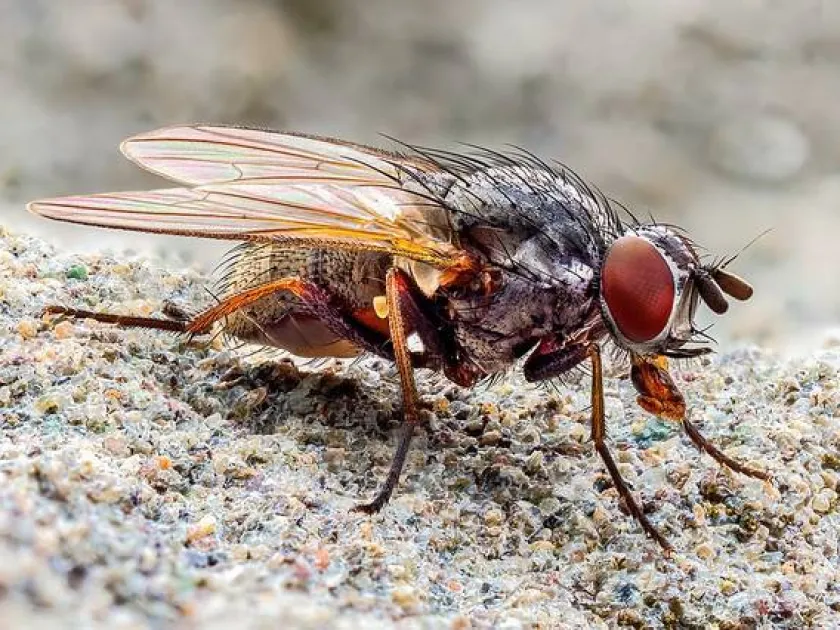
The housefly (Musca domestica) belongs to the order Diptera and the Muscidae family. It is a synanthropic species with a greyish body, usually 6–8 mm long, featuring four distinct dark stripes on its thorax.
They possess a sponging-lapping mouthpart, which is specialized for consuming liquid food that they liquefy using enzymatic saliva. The compound eyes provide a wide field of vision, allowing for rapid detection of movement.
The larval stage consists of legless maggots that are white and tapered. They transition into barrel-shaped, dark-brown puparia during the transformation process.
The insect undergoes a complete metamorphosis, passing through egg, larva, pupa, and adult stages within a single cycle.
Environmental conditions such as temperature and humidity significantly influence the duration of their life cycle, which can be as short as ten days in summer.
What it damages
Houseflies are not primary plant feeders; however, they cause significant indirect damage by acting as vectors for bacteria, viruses, and fungal spores that compromise crop health.
They contribute to the rapid spread of post-harvest diseases, as they frequently land on moist or decaying plant tissues, transferring pathogens.
In greenhouses, housefly activity is associated with the spread of plant infections that degrade fruit quality and marketable yield.
The presence of flies in storage facilities leads to the contamination of equipment and packaging with excrement, potentially carrying harmful pathogens.
In some cases, their presence can trigger secondary issues by introducing microbes into wounded plant tissues caused by other primary insect pests.
When it appears
The activity of houseflies begins in late spring once average daily temperatures climb above 12°C, marking the start of their annual reproductive cycle.
Peak populations occur during the summer months when high temperatures accelerate metabolic processes, leading to multiple generations in a short time.
As autumn approaches, activity patterns shift as adults begin seeking sheltered areas, including agricultural storage rooms, for hibernation.
Warm spring days stimulate early emergence from overwintering sites, often correlated with the onset of flowering in various horticultural crops.
In climate-controlled agricultural buildings and greenhouses, the housefly can remain active and continue its life cycle throughout the winter months.
Signs of infestation
A primary indicator of housefly infestation is the presence of small, dark fecal spots on leaves, stems, and fruits throughout the growing area.
Visible clusters of maggots in organic waste piles or manure beds indicate a major breeding ground for the population on or near the property.
A sudden increase in fruit rot cases, particularly on damaged tissues, often points to pathogen transmission by visiting adult flies.
Frequent sightings of adult insects resting on warm surfaces or near food and organic sources confirm the establishment of a population.
Foul odors emanating from decomposing organic matter in storage or production areas often signal high larval density within those materials.
Control measures
- Maintaining rigorous sanitation standards in all agricultural production and storage facilities.
- Removing and properly disposing of organic debris and waste where flies lay their eggs.
- Installing physical barriers such as fine-mesh screens on greenhouse vents and doors.
- Utilizing sticky traps and light traps to reduce the population of adult flies during peak seasons.
- Applying biological control measures, such as introducing parasitic wasps or microbial agents to target fly larvae in waste areas.
Taxonomy
- Latin name
- Musca domestica
- Order
- Diptera (flies)
- Family
- Muscidae
- EPPO code
- MUSCDO
Discussion
No discussions yet — be the first.