
Mordwilkoja
Mordwilkoja
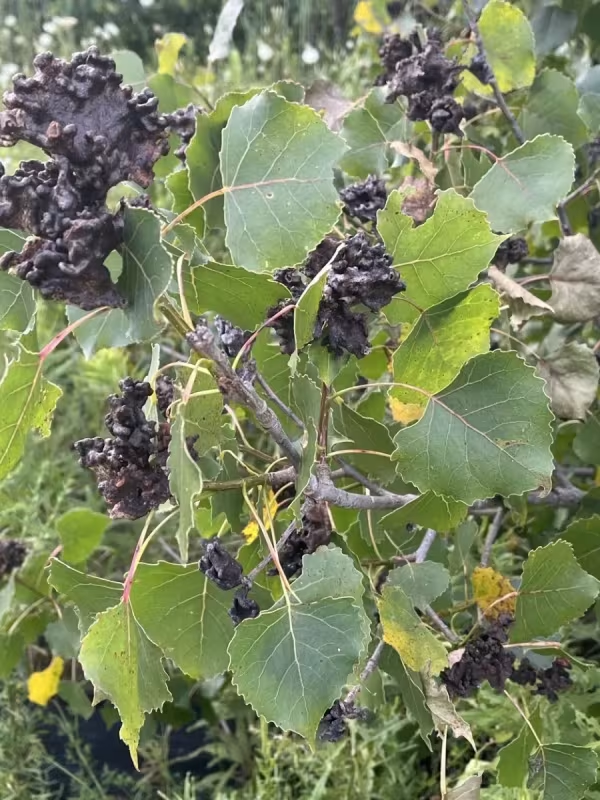
Description
How to identify
Mordwilkoja is a genus of insects belonging to the order Hemiptera and the family Aphididae (aphids). These insects are known for their distinct morphological features typical of specific aphid groups, often including waxy secretions.
Adult specimens are generally small with soft bodies, frequently covered in a white, powdery or woolly wax that protects them from environmental stressors and predators. Their mouthparts consist of a piercing-sucking proboscis adapted for feeding on vascular plant sap.
The life cycle is complex, involving both apterous (wingless) and alate (winged) forms. The winged individuals play a crucial role in the dispersal of the species, moving to secondary hosts during the peak growing season.
The biology of Mordwilkoja is closely linked to the phenology of host trees, particularly members of the Populus genus. Population dynamics are heavily influenced by temperature and moisture conditions.
Identification is primarily achieved through observing characteristic leaf deformations or galls created on the host plant. Careful inspection of the abaxial (lower) leaf surface usually reveals the location of the colonies.
What it damages
The primary host plants for Mordwilkoja are poplar trees. The main damage occurs as the insects systematically extract sap from the leaf tissues, depleting the plant's resources.
This feeding activity causes significant physiological stress, leading to the disruption of photosynthesis and metabolic processes. Symptoms include leaf curling, chlorosis, and premature senescence.
Continuous colonization weakens the host tree, making it more susceptible to secondary infestations, such as fungal pathogens and wood-decaying bacteria that enter through damaged tissues.
In nurseries and young plantations, this pest can cause stunted growth and severe deformation of apical shoots, which significantly reduces the quality and marketability of the stock.
The severity of damage is proportional to the population density; under heavy infestations, trees can experience substantial leaf drop, which severely hampers annual growth increments.
When it appears
The annual life cycle begins in spring when overwintering eggs hatch upon bud break. Nymphs immediately begin feeding on tender, newly emerged leaf tissues.
Mid-summer marks the peak of activity, characterized by the migration of alate females to secondary hosts or different parts of the same canopy. During this time, populations reach their highest levels.
As autumn approaches, the production of sexual forms occurs, followed by mating and the deposition of eggs in bark crevices or near bud scales. The egg stage is the primary mechanism for surviving winter temperatures.
Phenological synchronization is critical, as cold spring temperatures can delay egg hatch, while warm springs can lead to rapid and dangerous population spikes early in the season.
Summer droughts often exacerbate the impact of these aphids, as moisture-stressed trees have less defensive capability against the sap-sucking activity.
Signs of infestation
The first visual sign of infestation is the curling or twisting of leaves, which often change color to yellow or develop necrotic spots over time.
The presence of honeydew is a diagnostic indicator; this sticky substance coats the leaves and branches, creating a substrate for sooty mold fungi, which appear as black, powdery patches.
The aforementioned waxy or woolly secretions are highly visible in the colony areas, acting as a structural barrier for the aphids and making them easier to spot during field surveys.
Severe infestations lead to premature leaf abscission, creating noticeable gaps in the canopy that are visible from a distance as the season progresses.
Young shoots may show signs of inhibited development, appearing stunted or twisted compared to the healthy, vigorous growth observed on unaffected branches.
Control measures
The primary control strategy involves the application of systemic insecticides during the spring hatching period to eliminate the population before significant damage occurs.
Sanitation is a vital cultural practice, which includes pruning and disposing of heavily infested branches to reduce the overall inoculum level within the plantation.
Biological control can be enhanced by fostering natural enemies, such as lady beetles, lacewings, and hoverflies, which are highly effective at preying on aphid colonies.
Environmentally friendly treatments, such as horticultural oils or insecticidal soaps, provide effective suppression of aphid numbers while minimizing risks to non-target pollinators and beneficial insects.
- Regular inspection of bark and leaf health.
- Balanced fertilization to boost host plant vigor.
- Adequate spacing between trees to improve air circulation and reduce microclimate humidity.
Taxonomy
- Latin name
- Mordwilkoja
- Order
- Hemiptera (bugs, aphids, leafhoppers)
- Family
- Aphididae
- EPPO code
- MORDSP
Discussion
No discussions yet — be the first.