
Yellow pecan aphid
Monelliopsis pecanis
Description
How to identify
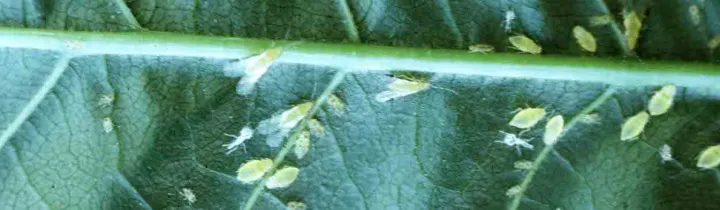
The yellow pecan aphid (Monelliopsis pecanis) is a small sap-sucking insect belonging to the family Aphididae, order Hemiptera. Adult aphids typically measure about 1.5 to 2 mm in length.
They are characterized by a distinct pale yellow or lemon-colored body. Their wings are transparent with a prominent vein pattern, allowing them to fly and colonize new branches quickly.
Nymphs resemble smaller versions of adults and progress through several developmental stages (instars) before reaching maturity. They lack wings during the initial growth stages.
Unlike some other aphid species, Monelliopsis pecanis does not form large, dense clusters. Instead, they are highly mobile and scatter across the leaf surface, making them harder to spot at low population levels.
Their lifecycle is synchronized with the pecan tree's phenology. The winter is spent as eggs, deposited by females into bark crevices on twigs to ensure survival until the spring thaw.
What it damages
The yellow pecan aphid feeds exclusively on the foliage of pecan trees (Carya illinoinensis). They use their piercing-sucking mouthparts to extract vital sap from the leaf tissues.
This feeding disrupts the plant's photosynthetic process. When populations are high, the cumulative loss of nutrients significantly weakens the tree and reduces the quality and size of the pecan nuts.
Severe infestations lead to premature leaf yellowing and shedding, often referred to as early defoliation. This stresses the tree, particularly when it occurs during the critical nut-filling stage.
The aphids secrete copious amounts of honeydew. This sticky substance covers the leaves and encourages the growth of sooty mold, which blocks sunlight and hinders photosynthesis.
Chronic infestation year after year can reduce the overall vigor of the orchard, making trees more susceptible to winter injury and various other environmental stressors.
When it appears
The activity begins in early spring, synchronized with the bud break of pecan trees. Nymphs emerge from overwintering eggs and start feeding on the tender new leaves.
Throughout the growing season, the aphids undergo multiple overlapping generations. Population growth is most rapid during warm, dry summer months.
Under optimal temperature conditions, a single generation can complete its development in roughly 7 to 10 days. This rapid reproduction allows populations to reach damaging levels very quickly.
As daylight hours shorten and temperatures drop in the autumn, sexual forms are produced. These aphids mate and deposit eggs on the bark for the upcoming winter.
Regular scouting throughout the summer is essential, as the aphid population can rebound rapidly even after initial control measures have been applied.
Signs of infestation
The most reliable sign of an infestation is the presence of small yellow aphids on the underside of the leaves, often moving rapidly when disturbed.
A sticky residue on the foliage or the ground beneath the canopy is a clear indicator of honeydew production. This is often accompanied by the appearance of dark sooty mold.
Leaves may show symptoms of chlorosis, appearing as small yellow spots at the sites where the aphids have been feeding. Leaf edges may also curl slightly.
Premature leaf drop is a major diagnostic sign. If leaves are falling mid-summer, a close inspection of the remaining foliage for aphids is highly recommended.
The presence of predators, such as lady beetles or lacewing larvae, can sometimes indicate that an aphid colony is established in that specific area of the tree.
Control measures
Chemical control involves the use of systemic insecticides that are taken up by the tree, providing longer-lasting protection compared to contact sprays.
It is vital to rotate different chemical classes of insecticides to prevent the aphids from developing resistance to commonly used active ingredients.
Biological control is a crucial component of integrated management. Protecting and encouraging natural enemies like ladybirds, lacewings, and parasitic wasps can keep aphid numbers in check.
Orchard sanitation and proper tree pruning to improve air circulation within the canopy help create a less favorable microclimate for aphid population explosions.
Utilizing yellow sticky traps for monitoring helps growers track the timing of population surges, allowing for timely intervention only when economic thresholds are exceeded.
Taxonomy
- Latin name
- Monelliopsis pecanis
- Order
- Hemiptera (bugs, aphids, leafhoppers)
- Family
- Aphididae
- EPPO code
- MNLSPE
Discussion
No discussions yet — be the first.