
Black-margined pecan aphid
Monellia nigropunctata
Description
How to identify
The black-margined pecan aphid (Monellia nigropunctata) is a small sap-sucking insect belonging to the family Aphididae that specifically targets pecan trees.
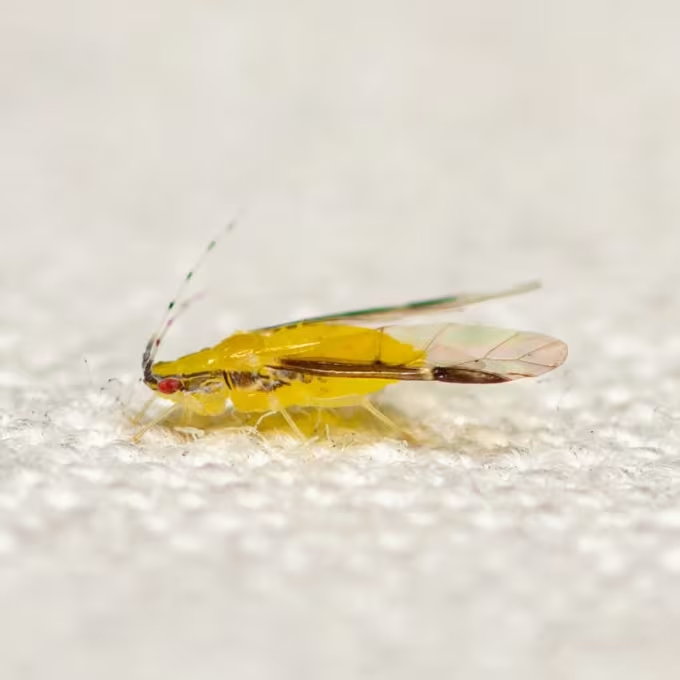
Adult aphids are characterized by a pale yellow body with distinct black spots at the base of the setae along the margins of the body, which identifies the species.
They exhibit a complex life cycle involving both parthenogenetic reproduction during the warmer months and sexual reproduction in the fall to produce overwintering eggs.
The insects are highly mobile, often shifting positions on the underside of leaves to avoid sunlight or direct contact with pesticide applications.
Several generations occur throughout the growing season, with the population density fluctuating based on temperature, predator presence, and host tree vigor.
What it damages
The aphid feeds on the phloem sap of pecan leaflets, which depletes the tree's energy reserves intended for nut production and overall foliage maintenance.
Severe infestations result in the excretion of large amounts of honeydew, which covers the leaf surface and promotes the growth of sooty mold fungi.
Sooty mold blocks sunlight, significantly reducing the photosynthetic capacity of the tree, leading to premature leaf drop and weakened tree structure.
Nut quality is negatively impacted, as the reduction in sugars and nutrients results in smaller, lower-quality kernels that may not meet commercial standards.
Extended periods of infestation place significant stress on the trees, making them more susceptible to secondary pest attacks and environmental stresses like drought.
When it appears
The life cycle begins in early spring when overwintered eggs hatch as the pecan buds break, providing immediate access to succulent young tissue.
Peak population levels are typically observed during the mid-summer months, when high temperatures accelerate the reproduction cycles of the aphids.
Damage intensity often reaches its maximum in late summer, as high aphid numbers result in substantial leaf coating with honeydew and sooty mold.
As autumn approaches and day length decreases, the aphid population produces sexual morphs to mate and deposit eggs for overwintering on the bark.
Orchard managers must monitor populations from spring through fall, as multiple overlapping generations make consistent control measures necessary.
Signs of infestation
The presence of a sticky, glistening substance on the leaves, known as honeydew, is the most common early sign of an aphid infestation.
A dark, powdery appearance on the leaves indicates the development of sooty mold, which grows directly on the honeydew excreted by the aphids.
Leaf yellowing and premature dropping of foliage in late summer are characteristic symptoms of long-term feeding damage by the aphid population.
Increased ant activity on the tree trunks is a common behavioral indicator, as ants often tend the aphids to feed on the sugary honeydew secretions.
Direct observation of the pale yellow insects with black markings on the underside of leaves confirms the presence of this specific pest species.
Control measures
Chemical control involving the use of selective insecticides is common, but it must be applied carefully to minimize harm to beneficial predator populations.
Biological control, including the encouragement of lady beetles, lacewings, and parasitic wasps, plays a vital role in natural population regulation within the orchard.
Proper orchard management, including adequate fertilization and irrigation, ensures trees are resilient enough to withstand moderate aphid pressure.
- Timed insecticide applications based on economic thresholds.
- Use of narrow-range horticultural oils for egg suppression.
- Preservation of natural enemies by avoiding broad-spectrum pesticides.
Integrated Pest Management (IPM) strategies are essential, involving regular monitoring and rotation of chemical modes of action to prevent resistance development.
Taxonomy
- Latin name
- Monellia nigropunctata
- Order
- Hemiptera (bugs, aphids, leafhoppers)
- Family
- Aphididae
- EPPO code
- MONLNI
Discussion
No discussions yet — be the first.