
Yellow pecan aphid
Monellia caryae
Description
How to identify
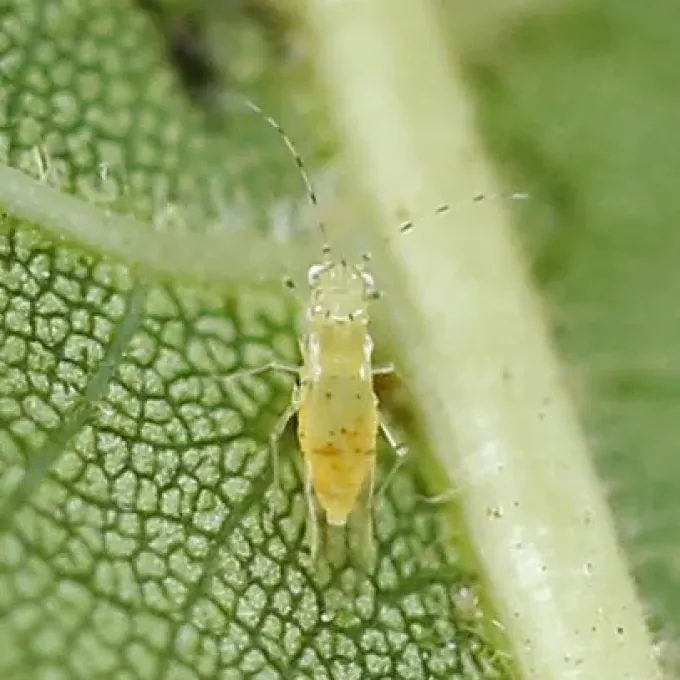
The yellow pecan aphid (Monellia caryae) belongs to the order Hemiptera and the family Aphididae. As its name suggests, it is characterized by a bright yellow body, which makes it easily distinguishable from other aphid species found on pecan trees.
These aphids exist in both winged and wingless forms. The winged adults possess clear wings with a distinct dark border along the leading edge, a feature that serves as a key diagnostic identification characteristic in the field.
Nymphs resemble smaller versions of the adults and pass through several developmental stages. They are typically found on the undersides of the leaves, where they remain sheltered from environmental stressors and most aerial predators.
The species is known for its high mobility. When the tree canopy is disturbed, adults are quick to take flight, which can make field scouting for population density levels quite challenging for orchard managers.
The insect overwinters in the egg stage. These eggs are deposited by females in the crevices of the bark on one- or two-year-old branches, ensuring survival through the winter and an early start to the population cycle in the spring.
What it damages
The primary host for Monellia caryae is the pecan tree (Carya illinoinensis). This pest is highly specialized and is predominantly found on trees within the genus Carya, where it causes significant physiological stress during the growing season.
As the aphids feed, they extract nutrients from the leaf parenchyma, disrupting the plant's metabolic processes. This direct loss of sap leads to reduced shoot growth and can negatively impact the development of fruit buds for the following year.
A major indirect source of damage is the production of honeydew. This sticky substance serves as an ideal medium for the growth of sooty mold, which creates a dark film on the leaf surface, effectively blocking sunlight and interfering with photosynthesis.
Heavy infestations during mid-summer can induce premature leaf drop. This defoliation weakens the tree before it enters winter dormancy, thereby reducing its cold hardiness and potentially leading to long-term decline in overall orchard productivity.
Chronic feeding by these aphids often results in smaller nut kernels and reduced oil content. This cumulative impact on tree health and crop quality highlights the necessity for proactive monitoring and control strategies.
When it appears
The life cycle commences in early spring as soon as the pecan buds break. Nymphs emerge from overwintered eggs and immediately begin feeding on the emerging tender foliage, initiating the seasonal colonization of the tree.
Throughout the summer, the population grows rapidly through successive generations. Under optimal temperature conditions between 22 and 28 degrees Celsius, the development cycle can be completed in as little as ten to fourteen days.
Reproduction during the summer months is primarily parthenogenetic, allowing for exponential population growth. Colonies reach peak density during the mid-to-late summer period, particularly on the foliage of the mid-to-upper canopy.
As day length shortens and temperatures decline in the autumn, sexual forms appear. After mating, females lay overwintering eggs, after which the adults perish, marking the end of the active seasonal cycle.
Effective management requires understanding these seasonal triggers. By timing control measures to match the peak emergence of nymphs, orchardists can significantly reduce the potential for widespread damage later in the season.
Signs of infestation
The first visual sign of infestation is the presence of yellow aphids on the underside of the leaves. Furthermore, the presence of white, cast-off skins (exuviae) often mistaken for powdery mildew indicates that an active colony is present.
Sticky residue on the foliage and branches is a classic indicator of aphid presence. As the colony size increases, the honeydew accumulation becomes more pronounced, often attracting ants that protect the aphids from predators.
The development of sooty mold is a clear sign of a long-standing infestation. The black, powdery coating on the leaves is a serious symptom that indicates the tree's photosynthetic capability is being compromised.
Curling and distortion of leaves near the tips of the shoots are common signs of intense feeding pressure. If these symptoms are accompanied by leaf chlorosis or yellowing spots, it confirms significant damage caused by the aphid population.
An increased presence of predatory insects, such as lady beetles or lacewings, often signals that a significant aphid colony is present. Scouting these natural enemies is a useful way to locate infestations within the orchard.
Control measures
Integrated Pest Management (IPM) is the preferred approach for controlling Monellia caryae. Prioritizing the conservation of natural enemies, such as lady beetles and green lacewings, is essential to keeping aphid populations below damaging levels.
When populations exceed economic thresholds, selective systemic insecticides are recommended. These products penetrate the plant tissue, effectively targeting the aphids while minimizing harm to beneficial insects that inhabit the canopy.
Proper nitrogen management is a crucial cultural control tactic. Over-fertilization encourages excessive vegetative growth, which creates an abundance of the tender tissue that these aphids prefer, thereby exacerbating the infestation risk.
Pruning practices that maintain an open tree canopy improve airflow and light penetration. This not only creates an environment less favorable for aphid colonization but also ensures better coverage of sprays during any necessary chemical applications.
Yellow sticky traps are highly recommended for monitoring. They provide a simple yet effective tool for tracking the presence and abundance of winged aphids, allowing for precise timing of interventions and reducing the need for blanket insecticide usage.
Taxonomy
- Latin name
- Monellia caryae
- Order
- Hemiptera (bugs, aphids, leafhoppers)
- Family
- Aphididae
- EPPO code
- MONLCY
Discussion
No discussions yet — be the first.